


A wholesale brass threaded inserts supplier gives a buyer something that small vendors cannot hold. Stable cost. Stable tolerances. Stable supply. You only understand this gap when you run inserts at volume.
Wholesale production forces that discipline. The setup does not change. The bar feeders stay tuned for brass only. The inspection routine stays tight because the team measures the same points on every tray. The process holds its line.
Small vendors cannot keep this stability. Their machines jump between mixed parts. Their bar stock changes often. Their tool wear runs uncontrolled. The inserts start drifting. The finish changes. The delivery slips.
Partnering with a wholesale supplier removes that noise. The batches stay consistent. The dimensions stay predictable. The supply stays on time. That is the real advantage, not the catalog price.
Significant Cost Efficiencies from Specialized Brass Inserts Suppliers
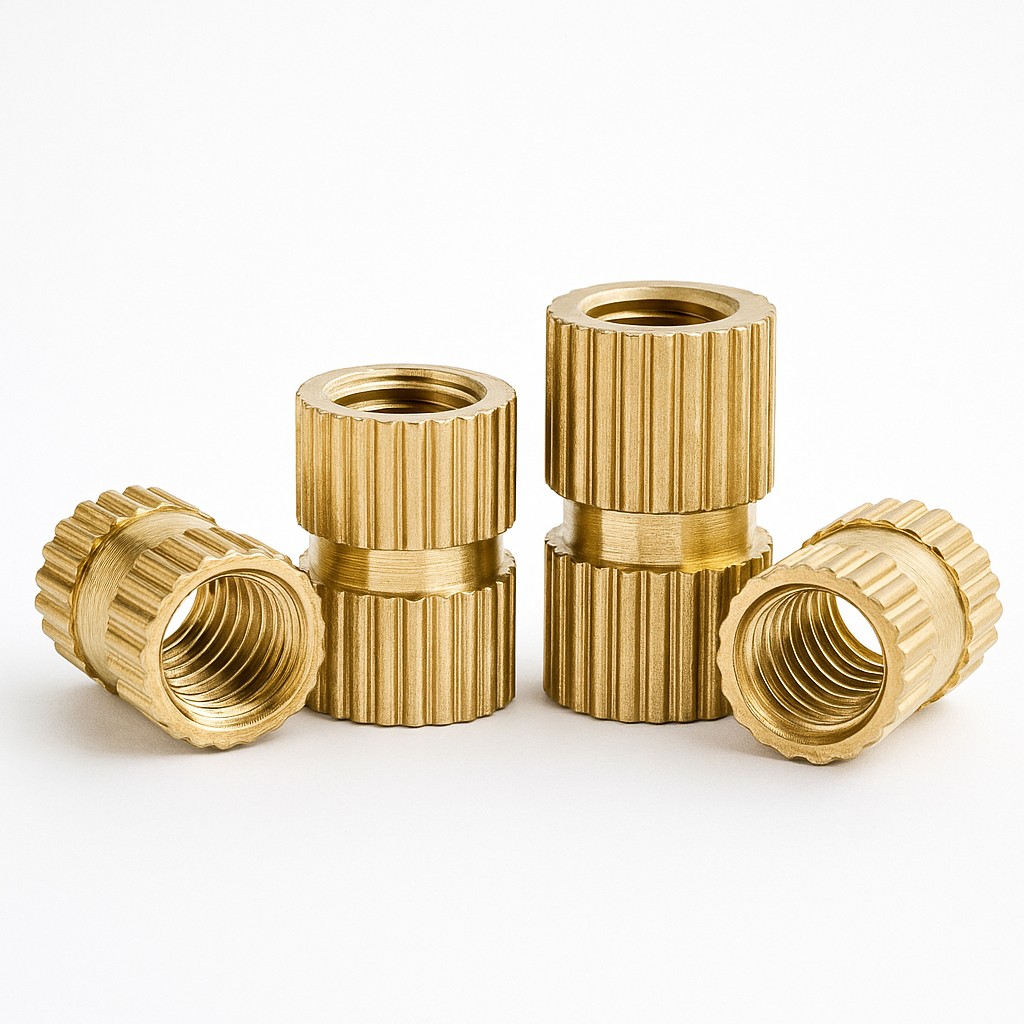
Wholesale production drops the cost of brass inserts because the machining line stops wasting time. A specialized supplier runs the same insert profiles every day. The setup stays fixed. The operator does not reset tools for mixed parts.
Cycle time drops first. A stable setup avoids tool hesitation. The toolpath stays identical for every shift. That removes idle movement. That is the real source of cost reduction.
Tool wear becomes predictable. A shop machining only brass Inserts knows the exact lifespan of each cutter, tap, and knurl wheel. You do not guess the replacement schedule. You change tools on a fixed interval. That prevents scrap. Scrap increases cost more than anything else in small shops.
Bar utilization improves. Brass is expensive. Wasting bar ends kills margin. Specialized suppliers tune their bar feeders to reduce material loss. Small vendors do not adjust feeders for one job.
Inspection time compresses. A wholesale supplier checks the same dimensions all day. The gauge plan stays simple. You measure diameter, thread fit, knurl depth, and length. No extra checks. No switching gauges. That lowers labor cost.
Bulk raw material pricing creates another drop. Buying C36000 or C27200 in large lots gives a stable price. Small vendors buy small quantities at higher rates. The material cost difference shows in every insert.
Shipping cost lowers when you pack inserts in uniform trays. Specialized suppliers design packing for high volume. You avoid damaged threads. You avoid rechecks. Damaged parts increase cost in small shops that mix different items in one box.
The cost difference is not a mystery. Stable tooling, predictable cycle time, controlled inspection, and bulk brass procurement cut the price. These points are measurable.
Guaranteed Quality from Leading Brass Inserts Manufacturers
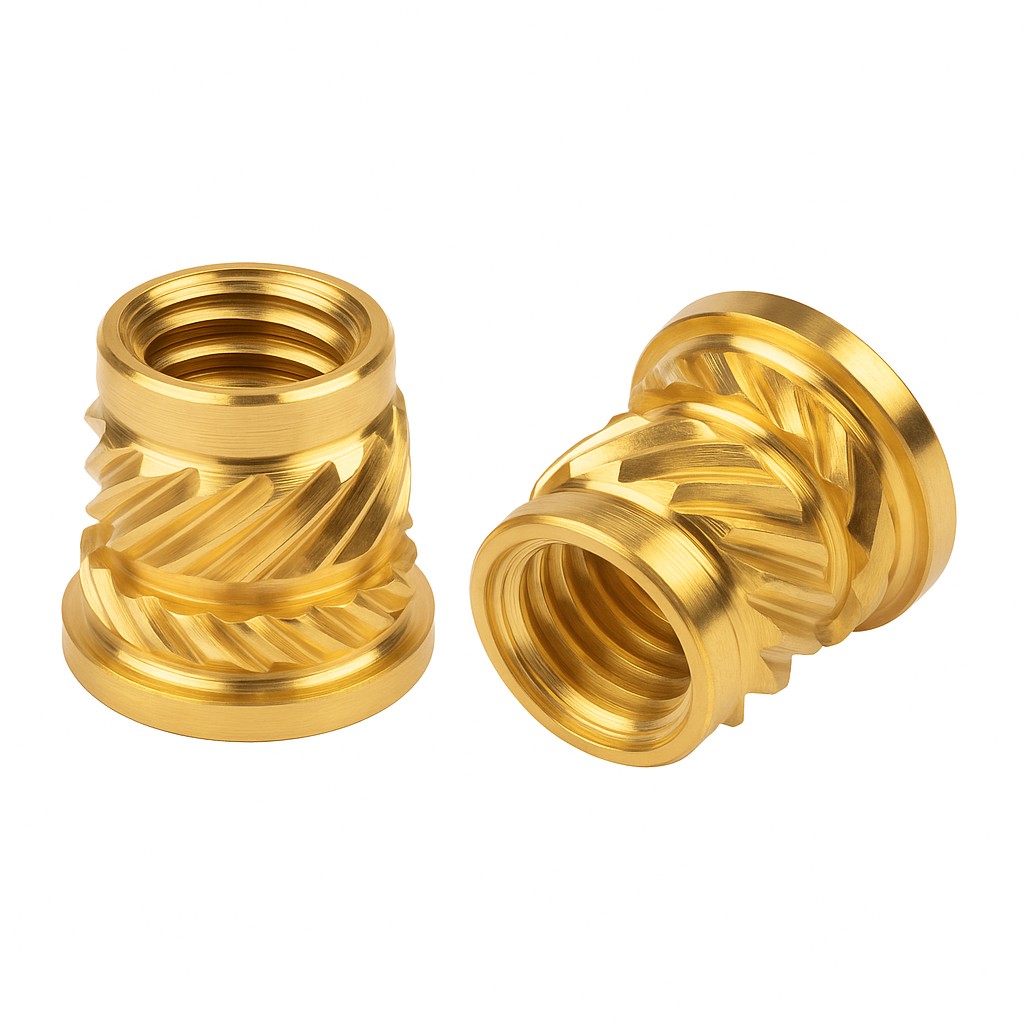
A leading brass inserts manufacturer delivers better quality because the process stays stable. Dedicated insert production removes the setup changes. When the machine setup remains fixed, the output stays predictable and the variation drops.
Material control is another factor. Certified brass grades behave in a known way when machined in volume. A manufacturer that reviews incoming material before cutting eliminates a major source of unstable dimensions.
Inspection discipline holds the line together. In-process checks catch movement early. The data from these checks stops small shifts from turning into full-batch failures.
Traceability keeps the system aligned. Batch records link material, tooling, and inspection history. Repeat orders rely on this data to match previous performance.
These principles set the foundation. The next sections break down the precision standards and the methods that keep every batch stable.
Leveraging the Precision and Standards of a Top Brass Parts Manufacturer
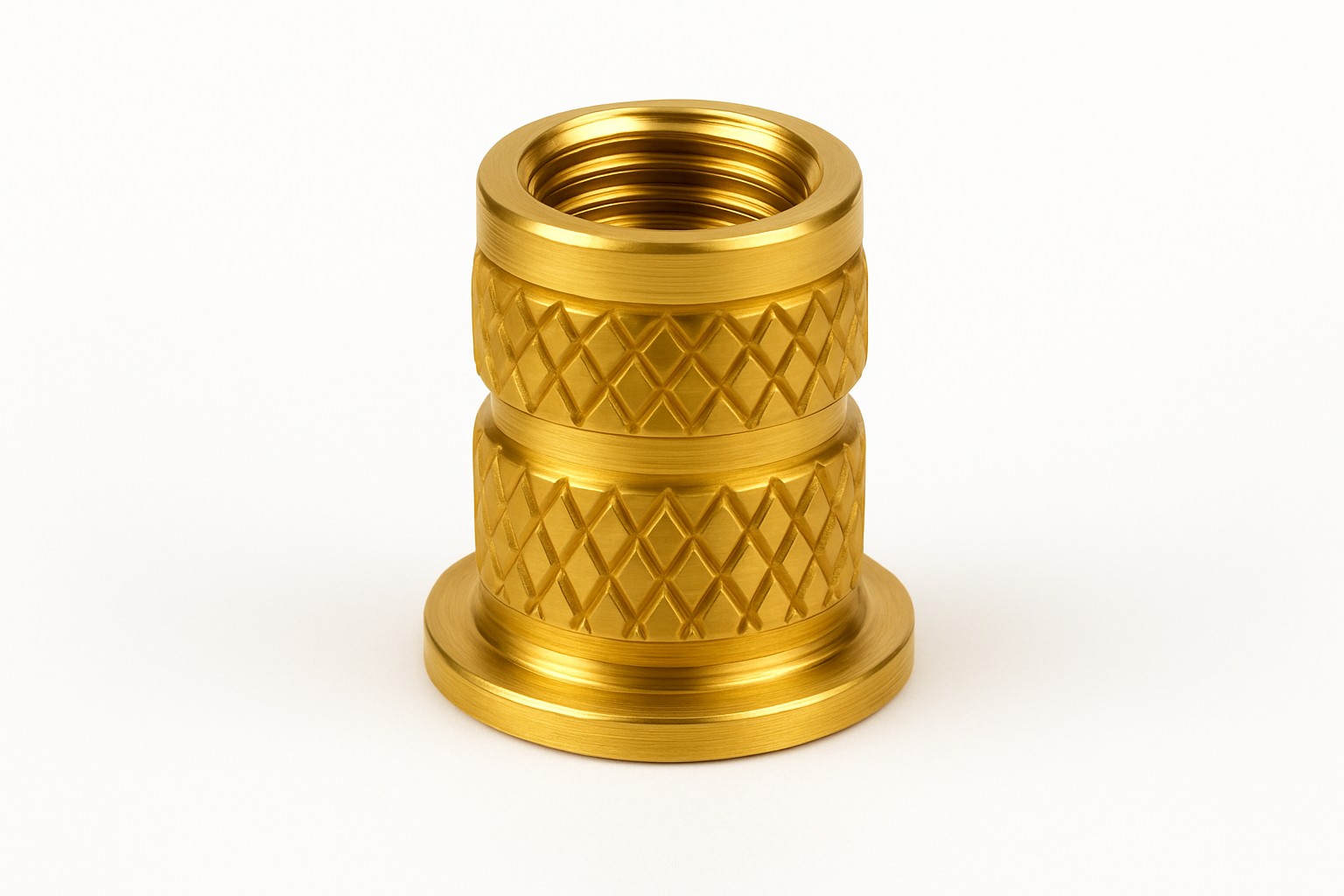
A top manufacturer applies strict standards because inserts fail when the thread form or knurl geometry drifts. We use certified brass grades like C36000, C27200, and C46400 because these alloys cut clean and hold size when the tooling is sharp and the feeds stay correct.
Thread accuracy stays controlled with calibrated GO and NO-GO gauges. We replace taps by part count to prevent pitch errors and minor diameter drift. ISO thread fit standards guide our acceptable limits.
Surface finish confirms cutter condition. Brass shows tool wear fast, so tearing or drag marks signal the need for a cutter change. We use contact gauges on critical parts to avoid finish-related seating issues.
These steps come from repeatable standards. No guessing. No random adjustments. No mixed-job offsets.
Ensuring Consistency Across All Brass Threaded Inserts Batches
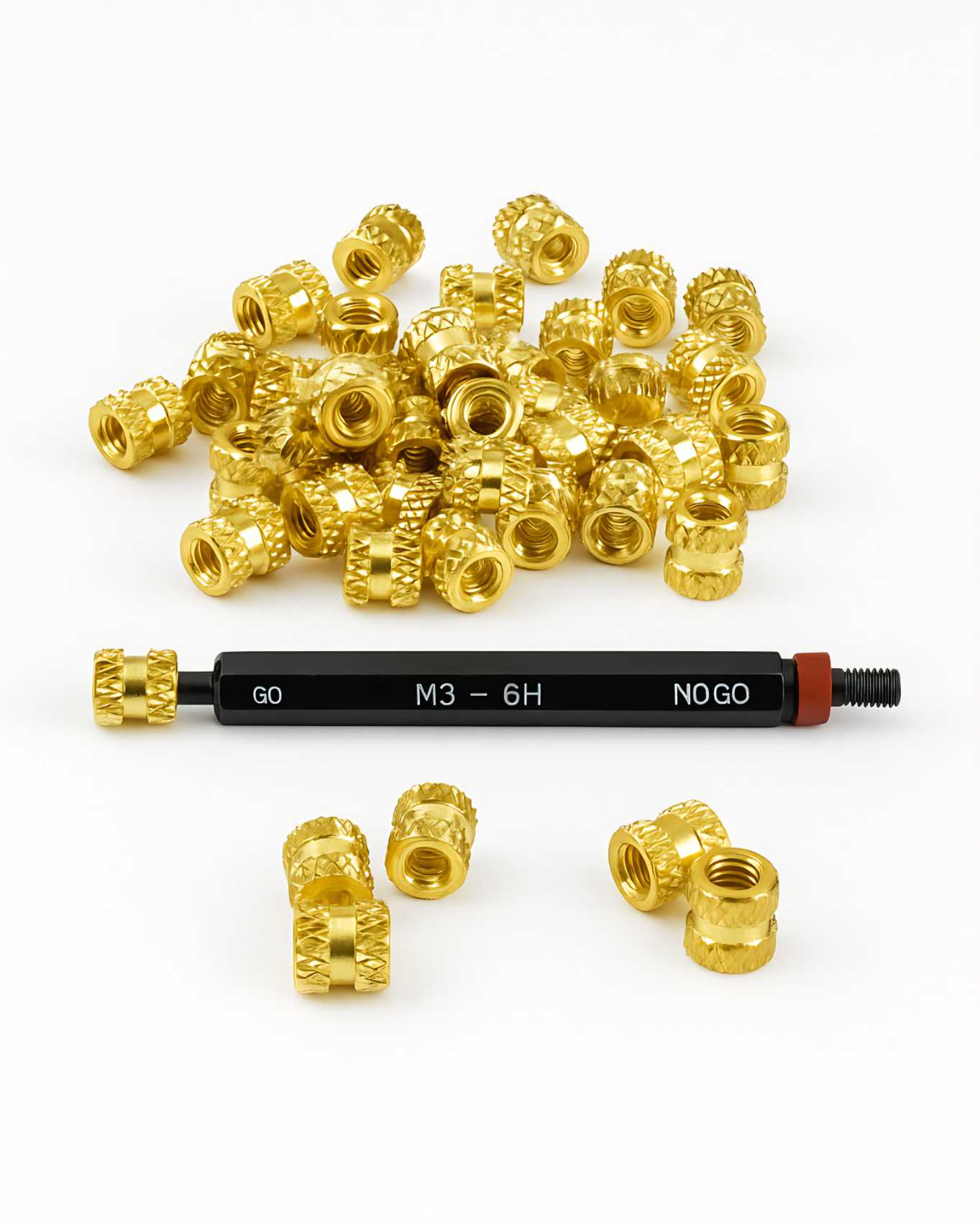
Consistency depends on controlled production. We run dedicated fixtures and locked offsets so the toolpath repeats without drift. This prevents the dimensional spread that happens in shops switching between unrelated parts.
Each batch begins with a first piece inspection that verifies diameter, knurl height, thread fit, and burr condition. If the first piece fails, the run does not continue. During production, we pull samples on a fixed schedule and record the results in the batch log. Any dimension movement triggers immediate correction.
Tool life is tracked with counters, not operator judgment. Dull cutters, worn taps, and fatigued knurl wheels create predictable defects.
Material traceability stays intact through lot numbers, certificates, inspection records, and tooling logs. Packing follows a fixed standard so batch identity never gets lost.
This system keeps one batch aligned with the next. Controlled process, controlled tooling, controlled material. That is why the output stays consistent.
Operational Reliability and Consistent Supply of Brass Inserts
A reliable brass inserts supplier keeps production stable. A dedicated line for inserts removes the delays that come from switching between different parts. The machines stay on one setup, so the output does not slow down. The operator works with the same dimensions every day, which reduces mistakes.
Supply depends on predictable material flow. Brass bars arrive in scheduled lots, and the supplier holds buffer stock so production does not stop when the market shifts. This prevents long gaps between orders. A shop without stock control cannot keep delivery times steady.
Lead time stays consistent when the workflow is fixed. A supplier running continuous insert production can plan each batch with accurate timing. Shops that jump between mixed jobs cannot guarantee this because their queue changes without warning.
Packing and logistics matter. Controlled packing reduces handling errors and keeps batches organized. A steady supplier uses the same packing format each time, so the customer receives uniform shipments without mix-ups.
This level of reliability comes from routine, stable scheduling, and uninterrupted machining. That is why a wholesale brass inserts supplier maintains consistent supply while smaller shops struggle.
Access to Expert Technical Support from Trusted Brass Manufacturers
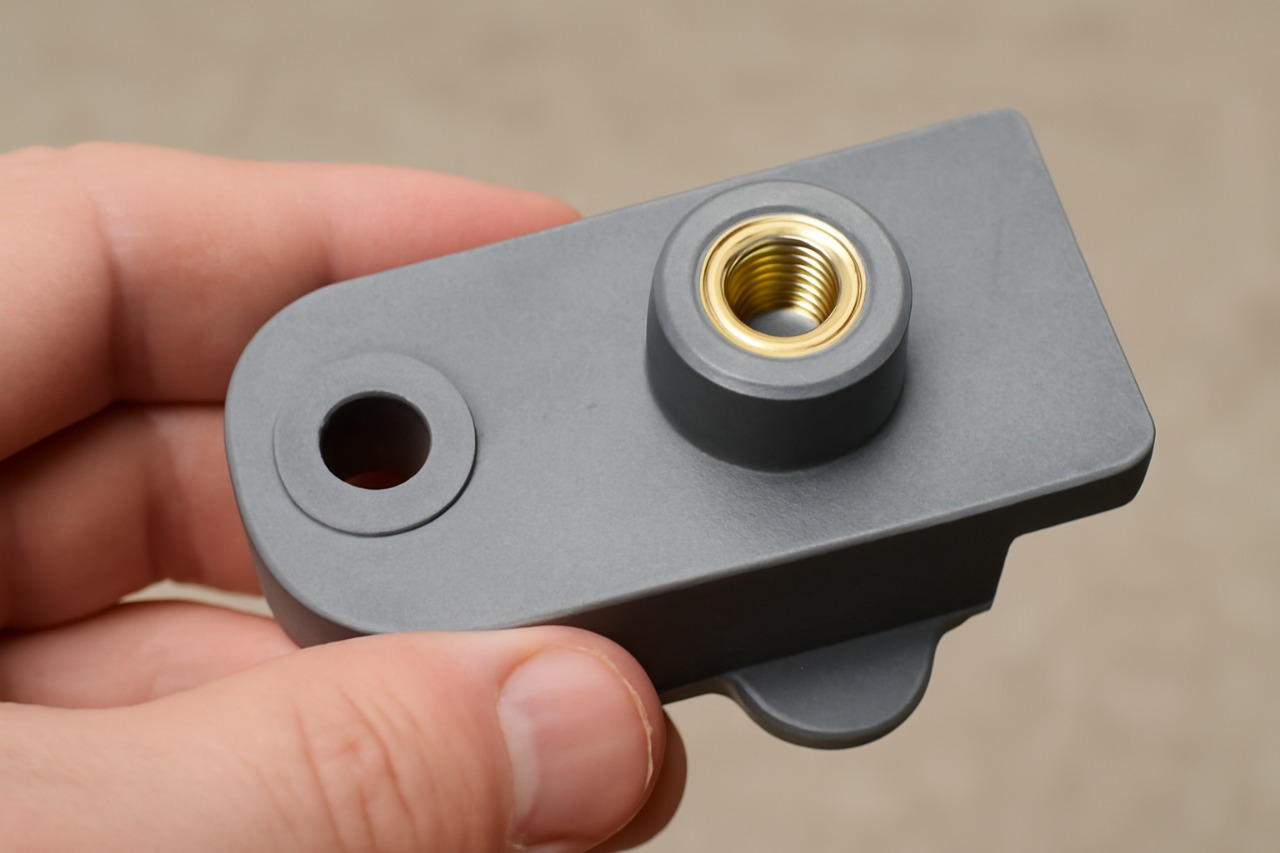
Real support comes from people who machine brass inserts every day. A trusted manufacturer understands how brass behaves under cutting forces, heat, and feed changes. That experience matters when a customer tries to fit an insert into a material that reacts differently under load. Technical support prevents redesigns by catching problems early.
A good supplier also reviews the drawing and points out issues before the part enters production. This reduces failure rates and speeds up the sourcing process.
A strong manufacturer gives direct answers, not assumptions. The team knows how knurling insert geometry affects pull-out strength. They know how wall thickness limits change when the molulding insert sits inside PA66, ABS, or POM. They also understand how thread fit changes the torque requirement. This type of support helps the customer avoid mistakes during assembly and molding.
Technical Consultation and Application-Specific Design Guidance
Design guidance works only when it comes from real machining knowledge. We look at the customer’s plastic grade, wall thickness, and assembly method before suggesting an insert style. Ultrasonic insertion needs a different knurl than press-fit. Heat staking needs a clean surface and controlled wall thickness. These details prevent cracking or loose seating.
We review the drawing for undercuts, relief depth, thread class, and tolerance range. A small change in length or minor diameter can remove a molding defect.
This type of consultation saves time. It avoids repeated mold revisions and keeps the insert compatible with the customer’s process.
Accelerating Bespoke Brass Threaded Inserts Development
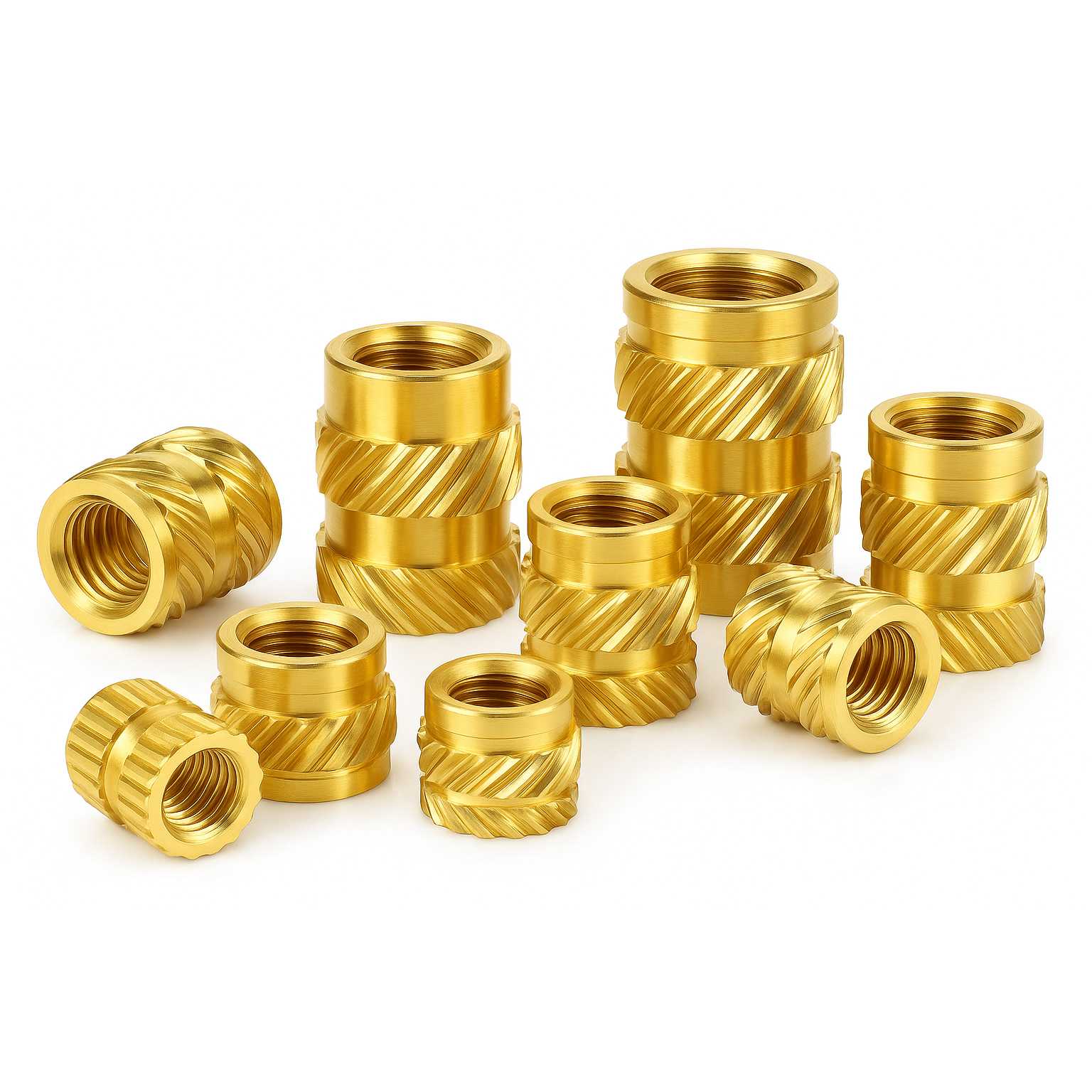
Custom inserts move fast when the process runs in a controlled environment. We start with a prototype that shows the fit, the knurl grip, and the thread behavior. One prototype round exposes weak points in the design. We adjust the dimensions and run a second pass until the insert behaves correctly in the customer’s material.
A dedicated insert line speeds up development because the tooling and fixtures are ready. We do not waste time finding the correct setup. The machine knows the work. The operator knows the response. That reduces trial cycles.
Once the prototype is approved, the part moves into volume without redesign. The same toolpath, tool selection, and inspection plan follow into production. This keeps the custom insert stable across every batch.
Ready to Optimize Your Sourcing? Partner with Hiren Brass Product
A reliable supplier protects your production from delays and inconsistent parts. We run dedicated brass insert lines, so the dimensions stay steady and the delivery stays predictable. You get inserts made from certified brass, controlled machining, and repeatable quality across every batch.
We also make custom brass threaded inserts when a standard size does not fit your design. You can send a drawing, a sample, or even a rough concept. We machine the insert to your exact requirements and keep the same process control used in our standard parts.
If you need custom insert as per your requirements, stable supply, consistent tolerances, and technical support that understands real machining behavior, shift your sourcing to us and remove uncertainty from your assembly line.