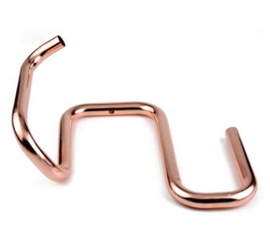
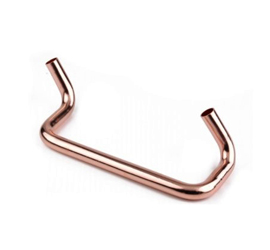
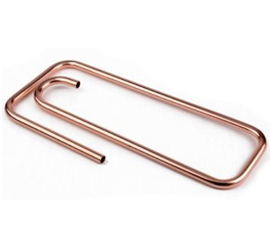
Copper tube fabrication and bending is a manufacturing process used to form copper tubing into functional parts for industrial and OEM applications.
The process includes copper tube bending, rolling, end forming, and brazed tube assemblies when required. Parts include U-bends, return bends, multi-plane bends, custom copper tube bends, and brazed tube assemblies.
These components are used in HVAC fittings equipment, refrigeration systems, heat exchangers, and general industrial assemblies.
We provide copper pipe bends and custom copper tube fabrication services built to approved drawings and specifications. Parts are produced for prototype and production requirements.
Finished components are supplied to OEM manufacturers and industrial buyers in the USA and across European markets, including Germany, France, Spain, the Netherlands, the UK, and Italy.
Request a Quote for Custom Copper Tube Bending Components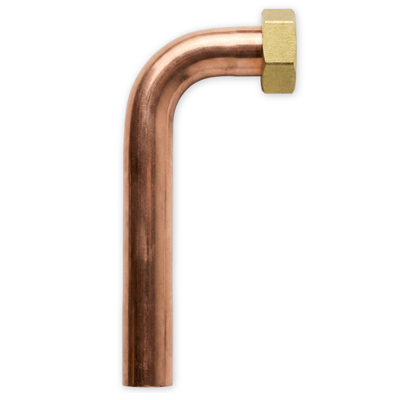
Material: Copper tube
Tube Size: Ø28 × 1 mm
Connection: G 1-1/4" brass nut assembly
Bend Angle: 90° L-bend
Vertical Length: 180 mm
Overall Height: 194 mm
Horizontal Dimension: 66 mm
Overall Horizontal Dimension: 80 mm
End Feature Length: 3 mm
Application:Fluid circulation line for heat pump and chiller units
Custom copper tube bending part manufactured from Ø28 × 1 mm copper tube with a 90° bend and 180 mm vertical length. The bent tube has a 194 mm overall height, 66 mm and 80 mm horizontal dimensions, and a 3 mm end section for fluid circulation lines in heat pump and chiller units.
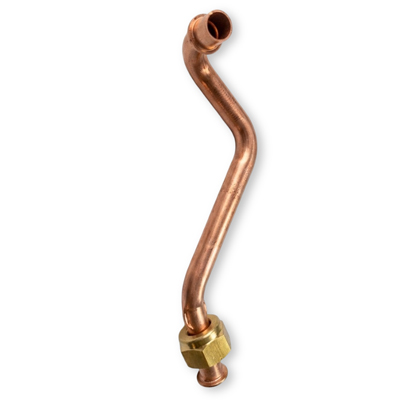
Material: 9.5 mm OD copper tube
Wall Thickness: 1.50 mm
Bends: Multiple bends formed as per drawing
End Forming: One end expanded to form collar
Nut Stop: Bead formed to retain 3/8" brass nut
Application: Central heating radiator and boiler equipment
This part was manufactured to customer drawing. The upper end was expanded to create a sealing collar. A bead was formed on the lower end to prevent the brass nut from sliding off. No brazing was used on this component.
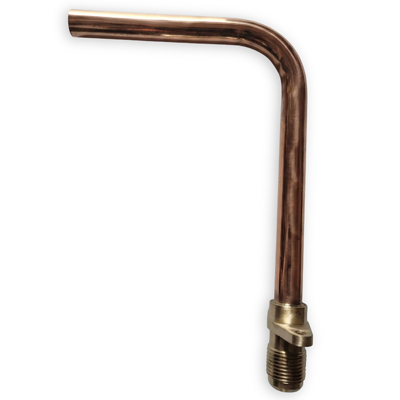
Material: free-cutting copper tube
Tube Diameter: 1/4 inch
Overall Height: 107 mm
Overall Length: 181.90 mm
Bend: Single bend 90° L-bend as per drawing
Straight Dimension: 148 mm
Horizontal Dimension: 73 mm
Horizontal Dimension: 54.19 mm
Flange Dimension: 10 mm
Additional Vertical Dimension: 73 mm
Flange: Brass flange inserted over tube and brazed
Joining: Standard brazing process
Application: Refrigerant line routing in HVAC equipment
This copper tube bend is formed to match the internal routing of HVAC equipment. Custom copper tube bending assembly made from 1/4 inch copper tube and fitted with a brass flange for refrigerant applications. The tube forms 80°, 90°, and 135° bends and follows the drawing dimensions, including 107 mm overall height, 181.90 mm overall length, 148 mm straight length, and the specified 73 mm and 54.19 mm dimensions. Bend position and straight length are controlled so the tube connects correctly with the mating refrigerant line. The brass flange is inserted over the tube and brazed to provide a fixed mounting point within the unit. The part is supplied as a finished fabrication component ready for OEM assembly.
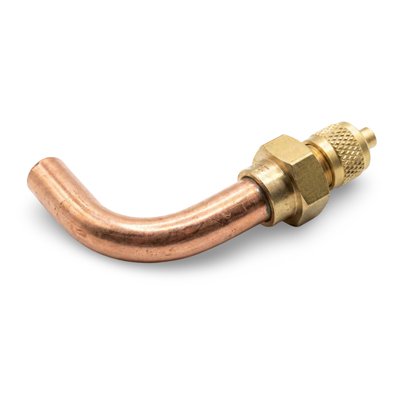
Material: copper tube
Bend: Single formed bend
Tube Size: 3/8 inch
Service Valve: Schrader valve body, 1/4 inch S.A.E. thread
Bend Radius: R13 mm
Vertical Dimension: 60 mm
Horizontal Dimension: 30 mm
Joint Method: Silver solder at the indicated connection point
Assembly: Refrigeration service valve brazed to tube
Application: Charging and servicing connection in Refrigerant service systems
The assembly uses a 3/8 inch copper tube with an R13 mm bend radius, 60 mm vertical dimension, 30 mm horizontal dimension, and a 1/4 inch S.A.E. threaded Schrader valve body. Silver solder joins the valve assembly to the copper tube at the specified connection point. The tube is bent to a controlled radius and joined to the valve body for use in refrigeration and HVAC charging, servicing, and testing operations. This part represents OEM copper tube bending with brazed valve assembly for refrigerant applications..
| Specification | Details |
|---|---|
| Material Standards | ASTM B280, ASTM B88 and custom copper grade as per drawing |
| Material Condition | Soft annealed and hard temper |
| Tube OD Range | 1/4" to 1-1/8" |
| Common Sizes | 1/4", 3/8", 1/2", 5/8", 3/4", 7/8", 1", 1-1/8" |
| Metric Sizes | 15 mm, 22 mm, 28 mm, 35 mm, 42 mm |
| Wall Thickness | Typically 0.8 mm to 1.2 mm |
| Bend Types | Single-plane and multi-plane |
| Bend Angles | 45°, 90°, 180° |
| End Forming | Flaring, expanding, flanging |
| Joining | Brazing, TIG welding |
| Nitrogen Purge | Applied during brazing |
| Inspection & Documentation |
Visual check for burrs Vernier / digital calipers, Go/No-Go thread gauges, height gauges, angle gauges Material test reports / mill heat certificates on request CMM and profile inspection via partners |
| Packaging |
Bag + label for standard orders Master Box + Wooden pallet |
| Lead Time |
Repeat orders: approximately 15-20 working days New orders: 25-30 working days Exact production time depends on the insert design and drawing. |
| Production Type | Prototype, medium volume, repeat production batches |
| Drawings Accepted | STEP (3D), PDF, DXF, and DWG files |
| Tooling Ownership | All tooling are customer-owned Tooling is never reused for other customers |
We process standard ACR copper tube for HVAC and industrial applications. Common grades include ASTM B280 and ASTM B88 copper tube as specified in customer drawings. Raw material is sourced according to project requirements. Material test certificates are available upon request from the raw material supplier.
Both soft annealed and hard temper copper tube can be fabricated depending on bend requirement and application.
Outer diameter range: 1/4 inch to 1-1/8 inch. Common inch sizes include 1/4", 3/8", 1/2", 5/8", 3/4", 7/8", 1", 1-1/2”, 1-1/4” and 1-1/8". Common metric equivalents include 15 mm, 22 mm, 28 mm, 35 mm, and 42 mm.
Typical wall thickness processed ranges from 0.8 mm to 1.2 mm. Other thicknesses are reviewed based on drawing and bend geometry.
We perform single-plane and multi-plane tube bending. Common bend angles include 45°, 90°, and 180° configurations. Tight radius bends are evaluated according to tube diameter and wall thickness to prevent excessive ovality.
Bend geometry is controlled using calibrated fixtures and angle gauges.
End forming operations include flaring, expanding, and flanging. Threading is available for specific applications where wall thickness allows.
Copper tube assemblies are joined using brazing and TIG welding as required. Nitrogen purge is applied during brazing to maintain internal cleanliness.
Pressure testing and leak testing can be arranged through certified third-party partners when specified.
Bend angle and dimensional features are verified using calibrated measuring tools and inspection fixtures. Dimensional verification is performed using vernier calipers and gauges.
CMM inspection is available through qualified partners when required by customer specification. Material certificates are available on request.
We support prototype samples before mass production. Production batches are also handled as regular supply. Output volume depends on tube size, bend complexity, and assembly configuration.
All components are fabricated strictly to approved customer drawings.
Copper tube bending depends on tube size, wall thickness, and final assembly layout. We choose the bending setup based on part geometry and installation requirement.
Rotary draw bending is used for most copper pipe bends in HVAC and refrigeration assemblies. It is suitable for single bends and multiple bends where repeatable shape is required.
Mandrel supported bending is applied when wall control is important. Internal support reduces wrinkling and keeps the tube round in tighter bends. It is used for thin wall tubing and parts where appearance and flow path matter.
End forming is part of our copper tube forming work. Tube ends can be expanded to create collars. Beads are formed to retain nuts. Flanges or fittings are assembled when required. These operations support complete copper tube fabrication rather than simple bending only.
All bending and forming work is carried out according to drawing dimensions. Angles and alignment are checked using gauges before dispatch.
Copper tube fabrication involves cutting, bending, end forming, and assembly according to customer drawings. Each step is controlled to maintain fit, alignment, and dimensional accuracy.
Raw copper tube is cut to specified lengths. Tube ends are cleaned and deburred to prepare for bending and brazing.
Tight-radius bends and specific suction-line parts are annealed when required to reduce cracking risk during bending.
We flare, expand, and bead tube ends as specified on the drawing. These operations prepare the tube for assembly, sealing, and nut retention.
Components are assembled and brazed using appropriate filler material. Silver brazing is applied when specified. Nitrogen purge is used during brazing where required.
Dimensional checks are performed using calipers, vernier instruments, and gauges. CMM inspection, material reports, pressure testing, and leak testing are available via certified partners when specified.
Finished parts are capped, protected, and packed to prevent damage during shipment.
We manufacture custom copper tube and copper pipe bends according to drawing requirements. From simple 90 degree bends to multi-bend assemblies, parts are produced for HVAC, refrigeration, and OEM fabrication projects.
Standard elbow used for directional turns in copper pipe systems. Common in HVAC units, chillers, and mechanical assemblies. Formed to maintain consistent bend radius and alignment.
U-shaped bend typically used in heat exchangers and coil circuits to reverse flow direction. Produced with controlled centerline radius to maintain roundness and flow integrity.
Wider radius U-configuration used in suction lines and longer loop assemblies. Bend control is important to prevent flattening and maintain internal flow area.
General category covering single-bend and multi-radius copper tube fabrication parts. Built to drawing with optional end forming when required.
Single-plane 90° configuration used where installation space is limited or routing requires offset geometry.
Multi-bend or special geometry parts built to print for OEM assemblies, manifolds, and equipment layouts. End forming such as flaring, expanding, or bead forming can be applied based on assembly requirements.
These applications represent common end-use sectors for our copper tube bending services and fabrication work.
We bend copper tube and copper pipe for suction, liquid, and discharge lines in split systems and rooftop units. Used in indoor coils, outdoor units, and refrigerant line sets.
Tubing for condensers and evaporators requires smooth internal bends to reduce pressure drop. U-bends and service bends are formed to match OEM spacing and installation clearance.
Used in walk-in units, display cases, condensing systems, and ice machines. refrigeration access valve, multi-bend tube assemblies and return bends are fabricated to drawing.
Compact routing is required inside enclosed units. Liquid and suction lines are bent to suit layout and connection points.
Copper tube assemblies are used in small and mid-size cooling systems. Manifolds and loop bends are produced to drawing.
Multi-bend copper tube assemblies are built to print for equipment manufacturers. End forming and brazing are applied as required. Pressure and leak testing are available via certified partners when specified.
Used for condensate removal in refrigeration and heat pump systems. Formed with gradual sweeps to prevent blockage.
Yes. Hard-drawn copper tube can be bent with suitable equipment, but it needs more force and more controlled tooling than annealed tube.
A bend radius that falls below the tube and tooling limits can cause wall deformation, flattening, buckling, cracking, or restriction of the flow area. The actual result depends on the tube size, wall thickness, temper, bend radius, and bending equipment.
Use the minimum bend radius specified for the tube and bending equipment instead of forcing a tighter bend.
Yes. Tube outside diameter and wall thickness affect the force, minimum bend radius, and achievable bend quality. A thicker tube does not automatically need the same bend radius as a smaller tube.
Yes. Temper strongly affects how easily copper tube bends. Annealed copper has greater ductility and generally suits tighter hand bends, while harder tube needs suitable equipment and usually a larger minimum bend radius.
Yes. Some copper tube bending operations can work without an internal mandrel, but the method depends on the tube, bend radius, equipment, and required result.
Copper tube can kink or flatten when the bending radius, tube temper, tooling, or bending method does not suit the tube.
The wrong bender can also create problems. A properly matched bender supports the tube and controls the bend, while poor tooling or an unsuitable radius can deform the tube wall.
Repeated bending in the same location can work-harden the copper and eventually cause cracking or breakage. The amount of damage depends on the tube, bend severity, and number of cycles.
For a production bend, make the required bend once with the correct equipment rather than repeatedly bending and correcting the same section.
To request a quotation for custom copper tube bending services, send your drawing in PDF, DWG, or STEP format with RFQ details.
Please include:
After receiving your RFQ, we review the drawing for manufacturability. Technical clarifications are discussed before quotation. Pricing and indicative lead time are issued prior to order confirmation.