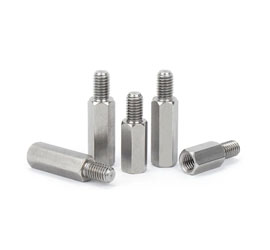
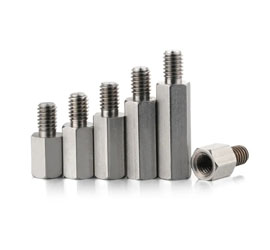
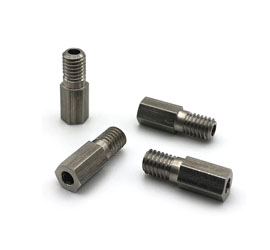
We are a manufacturer and supplier of custom steel and stainless steel spacers and standoffs, and we manufacture spacers and Standoffs according to customer drawings and specifications. We support custom thread sizes, holes, dimensions, and designs as per buyer requirements.
For steel and stainless spacers, we use CNC turning, CNC milling, threading, boring, step machining, and bolt-hole machining according to the spacer design. We support different steel materials including carbon steel grades and stainless steel grades.
We manufacture steel spacers in custom configurations such as round stainless steel spacers, steel threaded spacers, steel bolt spacers, hex steel spacers and standoffs, steel flat spacer, steel unthreaded spacers, steel shoulder spacer, steel spacers for bolts etc. Our steel spacers are used in machinery, mechanical assemblies, automotive, conveyor systems, electronics, flange and hinge assemblies.
We support prototypes, as well as medium to high-volume repeat orders. We supply steel spacers to customers in the USA and across European markets, including Germany, France, Spain, the Czech Republic, the Netherlands, Italy, and the UK.
Request a Quote for Custom Steel Spacers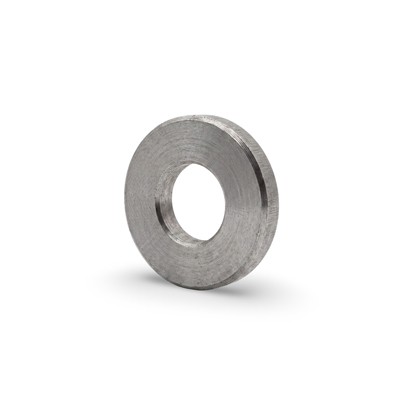
Material: Mild Steel (MS)
Spacer Type : Unthreaded Flat Spacer
Outside Diameter: Ø1.2500 ± 0.0100 inch [Ø31.75 ± 0.25 mm]
Inside Diameter: Ø0.437 ± 0.0100 inch [Ø11.11 ± 0.25 mm]
Thickness: 0.2500 ± 0.0200 inch [6.35 ± 0.51 mm]
Custom MS spacer, produced with a Ø1.2500 inch outside diameter, Ø0.437 inch inside diameter, and 0.2500 inch thickness. The round steel spacer maintains the specified dimensional tolerances for the outer diameter, bore, and thickness for accurate spacing and alignment in mechanical assemblies.
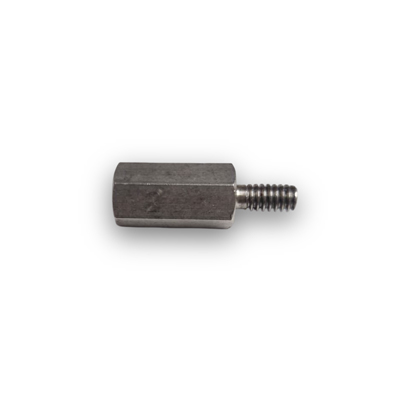
Material : SS304 Stainless Steel
Body Shape : Hexagonal
Female Thread : 1/4-20
Female Thread Depth : 0.625"
Thread Projection : 0.25"
Across Flats (AF): 1/2"
Body Length : 1.000"
Male Thread : 1/4-20
Male Thread Length : 0.500"
Manufacturing Process : CNC turning, hex machining, drilling, internal threading, and external threading
Custom SS304 stainless steel hex spacers standoffs with a 1/2 inch AF body and 1.000 inch length, combining 1/4-20 male and female threads in one compact spacer. CNC turning, hex machining, drilling, and threading produce the dual-threaded design for component spacing, mounting, and assembly applications.
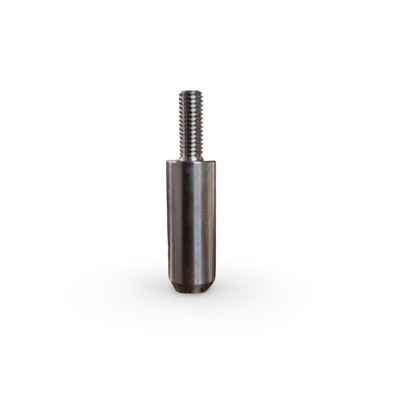
Material: SS316 Stainless Steel
Type : Male threaded standoff
Male Thread : 10-32
Thread Length : 0.500"
Outer Diameter (OD) : Ø0.375"
Overall Length : 1.000"
Pilot Diameter : Ø0.193"
Pilot Length : 0.040"
End Feature : Chamfered body end
Chamfer Length : 0.100"
Custom SS316 male threaded stainless steel standoff with a Ø0.375 inch outer diameter and 1.000 inch overall length. The standoff features a 10-32 male thread with a 0.500 inch thread length, Ø0.193 inch pilot, 0.040 inch pilot length, and a 0.100 inch chamfered end.
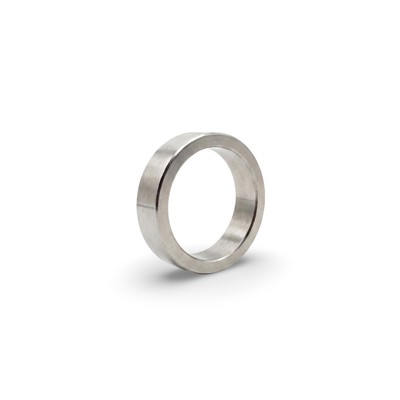
Material: SS304
Spacer Type: Cylindrical/Ring spacer
Outside Diameter: 1.38 inch
Inside Diameter: 1.10 inch
Thickness: 0.138 inch
Height: 0.31 inch
Custom SS304 cylindrical stainless steel spacer manufactured with a 1.38 inch outside diameter, 1.10 inch inside diameter, 0.138 inch thickness, and 0.31 inch height. This round stainless steel spacer for bolts provides controlled separation and positioning between components in mechanical assemblies, mounting systems, and equipment structures.
| Item | Steel Spacer Specification |
|---|---|
| Material | Carbon Steel, Low-Carbon Steel, Stainless Steel, and customer-specified steel grades |
| Manufacturing Process | CNC turning, CNC milling, drilling, boring, tapping, threading, step machining, chamfering, and deburring according to part requirements |
| Dimensions | Custom OD, ID, length, wall thickness, shoulder dimensions, and overall dimensions according to customer drawings |
| Steel Spacer Types | Round / Tubular Spacers, Standoffs, Threaded Spacers, Unthreaded spacers, Hex Spacers and Standoffs, Flat Spacers, Shoulder Spacers, and custom designs |
| Thread Type | Metric, UNC, UNF, and customer-specified thread standards |
| Thread Size | According to customer drawing and spacer design |
| Surface Finish | Plain, black oxide, zinc coating, electroless nickel plating, and other customer-specified finishes according drawing. |
| Tolerance | According to customer drawings and critical dimension requirements |
| Inspection | Dimensional inspection of critical dimensions according to customer drawings and specifications |
| Material Certification | Available on request |
| Packaging | Customer-specified packaging requirements |
| Typical Lead Time | Approximately 3-4 weeks depending on quantity, part complexity, and finish |
| Minimum Order Quantity (MOQ) | Depends on part complexity, material, manufacturing process, and production requirements |
| Drawings Accepted | STEP, PDF, DXF, and DWG files |
| Tooling | Custom tooling according to production requirements |
Steel spacers come in different shapes and constructions to maintain spacing, support loads, and provide a defined mounting distance.
The round steel spacers shape is a cylindrical body with a through bore. Used to maintain a fixed distance between two components, with a bolt, screw, rivet, or rod passing through the bore. Low-carbon steel is commonly used for round spacers, but round stainless steel spacers are also available.
The stainless steel threaded spacers has a cylindrical body with internal or external threads, and in some geometries, both male and female threads. Used to provide a fixed spacing distance while also creating a threaded fastening point. Common configurations are female-female and male-female.
Hex steel spacers (hex spacers standoffs) have a six-sided body with different thread arrangements. The hex body provides wrench flats for installation, and the threaded sections maintain spacing and join components. Common configurations for stainless steel standoff spacers are female-female and male-female steel standoff versions.
A flat spacer has a thin plate or ring-shaped body, generally with unthreaded geometry. Stamping is a suitable production method for flange spacers, depending on the thickness, geometry, tolerance, and production requirements.
A shoulder spacer has a stepped cylindrical body with a shoulder. Used to position a component at a defined height and to provide a locating shoulder in an assembly. The shoulder positions and supports a component at a fixed height, while the remaining section can fit through the mating hole according to the design.
We manufacture custom steel spacers from stainless steel and steel grades according to customer requirements. Steel spacers are available in low-carbon steel, spring steel, and stainless steel. Hardened steel spacers are used for applications that require higher hardness, strength, and wear resistance.
Low-carbon steel is a common material for roll-formed tubular spacers. Low-carbon steel is an less costly. Cost, formability, and suitability for tubular spacer production. Used in general spacer applications where the service environment does not require high corrosion resistance. Zinc plating and coating as a corrosion-protection option.
Common grades are used for USA UNS G10060, G10080, and G10100, as well as European grades DC04, DC03, and DC01 for spacer products. AISI 1018 Carbon Steel provides good machinability, and AISI 1018 Carbon Steel is a low-carbon steel grade.
Spring steel has higher carbon content and spring-related mechanical requirements. Common grades are SAE 1050, SAE 1075, SAE 1095. These grades are used in applications that require spring behavior.
Stainless steel grades provide corrosion resistance. Strength and other properties depend on the stainless steel grade and material condition. Additional corrosion protection may not be required depending on the grade and service environment. Common ss spacers grades are SS 301, SS 304, and SS 316.
| Steel material / grade | Main characteristic | Spacer use |
|---|---|---|
| Low-Carbon Steel | Economical and suitable for tubular spacer production | General-purpose tubular spacers |
| AISI 1018 | Low-carbon steel with good machinability | Machined spacers |
| AISI 1045 | Medium-carbon steel; suitable for machining | Machined/custom spacers |
| SAE 1050 | Spring-steel grade | Spacer applications requiring spring properties |
| SAE 1075 | Higher-carbon spring steel | Spacer applications requiring spring properties |
| SAE 1095 | High-carbon spring steel | Spacer applications requiring spring properties |
| 304 Stainless Steel | Corrosion-resistant stainless steel | General corrosion-resistant spacer applications |
| 316 Stainless Steel | Higher corrosion resistance, particularly in chloride environments | More demanding corrosive environments |
| 316L Stainless Steel | Low-carbon version of the 316 stainless-steel family | Applications requiring 316L specifically |
Choose steel spacers when the spacer needs higher strength, higher columnar strength, and greater resistance to clamp load. Choose aluminum spacers when reducing weight matters more and the application can accept its lower strength.
A thicker spacer increases the distance between the components. If the specified length is wrong, it can prevent the assembly from reaching the intended position . For tubular spacers, increasing wall thickness also increases the bearing area and can increase columnar strength, but the spacer length still has to match the assembly design.
A steel spacer and a wheel adapter perform different jobs, so neither is generally “better.” A spacer adds distance between components while keeping the existing relationship between them. A wheel adapter changes the wheel mounting interface, such as the bolt pattern, and may also change wheel offset. Use a spacer when the existing wheel mounting pattern already works and you only need additional clearance. Use an adapter when the wheel and hub require a different mounting pattern. The exact fitment and vehicle application determine the correct part.
Start with the load, spacer length, outside diameter, inside diameter, wall thickness, and material. A thicker-wall tubular spacer can provide greater columnar strength and a larger bearing area than a thinner-wall spacer.
Yes. Carbon steel can rust when moisture reaches the metal. carbon-steel spacers as suitable for dry environments and states that moisture causes them to rust. Use finishes such as zinc coatings or other protective treatments when the application needs additional corrosion protection.
Choose carbon steel when the environment and corrosion requirements allow it and the main requirements are mechanical performance and cost. Choose stainless steel when the spacer will face moisture, outdoor exposure, salt, or other corrosive conditions that require greater corrosion resistance.
A coating protects the steel only where the coating remains effective. Corrosion can occur when the coating becomes damaged, when the environment exceeds the coating's resistance, and when the coating does not adequately cover all required surfaces.
A properly selected spacer can carry the intended clamp load, but you cannot determine that from the material alone. The design needs enough wall thickness and bearing area to carry the load without excessive compression, indentation, and column failure. Columnar strength, wall thickness, bearing area, material, and clamp load as selection factors.
To request a steel spacer quotation, send your drawing and RFQ details.
Please include:
Send your RFQ and drawings to receive a quotation with pricing and indicative lead time.