

OEM Brass Inserts Manufacturer And Supplier | Custom Brass Inserts For Plastic
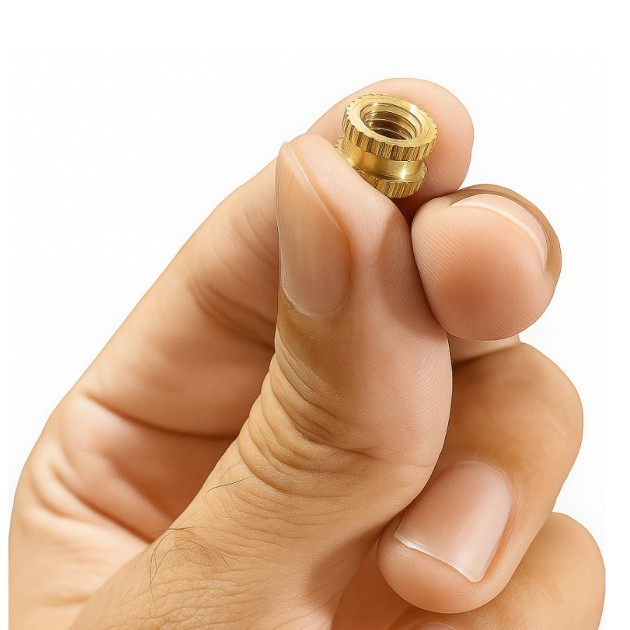
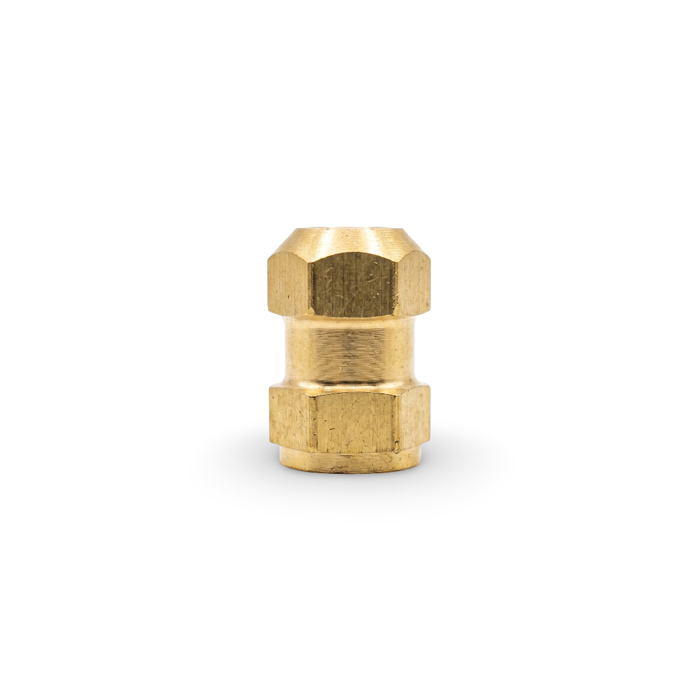
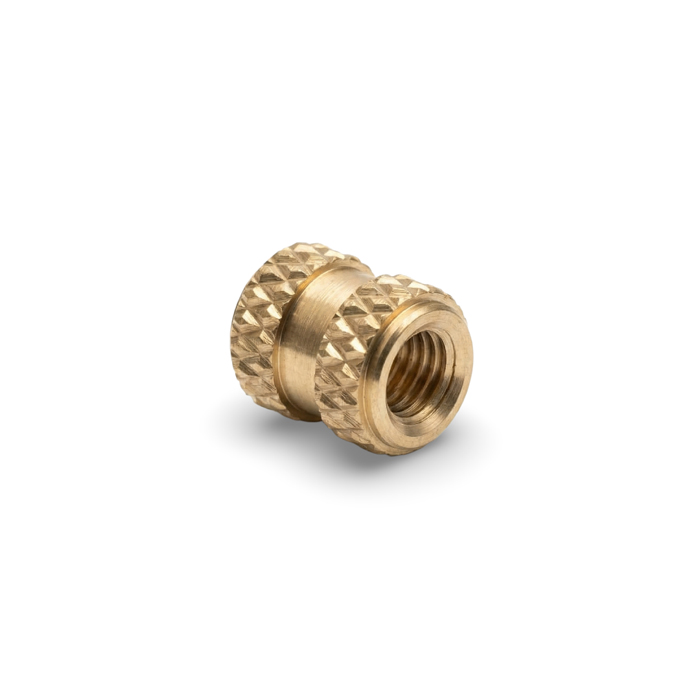
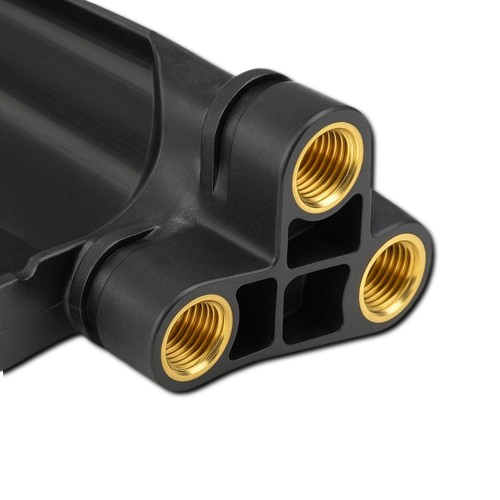
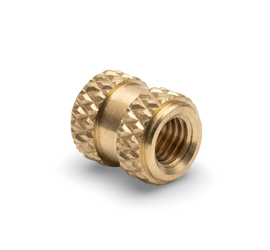
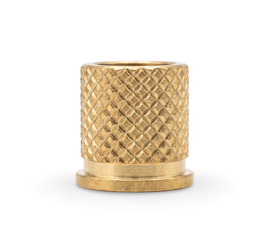
A brass threaded insert is a small brass component with an internal thread installed into another material to provide a secure connection point. The outside of a brass insert is designed to hold it in the host material, and the brass insert's internal thread accepts a screw after installation. The brass insert nut can be installed in materials such as plastic, wood, composites, and some light metals.
We are a brass insert manufacturer and supply brass inserts to OEMs, distributors, and industrial buyers in the United States, Asia, and across European markets, including Germany, France, Spain, the Czech Republic, the Netherlands, the UK, and Italy.
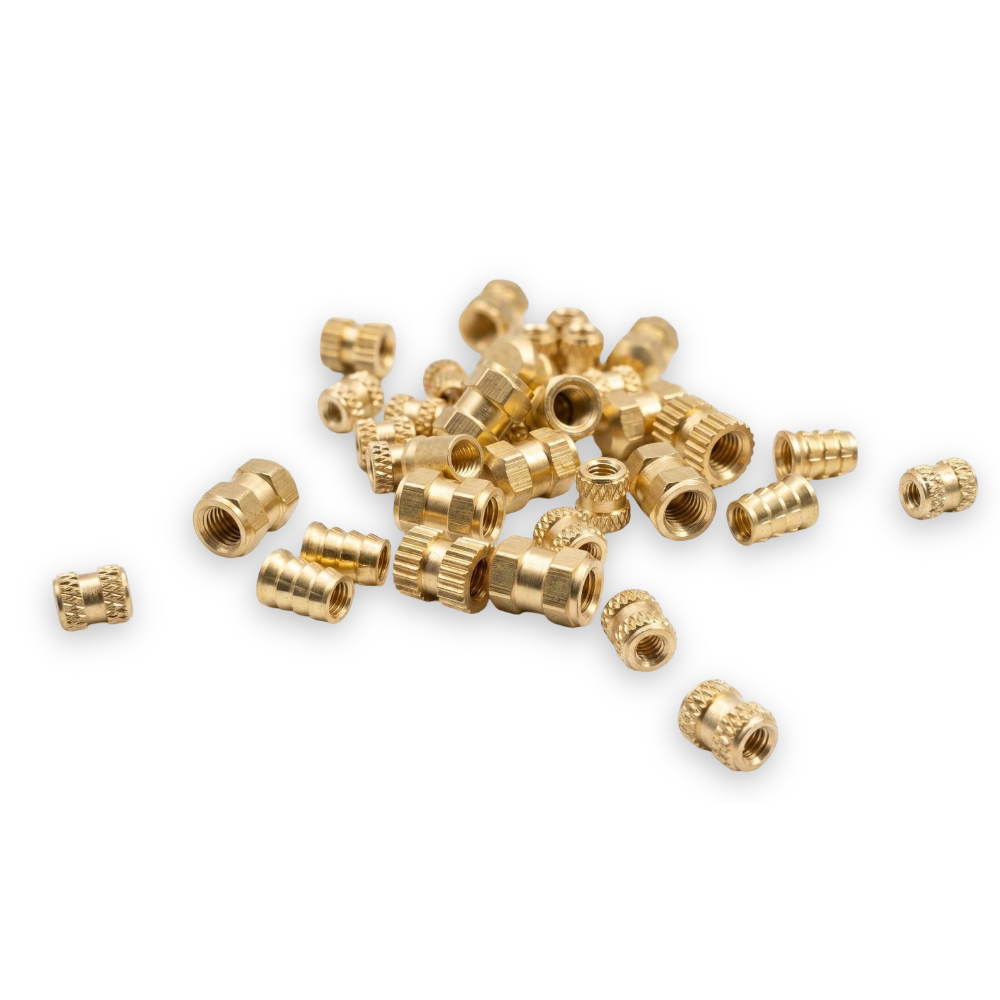
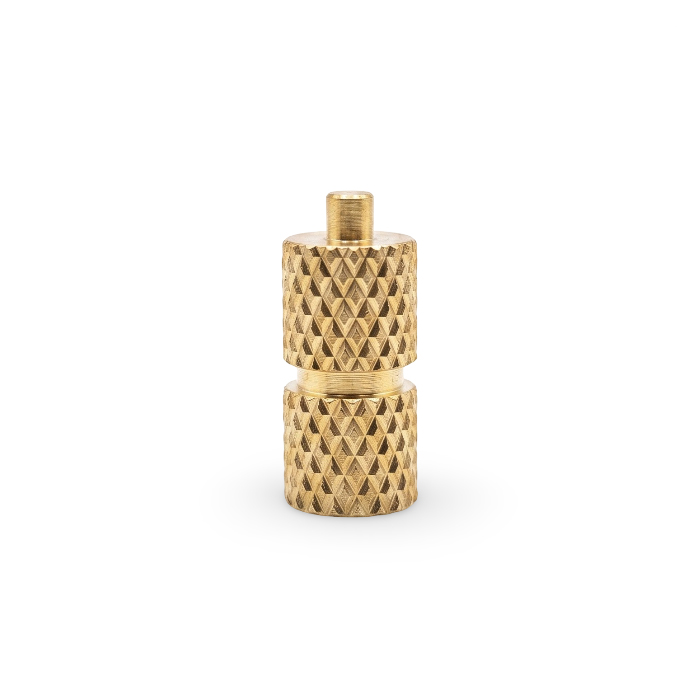
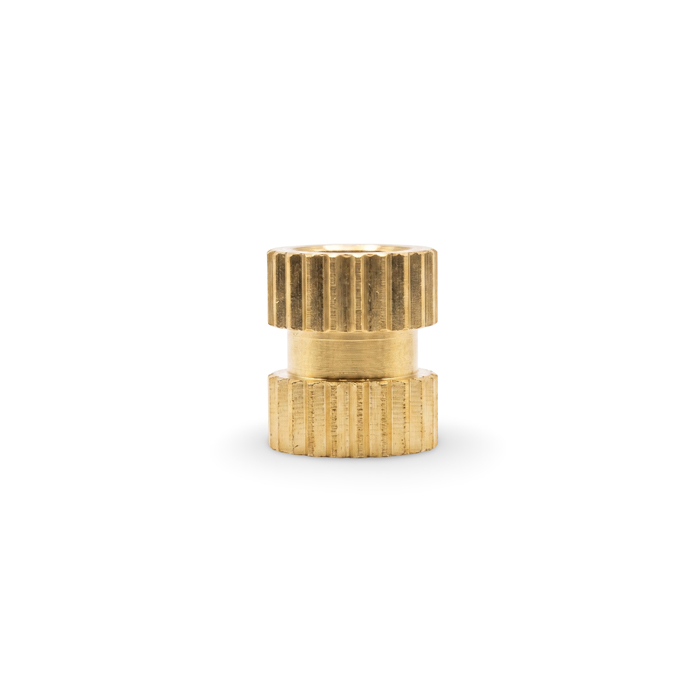
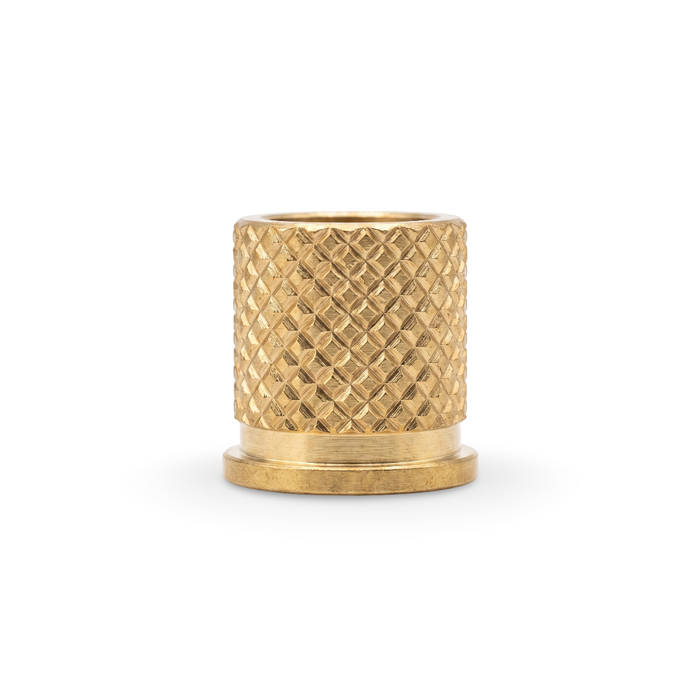
All our custom brass inserts will be manufactured according to customer drawings, samples, and specifications. We support custom thread sizes, knurl patterns, dimensions, and designs as per buyer requirements. We manufacture custom brass inserts in various knurl patterns and configurations, including straight knurls, diamond knurls, flanged, blind, slotted, and through-thread designs. These brass screw inserts can be produced for heat-set, press-fit, ultrasonic, and molded-in applications. We produce custom brass threaded inserts for electronics, plastic injection molding, electrical assemblies, automotive components, and 3D printed parts. We support both inch and metric thread configurations.
We support medium- to high-volume production requirements. Samples and a small batch are also supported for quality and testing.
Send Your Drawing for a Custom Brass Insert QuoteRecent OEM Brass Inserts Projects
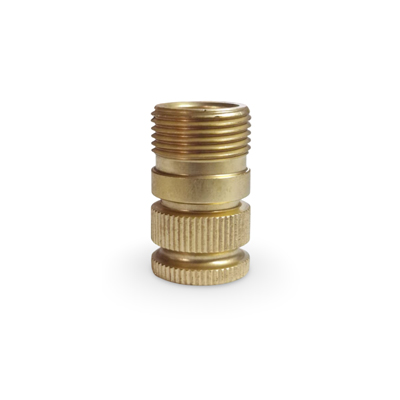
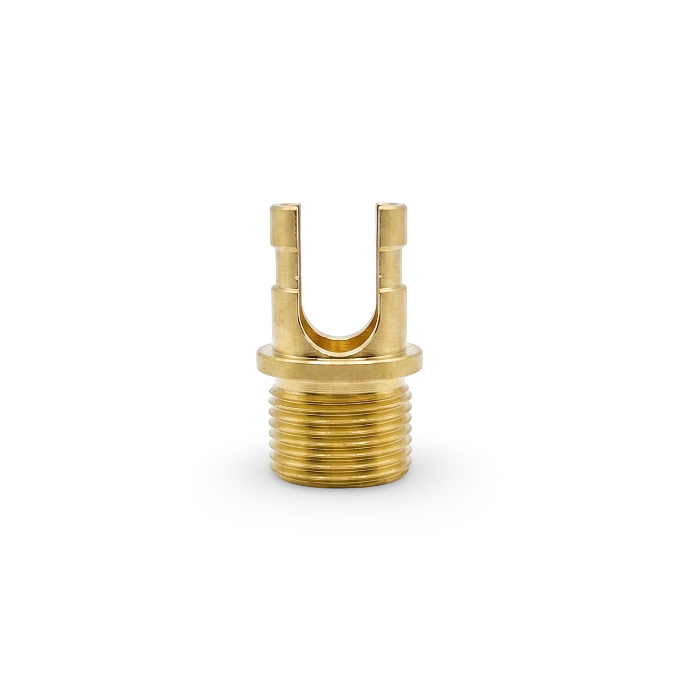
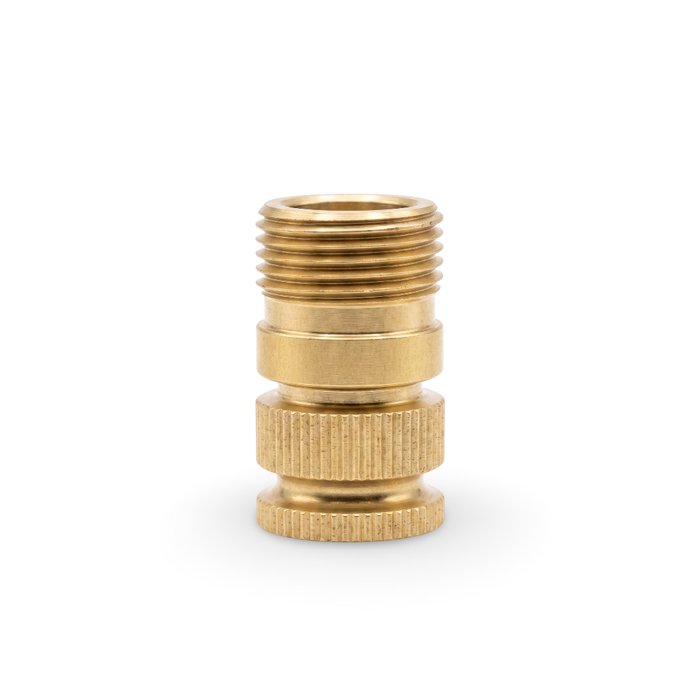
Custom CNC Machined Knurled Brass Insert
Manufacturing Process: CNC Machined
Thread: 9/16-24 UNEF-2A
Overall Length: 0.955 in
Thread Length: 0.275 in
Minimum Full Thread: 0.28 in
Threaded Section Diameter: Ø0.500 in
Knurled Section Diameter: Ø0.383 in
Knurled Section Length: 0.260 in
Lower Shoulder Height: 0.061 in
Shoulder Length: 0.080 in
Transition Angle: 10°
Minor Diameter Before Knurl: Ø0.563 in
Major Diameter After Knurl: Ø0.575 ±0.002 in
Top Chamfer: 45°
Orientation Flat: 0.249 in
Starting Material: Round Stock Ø0.563 in
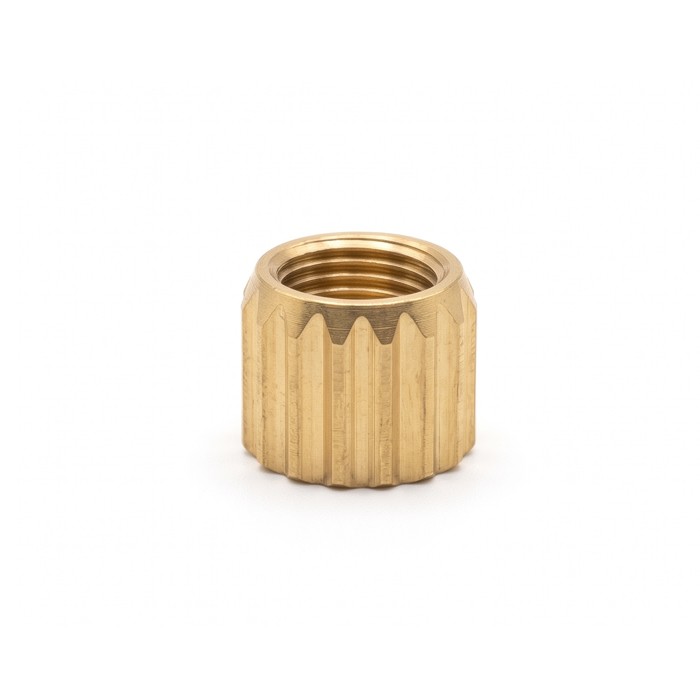
Custom CNC machined full form knurled brass threaded insert manufactured with a 9/16-24 UNEF-2A external thread, 0.955 in overall length, and a full form knurled body. The insert features a major knurled diameter of Ø0.575 ±0.002 in, thread relief per ASME B1.1 Form A, and an orientation flat, manufactured according to the customer drawing.
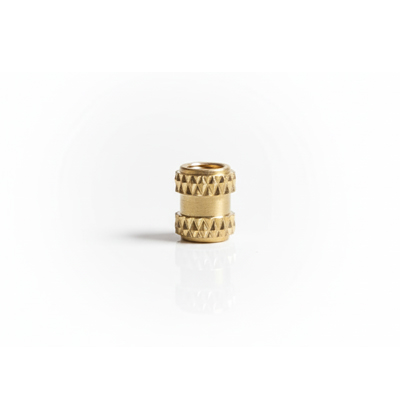
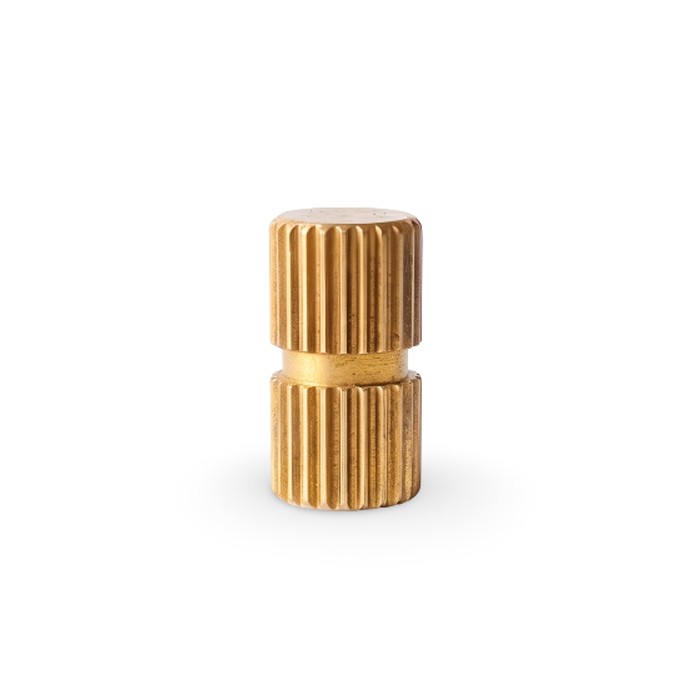
Brass Diamond-Knurled Insert
Thread: M3
Outer Diameter (OD): Ø6 mm
Overall Length: 7 mm
Knurl Type: Diamond Knurl
Upper Knurled Section Length: 2 mm
Center Section Length: 2 mm
Lower Knurled Section Length: 2 mm
Chamfer: 0.5 mm
Brass heat set inserts manufactured with an M3 internal thread, Ø6 mm outside diameter, and 7 mm overall length. Designed as an M3 heat insert for reliable heat set installation, the insert features diamond knurling on both ends, a 2 mm center section, and a 0.5 mm chamfer, manufactured according to the drawing for use in injection-molded plastic components.
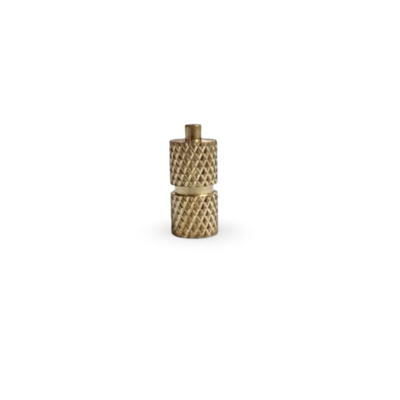
Custom Diamond-Knurled Brass Terminal Insert With Silver Brazing
Component Type: Terminal Insert
Application: Plastic Molding
Thread: 6-32 Internal Thread
Overall Length: 0.500 in
Body Diameter Before Knurling: Ø0.240 in
Body Diameter After Knurling: Ø0.260 ±0.010 in
Upper Body Length: 0.250 in
Lower Body Length: 0.220 in
Center Relief Width: 0.060 in
Pilot Diameter: Ø0.085 in
Pilot Length: 0.070 in
Internal Bore Diameter: Ø0.200 in
Knurl Type: Medium Diamond Knurl
Chamfer: Ø0.17 Max
Custom diamond-knurled brass terminal insert manufactured with a 6-32 internal thread, Ø0.260 ±0.010 in outside diameter after knurling, and 0.500 in overall length. The insert features medium diamond knurling to improve retention in plastic molded components and is designed for terminal assemblies joined by silver brazing.
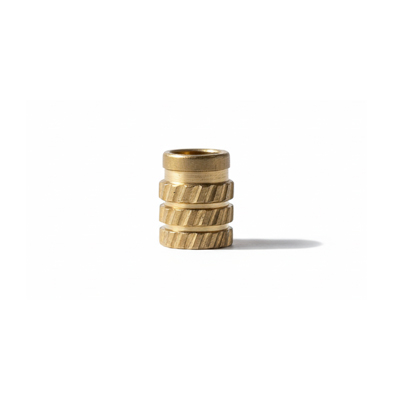
Custom Brass Insert
Material: Brass
Insert Type: Helical Knurled Insert
Thread: 6-32 UNC
Outer Diameter (OD): Ø4.90 mm
Inner Bore Diameter: Ø3.50 mm
Reduced Center Diameter: Ø4.10 mm
End Diameter: Ø4.40 mm
Overall Length: 6.30 mm
Knurl Type: Helical Knurl (15 Teeth × 0.30 mm Deep)
Knurl Profile: Approx. 20°
Chamfer: 45°
Entry Chamfer: 0.2 mm
Custom helical knurled brass threaded insert manufactured with a 6-32 internal thread, Ø4.90 mm outside diameter, and 6.30 mm overall length. The insert features a 15-tooth helical knurl with 0.30 mm depth and is manufactured according to the specified drawing dimensions for plastic injection molded components.
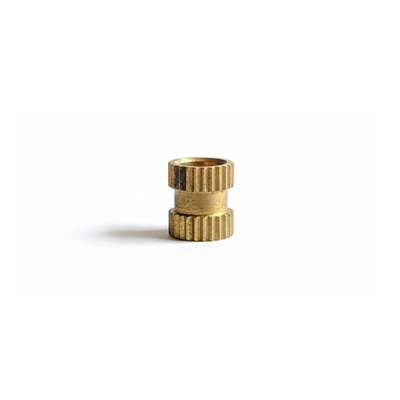
Brass Straight-Knurled Press-In Insert
Insert Type: Straight Knurled Brass Insert
Thread: M4 ISO Metric
Outer Diameter (OD): 7.80 mm
Reduced Center Diameter: 6.55 mm
Overall Length: 8.90 mm
Knurl Type: Straight Knurl
Knurled Section Length: 3 mm
Custom straight knurled brass insert manufactured with an M4 ISO metric internal thread, Ø7.80 mm outside diameter, Ø6.55 mm reduced center section, and 8.90 mm overall length. The insert features straight knurling on both ends with a reduced center body and is manufactured according to the specified dimensions for press-in installation in OEM plastic assembly applications and injection-molded components.
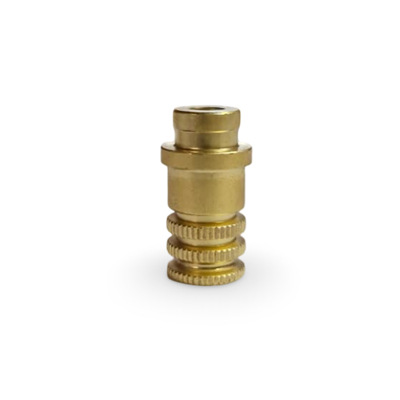
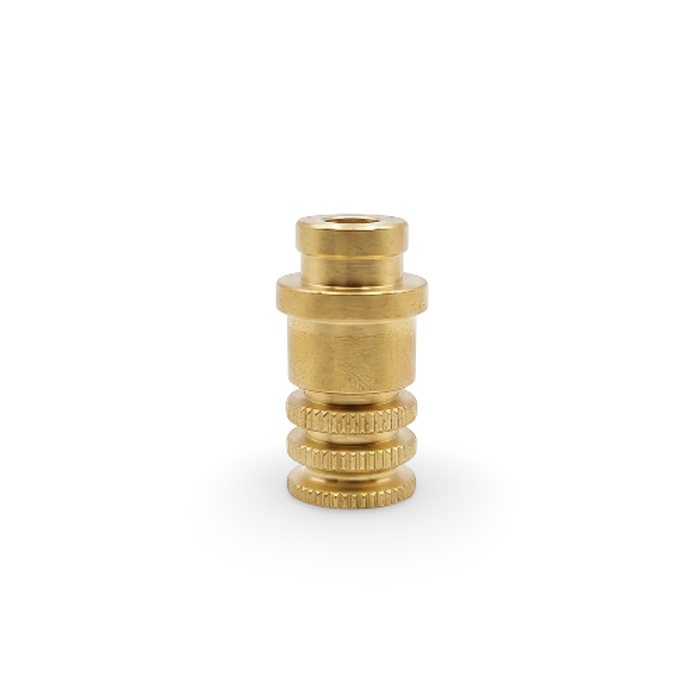
Custom Straight Knurled Brass Insert Nut
Manufacturing Process: CNC Machined
Overall Length: 0.93 in
Top Diameter: Ø0.185 in
Top Flange Diameter: Ø0.50 in
Upper Body Diameter: Ø0.37 in
Lower Body Diameter: Ø0.34 in
Knurled Section Diameter: Ø0.43 in
Center Neck Diameter: Ø0.181 in
Lower Neck Diameter: Ø0.33 in
Knurl Type: Straight, 32 TPI
Minor Diameter Before Knurl: Ø0.430 in
Major Diameter After Knurl: Ø0.444 ±0.002 in
Knurl Width: 0.334 in
Top Shoulder Height: 0.10 in
Second Shoulder Height: 0.10 in
Shoulder Thickness: 0.092 in
Taper Angle: 100°
Lower Radius: R0.08 in
Lower Groove Width: 0.042 in
Lower Knurled Section Diameter: Ø0.33 in
Bottom Diameter: Ø0.31 in
Custom straight knurled brass nut retainer manufactured with a full form 32 TPI straight knurl, Ø0.444 ±0.002 in major knurled diameter, and 0.93 in overall length. The multi-step body and full form knurl are designed to provide secure mechanical retention when installed into a mating component.
Brass Inserts – Specifications & Capabilities
| Specification | Details |
|---|---|
| Manufacturing Method |
Dedicated automatic brass insert machines CNC machining for Large and Special Insert Requirements |
| Materials |
Brass C36000 Brass CW614N(CuZn39Pb3) Brass IS 319 Grade 1 Custom grade according requirements |
| Insert Types |
Brass press-in inserts Brass heat-set inserts Brass molding inserts Brass self-Tapping inserts Brass flange inserts Brass ultrasonic inserts Custom brass inserts as per requirements |
| Typical Size Range |
Small to big inserts used in plastic molding (exact limits reviewed per drawing) |
| Thread Types |
Metric: M2, M2.5, M3, M4, M5, M6, M8, etc. Imperial: #2-56, #4-40, #6-32, #8-32, #10-24, 1/4-20, and other UNC/UNF sizes according to drawing Blind and through threads as per design and other custom specified threads |
| Knurl Type | Straight, Diamond, Helical/Diagonal, Cross, and Annular knurling. custom knurl patterns and external retention features according to requirements. |
| Dimensional Control |
OD typically around ±0.10 mm depending on size Tighter tolerances reviewed case by case according to drawing. |
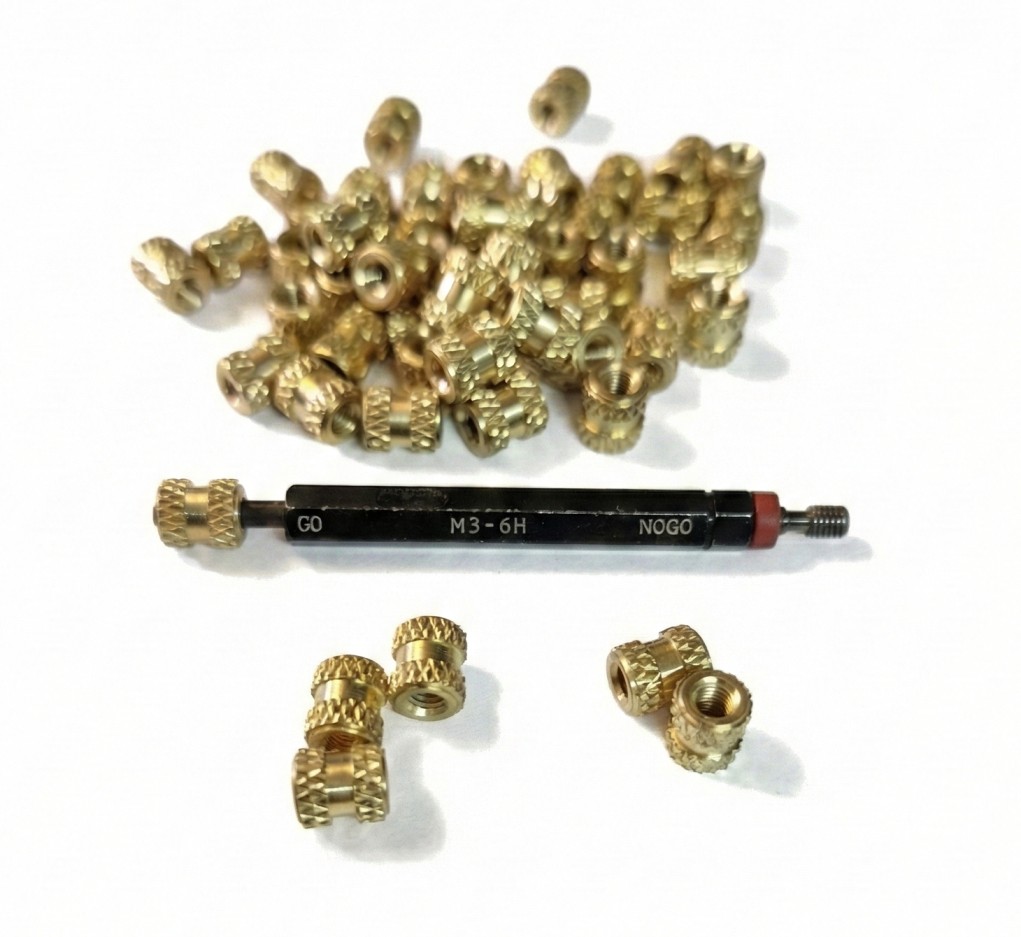
| Thread Control | Go/No-Go gauge checks at regular intervals during production |
| Surface Finish |
Nitric/Cleaning as default Nickel and tin plating via partners |
| Inspection & Documentation |
Visual check for burrs Vernier / digital calipers, Go/No-Go thread gauges, Material test reports / mill heat certificates on request CMM and profile inspection via partners |
| Packaging |
Bag + label for standard orders Master Box + Wooden pallet |
| Lead Time |
Repeat orders: approximately 15-20 working days New orders: 25-30 working days Exact production time depends on the insert design and drawing. |
| Production Volume |
Prototype / sample before batch (1–10 pcs) Medium and repeat OEM production preferred Standalone very small orders (10–50 pcs only) not supported |
| Drawings Accepted | STEP (3D), PDF, DXF, and DWG files |
| Tooling Ownership | All tooling are customer-owned Tooling is never reused for other customers |
Why Use Brass Inserts?
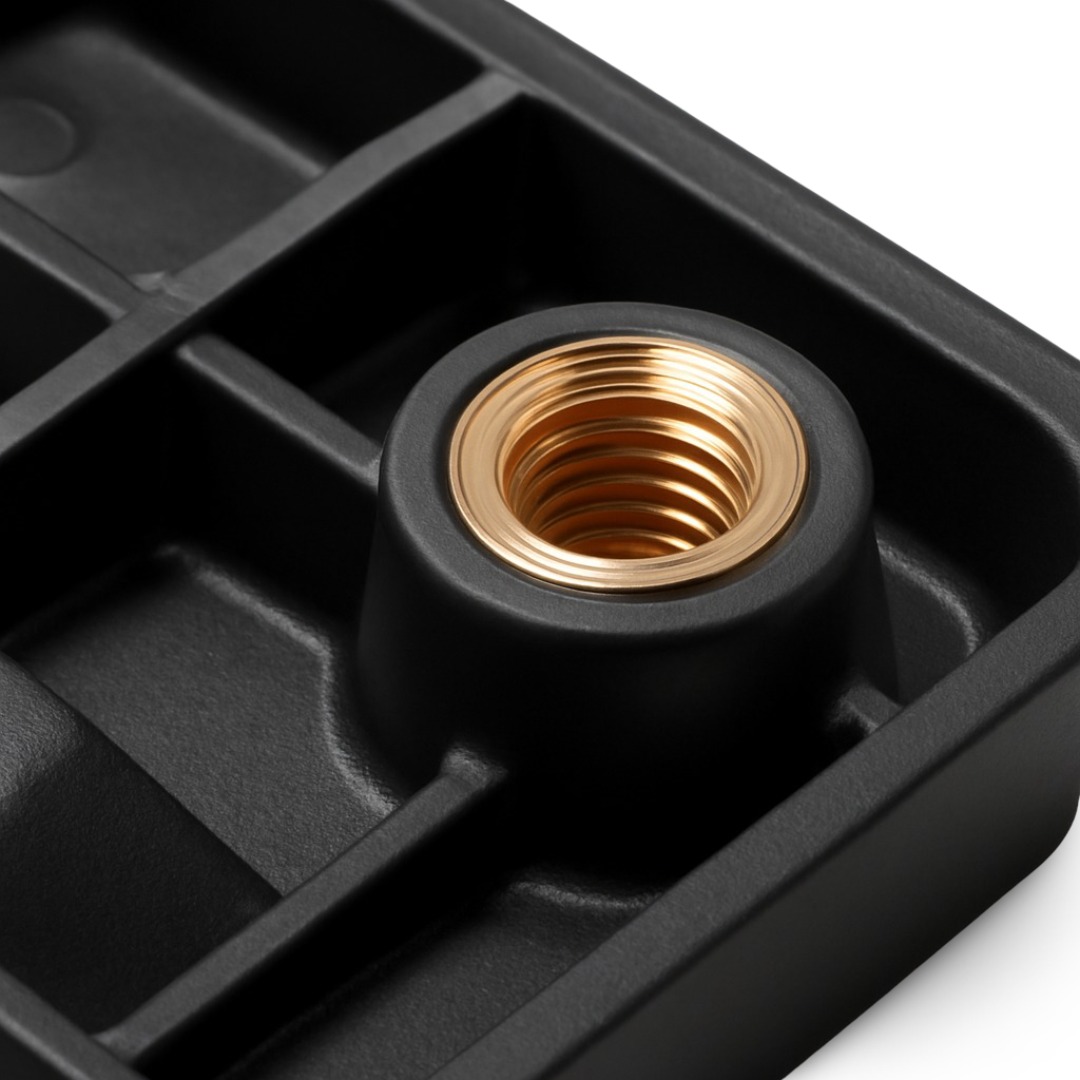
Brass inserts provide a metal threaded connection inside plastic parts. Inserts are used when plastic can’t provide the required thread strength, repeatable fastening, and service life. Brass inserts provide the screw with a machined metal thread and can provide better pull-out and torque-out performance.
The real reason to use an insert is that a metal threaded insert can provide a more durable/reusable threaded interface and improve retention performance for the application that require it.
Reusable Threads
A brass molding insert allows screws to be installed and removed repeatedly without relying on a plastic thread for every assembly cycle. This is useful for plastic housings, covers, enclosures, plastic molding parts, and other parts that need regular service and assembly.
Stronger Threaded Connection in Plastic
The insert provides a metal internal thread with external features, like knurls, to retain the insert in the plastic. Pull-out and torque-out performance depends on the insert design, plastic material, installation method, and boss design.
Suitable for Injection Molding and Post-Molding Installation
Brass inserts for plastic support various installation methods, including mold-in, heat staking, ultrasonic installation, and press-fit installation.
Why Brass?
Brass provides a good balance of machinability, mechanical properties, and corrosion resistance, which makes it suitable for precision-machined inserts. The appropriate brass grade still depends on the insert design, plastic material, and application.
Brass Insert Materials & Grades
Brass provides good machinability, durable threads, and corrosion resistance. We support custom brass grades according to customer requirements. If not mentioned in the drawing, our default grade is Indian standard IS319 free-cutting brass. Brass inserts manufacturers commonly use C36000 and IS319 Grade 1 Free-cutting brass grade for good machinability.
C36000 Brass, USA Specification
C36000 is a free-cutting brass grade covered by ASTM B16/B16M for rod, bar, and shapes used in screw-machine applications. It is suitable for drilled, tapped, threaded, and knurled insert designs.
CW614N Brass, European Specification
CW614N (CuZn39Pb3) is a European free-machining brass grade specified under EN 12164. It provides good machinability and is used for precision-machined insert.
Customer-Specified Brass Grades
We also support customer-specified brass grades according to the material specification and customer drawing.
Brass Insert Grade Comparison
| Brass Grade | US / European Designation | Main Characteristic | Why Used for Inserts |
|---|---|---|---|
| C36000 | UNS C36000, ASTM B16/B16M | Free-cutting brass | Suitable for precision machining, drilling, tapping, threading, knurling, and high-volume insert, production |
| CW614N | CuZn39Pb3, EN 12164 | Free-machining European brass | Suitable for precision-machined, threaded inserts and other machined components |
| Customer-Specified Brass Grade | According to drawing/specification | Depends on selected grade | Used when the customer requires, a specific material, standard |
Brass Insert Thread Specifications
Thread size is a very important part of brass insert selection because the internal female thread must match the screw used in the final plastic assembly. We support both metric and imperial thread systems according to customer requirements.
| Thread System | Common Insert Thread Sizes | Typical Use / Market |
|---|---|---|
| Metric ISO | M2, M2.5, M3, M4, M5, M6, M8 | Europe, Asia, and international OEM products |
| UNC | 2-56, 4-40, 6-32, 8-32, 10-24, 1/4-20, 5/16-18 | USA and North American equipment |
| UNF | 3-56, 4-48, 6-40, 8-36, 10-32, 1/4-28, 5/16-24 | USA and applications requiring finer Unified threads |
| BA | BA sizes according to drawing | Older equipment and specific engineering applications |
| BSW | BSW sizes according to drawing | Specific British/legacy equipment and applications |
| Custom Thread | Customer-specified size and thread standard | OEM and non-standard insert designs |
Brass Insert Surface Finishes
We provide different surface finishes for brass inserts according to customer requirements. Natural brass can be supplied without additional plating, while nickel and tin plating can be used where required for appearance, corrosion protection, wear resistance, and electrical contact performance.
| Surface Finish | Typical Purpose / Benefit |
|---|---|
| Natural Brass | Brass surface without additional plating; suitable where no special coating is required |
| Nickel Plated | Used for a plated appearance, improved tarnish and corrosion resistance, and a harder wear surface |
| Tin Plated | Used where improved electrical contact performance and corrosion protection are required |
| Other Specified Finish | Other coatings can be supplied when required by the customer specification |
Custom Brass Insert Manufacturing Process
Our custom brass insert manufacturing process includes raw material procurement, cutting or bar feeding, turning, drilling, tapping, external threading where required, knurling, secondary machining, cut-off, chamfering, deburring, cleaning, surface finishing, final inspection, and packaging as required. The exact process depends on the insert design, thread type, knurling, tolerance, and other customer requirements. We use CNC and SPM machines for brass insert manufacturing.
1. Raw Material Procurement
Our first step is to source brass rod stock from our trusted supplier according to customer requirements. We verify the required alloy, grade, material condition, and diameter.
2. Cutting / Bar Feeding
The second step is to cut the brass rod into blanks when separate blanks are needed. For automatic turning production, the brass rod can also be fed directly into the machine, with the required length controlled during the machining cycle.
3. Turning & Outside Profile Machining
The brass blank is machined to the required outside diameter and insert profile. Turning operations can include:
- Outside diameter turning
- Facing
- Steps and shoulders
- Grooves
- Head and flange formation
- Chamfering where required
- Other turned profiles
The exact operations depend on the insert design.
4. Drilling / Internal Hole Machining
For inserts that need internal threads, holes are drilled according to the customer drawing. Sometimes, the drawing also requires additional machining such as special diameter, depth, or internal profile before tapping.
5. Internal Tapping
The drilled internal hole is tapped for a female screw thread requirement. The thread size, pitch, depth, and tolerance are produced according to the customer drawing.
6. External Threading
For inserts with male threads, the outside thread is produced according to the required thread size, pitch, length, and tolerance.
7. Knurling & External Retention Features
Knurling is produced on the outer surface, such as diamond, straight, helical, and other specified knurl patterns according to the drawing.
8. Secondary Machining
Some inserts require additional machining after the main operation. This can include:
- Grooves
- Slots
- Cross holes
- Flats
- Special profiles
- Additional drilling
- Milling
- Other custom features
These operations are only performed when required by the insert design.
9. Cut-Off
For inserts produced from continuous brass rod, the finished part is separated from the remaining bar stock using a cut-off operation. On automatic turning machines, cut-off can be completed as part of the same machining cycle.
10. Chamfering & Deburring
Machined edges, holes, and thread entrances are chamfered and deburred to remove machining burrs and sharp edges.
Threaded inserts can also be checked with suitable thread gauges during production and final inspection.
11. Cleaning
After machining, the brass inserts are cleaned to remove machining oil, chips, and loose burrs. Tumbling can be used where required and suitable for the insert design.
12. Surface Finishing
The finished brass inserts receive the specified surface finish after machining and cleaning.
Depending on the customer requirement, finishes can include:
- Natural brass
- Tin plating
- Nickel plating
- Other specified finishes
13. Final Inspection
Finished brass inserts are checked against the customer drawing and required specifications before shipment.
Inspection can include:
- Overall length and dimensions
- Outside diameter
- Internal diameter
- Thread size and depth
- External thread
- Knurl dimensions
- Groove and slot dimensions
- Chamfers
- Other customer-specified features
Thread Go/No-Go gauges and other suitable measuring equipment are used.
14. Packaging
Finished brass inserts are packed according to customer packaging and shipping requirements.
Brass Inserts Manufacturer Capabilities
We manufacture most brass inserts on dedicated automatic brass insert machines, not general CNC lathes. CNC turning is used only for large inserts requiring special features and tighter tolerances.
Production is based on repeatable, dedicated setups for each part number. All inserts are made strictly as per customer drawings for plastic molding and assembly use.
Machining Scope
Standard brass inserts are produced on special-purpose automatic brass insert machines. This SPM machine designed for high repeatability and stable thread quality.
CNC turning is used only when required for:
- Big inserts
- Complex geometry
- Special tolerances
- Non-standard profiles
Blind threads and short thread lengths are produced with controlled threading methods suited to brass inserts. Thread depth and profile are maintained consistently across batches.
Production threads are cut using tools selected for stable pitch and long tool life.
Dimensional Control
Outside diameter is typically controlled around ±0.10 mm depending on insert size and application, and checked on every batch. Vernier caliper is used to inspect the outside diameter, inside diameter, and depth, knurl dimensions, grooves, slots, chamfers, and other customer-specified features.
Roundness is normally controlled around 0.05 mm on critical diameters where required. Internal thread pitch is verified using Go/No-Go gauges at regular intervals during production.
Inspection & Quality Checks
For quality and inspection, visual inspection and dimensional inspection using a vernier caliper are performed. Threads are checked using Go/No-Go gauges. Material certificates and inspection reports are available on request.
Packaging and Logistics
For standard orders, we use clear labeling on each box. Packaging can include poly bags, small boxes, master cartons, and wooden pallets for sea shipments. Custom packaging is available according to customer requirements.
Lead Time
For new orders, the approximate lead time is 25-30 days, while repeat orders are approximately 20 days. New tooling, special surface plating, and design changes can extend the production time. Actual lead time depends on the drawing, part complexity, and order volume.
Brass Inserts for Plastic Injection Molding
Brass inserts are used in plastic injection molding when a molded plastic part needs a permanent metal threaded connection. The insert is positioned in the mold before the plastic is injected, and the molten plastic flows around the outside of the insert and into its external retention features. After molding, the brass insert remains fixed inside the plastic part, with an internal thread available for screw fastening.
How Brass Inserts Are Used in Injection Molding
1. Insert Positioning in the Mold
The brass insert is positioned on a core pin inside the mold before the mold closes. According to the production setup, manual loading or pick-and-place loading can be used. The core pin helps hold the insert in the required position during molding.
2. Plastic Injection Around the Insert
After the mold closes, molten plastic fills the cavity and flows around the external surface of the brass insert and its knurled retention features. The plastic engages with the external knurls and undercut features on the insert.
3. Retention in the Molded Part
External features such as knurling and undercuts help provide resistance to pull-out and rotation after the plastic has cooled and solidified. The actual retention performance depends on the insert geometry, plastic material, mold design, and processing conditions.
4. Demolding
After the plastic has solidified, the molded part is removed from the mold. The insert remains embedded in the plastic, with an internal thread available for the final screw connection. Molded-in inserts require suitable pin and mold design so the insert is positioned correctly and can be released during demolding.
Mold Design & Insert Selection
The insert dimensions and external retention features need to match the mold and plastic-part design. Core-pin dimensions, insert alignment, thread position, insert outside diameter, and the surrounding plastic geometry all affect the molding process.
Why Use Brass Inserts in Injection-Molded Parts?
A molded-in brass insert puts a metal thread directly into the plastic component during the molding process, so the finished part does not need a separate threaded metal component installed afterward. Molded-in designs can provide strong resistance to pull-out and rotation.
Types of Brass Inserts and Installation Methods
We manufacture brass inserts for all major install types such as press-fit, heat set, ultrasonic and mold-in. Each needs a different outside diameter geometry, knurling and tolerance. If insert will wrong match? We will insert spins, cracks part and pull out. We cut them right so your installation process will run soooth.
Press-In Brass Inserts
Press-in brass inserts work best in rigid plastics. Rigid plastics accept interference fit better. They allow fast assembly in high-volume production. But they need tight outer diameter control and consistent knurling to avoid spin-out. When sized correctly, press-in inserts give reliable pull-out resistance.
- OD Design: Straight wall and slightly tapered
- Knurl Type: Diamond and straight for perfect grip
- Material Fit: Works best for ABS, Nylon, soft PC
- Use Case: Mounting bosses, standoffs, threaded holes in rigid plastic housings
- Risk: Over pressing can crack thin walled parts
In assemblies that require PCB spacing, aluminum spacers can be used alongside press-in inserts. The insert provides the threaded fastening point, while the spacer maintains the required distance between components.
Brass Heat Set Inserts
Brass heat set inserts are installed into a pre-molded hole using a heated tool. The heat softens the plastic around the insert. Soft plastic flows into the knurl pattern. When it cools, it hardens and locks the insert in place. This method is used when stronger and more consistent retention is required. It also gives better alignment control than press-fit.
- OD Design: Tapered entry, vented or open-ended
- Knurl Type: Helical or diamond
- Plastic Types: Nylon, ABS, PC, PEEK heat tolerant plastics
- Tooling: Hot-tip soldering iron, thermal press, CNC controlled heater
- Critical Detail: OD taper must match hole ID to avoid float and sink
Mold-In Brass Inserts (Pre-Insert and Post-Mold Insert)
Mold-in brass inserts are placed inside the mold before injection. Molten plastic flows around the insert during molding. As the plastic cools, it forms a mechanical lock with the knurl. No extra installation step is needed. Manufacturers use this for structural housings and heavy-load threaded features.
- OD Design: Flanged or barbed to resist pull
- Knurl Type: Straight grooves or anchor fins
- Usage: Plastic enclosures, connectors, threaded caps
- Advantages: Zero secondary process, strongest mechanical lock
- Requirement: Mold design must allow accurate insert placement
Ultrasonic Brass Inserts
Installation using vibration and pressure. Ultrasonic horn vibrates at high frequency, creating heat from friction between insert and plastic then softens plastic and lets the insert sink in.
- OD Design: Shorter length, precise diameter
- Knurl Type: Spiral or multi-start diamond for grip
- Application: Fast install for mass production
- Risk: Too sharp a knurl, wrong horn can overheat and cause flash marks
- Ideal For: Thin-walled parts, tight spacing, automated assembly
Brass inserts work reliably in common engineering plastics such as ABS, Nylon, Polycarbonate (PC), and heat-resistant plastics like PEEK. Performance still depends on boss design, wall thickness, and installation method.
Brass is commonly preferred over aluminum for plastic inserts because it resists corrosion and machines easily. Stainless steel is usually chosen only when higher temperature and strength is required.
For detailed thread sizing, classes, and tolerance control, see our brass threaded insert page.
Applications of Brass Inserts
Brass inserts are used in plastic, 3D-printed parts, and molded components where a reusable metal thread is required. Common applications include automotive parts, electronics, electrical components, medical equipment, industrial equipment, and other molded plastic parts.
Automotive Plastic Parts & Components
Brass threaded inserts are used in automotive plastic housings, interior components, electronic modules, and other molded parts. Brass inserts are useful in automotive applications where plastic components require a reusable threaded connection for assembly.
Electronics & Electrical
Brass inserts are used in plastic electronic housings, enclosures, control modules, electrical components, and molded assemblies. Some insert designs can also provide an electrical contact point where required by the application.
Consumer Products & Appliances
Brass inserts are used in consumer products and home appliances, including appliance housings, consumer electronic products, plastic covers, and other molded components.
Industrial Equipment & Machine Components
Brass inserts are used in industrial equipment housings, machine covers, control components, and other composite parts.
Customer Testimonial
I worked with Hiren Brass Products to produce a customized insert for one of my products and the results were excellent. The craftsmanship was of high quality, they were delivered on time and the price was very good. They asks all the right questions to make sure he delivers their best quality for my purposes. This was my first custom made order from this company, i have since placed orders for two more custom made parts with hiren and the results were great. I will be placing more orders with them in the future.
Aron Belnap, Project Manager, USA
Brass Insert FAQs
1. What Size Hole Do I Need for a Brass Insert?
There is no single hole size for every brass insert. The required hole diameter depends on the insert type, outside diameter, plastic material, installation method, and insert design.
2. How Much Torque Can a Brass Insert Handle in Plastic?
There is no single torque value for all brass inserts. Torque-out performance depends on the insert design, outside retention features, plastic material, hole size, installation method, boss geometry, and screw/thread configuration.
3. Brass Inserts vs Stainless Steel: Which Should You Choose?
Brass is commonly selected for threaded inserts because it offers good machinability and high thermal conductivity. Stainless steel can be selected when the application requires high strength.
The correct material depends on the plastic, environment, installation method, mechanical requirements, corrosion conditions, and cost.
4. How Many Times Can You Use a Brass Insert?
A brass insert does not have one fixed number of assembly and disassembly cycles. A properly selected metal insert provides a reusable metal thread, but the actual service life depends on the insert design, screw, tightening torque, plastic material, installation quality, and load.
5. Why Are My Brass Inserts Coming Loose Over Time?
A brass insert can loosen when the plastic-to-insert retention is not sufficient for the applied load. Possible causes include incorrect hole size, insufficient boss support, unsuitable insert design, improper installation, excessive screw torque, vibration, and repeated loading.
6. Why Does a Plastic Boss Crack When Installing a Brass Insert?
Boss cracking can occur when the surrounding plastic cannot handle the stress created during installation. Common factors include incorrect hole size, insufficient boss wall thickness, excessive interference, excessive installation force, and unsuitable insert design.
7. What Is the Difference Between Pull-Out Strength and Torque-Out Strength for Brass Inserts?
Pull-out strength is the axial force required to pull the insert out of the plastic. Torque-out strength is the rotational torque required to turn the insert in the plastic.
They measure different failure conditions. An insert can have good pull-out resistance but lower torque-out resistance, or the opposite, depending on the external retention design, plastic material, hole preparation, and installation method.
8. Can Brass Inserts Be Used in Thermoset Plastics?
Yes, certain brass insert designs are specifically intended for thermoset plastics. Press-in and mold-in insert designs can be used for thermoset materials, depending on the insert and installation method.
The installation method must match the thermoset material and insert design. Heat-set methods that depend on melting the plastic are generally intended for thermoplastics and should not automatically be used with thermosets.
9. Can Brass Inserts Be Custom Made for Non-Standard Plastic Parts?
Yes. Custom brass inserts can be manufactured with non-standard lengths, outside diameters, thread sizes, knurl patterns, heads, grooves, and other dimensions according to the part design.
Request a Brass Inserts Quote
To request a brass insert quotation, send your drawing and RFQ details.
Please include:
- Brass grade specification
- Quantity requirement (one-time, repeat, or blanket order)
- Critical dimensions and tolerance requirements
- Required delivery timeline
- Shipping terms (EXW, DAP, or DDP)
After receiving your RFQ, drawings are reviewed and any technical clarification is discussed if required. A quotation is issued with pricing and indicative lead time before production.