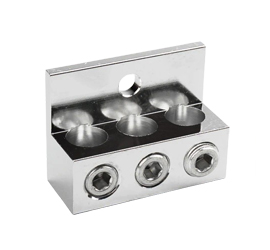
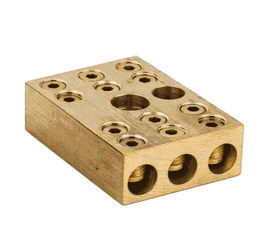
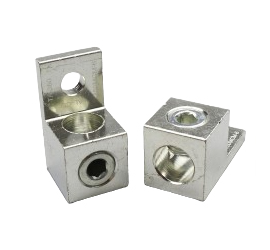
The terminal block is machined from solid aluminum, brass, and copper. It works as a power junction block inside control panels and switchboards. Each hole is tapped and fitted with a set screw that locks the conductor tight. The current passes directly through metal. This block is built for engineers who want full metal contact and compact size. Use it when space is tight, heat is high, and every connection must stay firm.
Every block is cut from billet metal and tapped with precision threads for clean torque. The solid design handles heavy current without hot spots. It fits straight onto a panel using a simple bolt hole.
This block is not the same as a neutral bar or a ground bar. A neutral bar carries return current from the circuit. It is insulated from the panel body and connects only to the neutral line from the supply. It closes the circuit path for normal current flow. A ground bar does not carry working current. It bonds equipment metal parts to earth. It is bolted directly to the panel body with no insulation. Its job is fault protection, not load return.
The uninsulated terminal block you see here is different from both. It has no fixed function until installed. It can be used for phase, neutral, or ground depending on wiring design. It is a bare junction block, machined from solid metal, made to handle current transfer between busbars. It works as a neutral link or ground bar depending on how it is mounted and connected in the panel Get a Free Terminal block Quote – Fast 4 Hour Response
This section lists what the block delivers in actual panel work.
Material choice controls conductivity, thread strength, heat stability, and long-term clamp behavior. The machined junction block shape stays the same, but the performance shifts with the metal, so the selection must match the electrical duty.
Brass terminal blocks deliver steady electrical behavior under panel load. The threads cut clean in C36000 and CZ121 brass. This metal holds torque without distortion. Contact pressure stays consistent when the cabinet runs warm. Brass keeps clamp force predictable for repeated tightening. It performs well in neutral links and in mixed-load control panels.
Aluminum terminal blocks reduce weight and spread heat fast in tight electrical spaces. Threads cut clean in 6061-T6 and 5052 when tooling is sharp. Clamp force stays reliable when torque is applied with controlled feed. Aluminum fits lightweight installations where cooling speed and easy handling matter.
Copper terminal blocks provide the highest conductivity in heavy-duty panels. C11000 ETP copper carries load with minimal voltage drop. The metal stays stable under continuous heat and long current cycles. Threads remain firm when machined with sharp cutters. Copper suits feeders, dense power links, and circuits that demand the lowest resistance path.
| Property | Brass Version (C36000, CZ121, DZR) | Aluminum Version (6061, 5052, 1100) | Copper Version (C11000, OFC) |
|---|---|---|---|
| Conductivity | Medium, lower than copper | Moderate, ~60% of copper (depends on alloy) | Highest, best for low drop |
| Heat Behavior | Lower thermal conductivity than Cu and Al; slower conduction | Good thermal conduction; lower mass helps faster cooling in some assemblies | Highest thermal conductivity; best at moving heat away from contact |
| Thread Quality | Best thread retention for set-screw joints when using common brass grades | Softer than brass; requires precise machining parameters | Machinable; threads softer than brass but reliable when cut correctly |
| Weight | Medium | Light | Heavy |
| Corrosion Notes | Good indoors; use DZR for damp zones | Susceptible in harsh environments; plating recommended | Good; tin or other finishes improve wear and contact longevity |
| Best Use Case | Neutral links, repeated torque cycles, reliable thread life | Inverter/battery cabinets, weight-sensitive panels | Main feeders, high-current junctions, minimal voltage drop needs |
This block joins conductors in low-voltage power circuits. It works as a power terminal block when the panel needs a compact metal junction. It creates a fixed point for feeders and short branch runs inside enclosed cabinets where a small power distribution block fits the layout. It supports neutral bar lug duty when the design needs a short neutral link. It runs as a ground lug when bonded to the enclosure in a protected panel. It also acts as a terminal lug in machinery frames and inverter sections that need clean torque and stable metal contact.
We make OEM custom terminal blocks and single-pole terminal lugs based on customer drawings. We match the metal to the load and supply brass, aluminum, and copper on request. We machine every part to the specified dimensions. We produce samples and small batches for testing before full production. We support changes in port size, thread type, and mounting layout when the panel design demands it.
| Field | Details |
|---|---|
| MOQ | Based on size and material. Small lots accepted for sampling. |
| OEM to Drawing | Custom machined connector options supported for brass, aluminum, and copper. |
| Dimensional | Port size, thread type, and mounting hole can be modified to match the panel layout. |
| Finish Options | Bare metal, tin plating, and custom finish depending on alloy and circuit duty. |
| Material Variants | Brass, aluminum, copper versions produced from confirmed alloy grades. |
| Bulk Supply | Bulk terminal lug sets available for switchgear, inverter frames, and battery cabinets. |
| Lead Time | Depends on product drawing and quantity. |
| Quote Process | Inquiry by drawing. Final pricing issued after dimension and material confirmation. |
Get pricing, lead time, and technical confirmation for your exact terminal block design. Send the drawing, the alloy choice, and the required thread size, and the machining team will review and return a full quote. Every order starts with clear specifications, and every part ships after dimensional checks. Custom batches, small test runs, and full production lots are all supported.