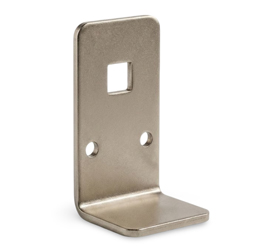
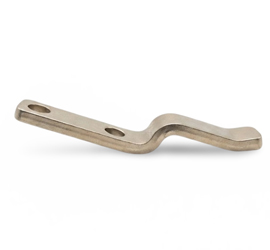
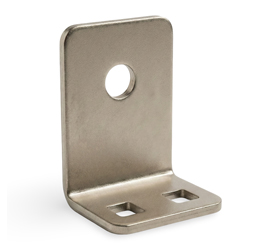
We are custom sheet metal fabricators from India. In our sheet metal fabrication process, we use laser cutting, punching, bending, forming, and joining methods to make sheet metal products. We also support secondary operations such as tapping, deburring, and welding according to part requirements.
In our sheet metal manufacturing, we support carbon steel, stainless steel, aluminum, galvanized steel, copper, and brass according to customer drawings.
Our common sheet metal manufacturing parts include brackets, mounting components, covers, frames, and other structural components. These sheet metal products are widely used in electrical equipment, automotive systems, HVAC assemblies, and industrial machinery.
We support prototype sheet metal fabrication to high volume production. Our sheet metal factory supplies customers in the USA and across European markets, including Germany, France, Spain, the Netherlands, the UK, and Italy.
Request for a Sheet Metal Fabrication QuoteSheet metal fabrication is the process of making metal parts and assemblies from sheet metal by cutting, forming, bending, joining, and finishing. Common fabrication operations include laser cutting, punching, shearing, bending, forming, welding, riveting, hardware insertion, and finishing. The exact process depends on the part design, material, thickness, and production requirements.
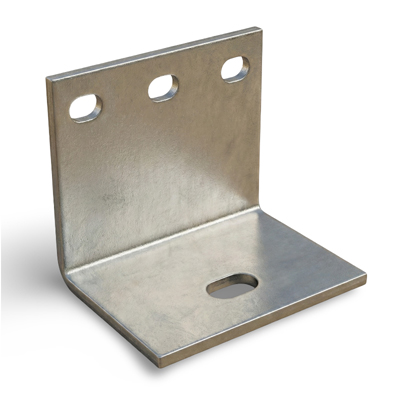
Part Type: Sheet metal bracket
Thickness: 0.120 inch
Material: Sheet steel, G90, 12 GA
Overall Flat Pattern Width: 5.55 inch
Flat Pattern Height: 3.50 inch
Formed Length: 3.25 inch
Formed Height: 2.50 inch
Bend Reference: 1.15 in from the flat-pattern datum
Left Hole Center Location: 0.58 in from the datum
Right Hole Center Location: 4.77 in from the datum
Hole Vertical Locations: 0.38 inch, 1.75 inch, and 3.13 inch
Left Holes: OBR 0.312 × 0.438, 90°, 3X
Right Hole: OBR 0.437 × 0.750, 90°
Additional Formed-View Dimension: 1.50 inch
Estimated Weight: 0.1 lb
Custom steel sheet fabrication enclosure bracket produced from 0.120 in pre-galvanized G90 steel sheet, with a 5.55 × 3.50 in flat pattern and multiple OBR holes positioned to the customer drawing, 12 gauge (3.05 mm) thick. Manufactured using press brake forming with a 90-degree bend, deburred edges, and as-received mill galvanizing with no secondary coating applied.
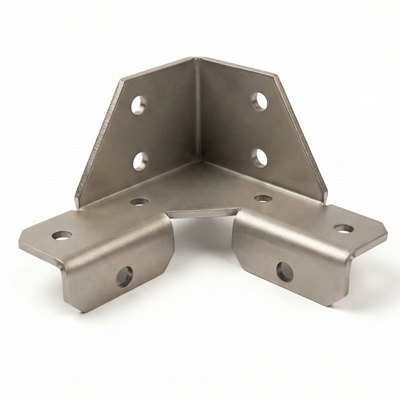
Part Type: Structure common gusset
Material: Sheet steel, G12 GA
Thickness: 0.105 in
Estimated Weight: 0.1 lbm
Hole Pattern: Ø0.313 THRU, 6X; Ø0.281 THRU, 4X
Bend Angle: 90°
Bend Count: 4
Bend Directions: 2 × DOWN, 2 × UP
Formed Height: 4 inch
Formed Width: 2.750 inch
Top Flange Dimension: 2.000 inch
Additional Formed Dimensions: 1.355 in, 1.580 in, 0.855 in, 1.375 inch
Sloped Feature Angle: 30°
Custom sheet metal structure press-formed sheet metal gusset manufactured from G90 galvanized steel, 12 GA thickness (0.105 in / 2.67 mm), six Ø0.313 inch through holes, and four Ø0.281 inch through holes. Produced using dedicated forming dies with multiple 90° bends and controlled bend radii. The fabricated gusset includes 30° sloped geometry, a 4 inch formed height, and a 2.750 inch formed width. Edges are deburred and the surface remains as-galvanized for corrosion resistance. Suitable for structural reinforcement and panel support applications in fabricated assemblies.
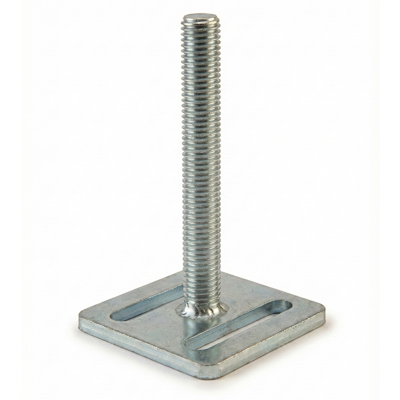
Material: Steel Plate
Part Type: Bolt-down foot
Overall Base Size: 65.00 mm × 65.00 mm
Base Thickness: 5.00 mm
Base Corner Radius: R5.00 mm
Slot Width: 8.50 mm
Slot Position: 15.00 mm from the left edge to the slot centerline
Slot Top Position: 10.00 mm below the top edge to the slot centerline
Thread: M12 × 1.75 - 6g
Overall Height: 115.00 mm
Custom Sheet metal fabrication bolt-down foot assembly manufactured from laser-cut steel plate with elongated mounting slots with a 65 × 65 mm base plate, 5 mm thickness, two 8.50 mm wide mounting slots, and a vertically positioned M12 × 1.75 - 6g thread. A standard M12 × 1.75 threaded stud is fillet welded to the base and zinc plated after fabrication for corrosion protection. Commonly used as an adjustable support or anchoring foot in industrial fixtures and equipment.
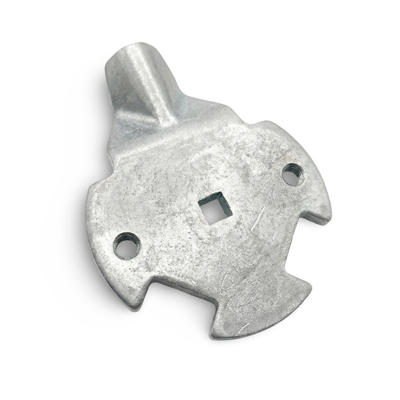
Material: Steel
Finish: Zinc plated
Thickness: 0.180 inch [4.80 mm]
Overall Width Reference: 2.50 inch [63.5 mm]
Overall Height Reference: 2.25 inch [57.2 mm]
Offset Dimension: 0.80 inch [20.3 mm]
Radius: R1.50 inch [38.1 mm]
Square Feature: 0.320 inch [8.13 mm] SQ
Threading: 5/8-18 THD, 2 places
Angle: 45° TYP
Handle Shaft Compatibility: 0.313 inch [8.00 mm] square shaft
Additional Profile Dimension: 0.19 inch [4.8 mm]
Custom sheet metal Zinc plated steel offset center cam manufactured by sheet metal forming. offset center cam manufactured from steel with a zinc-plated finish. The formed component uses a 0.180 inch [4.80 mm] thickness, R1.50 inch [38.1 mm] radius, 5/8-18 threaded features at two locations, and a 0.320 inch [8.13 mm] square feature, with handles that have a 0.313 inch [8.00 mm] square shaft. Designed for use with 8 mm square shaft handles in panel and enclosure locking mechanisms, providing controlled cam action for secure closure.
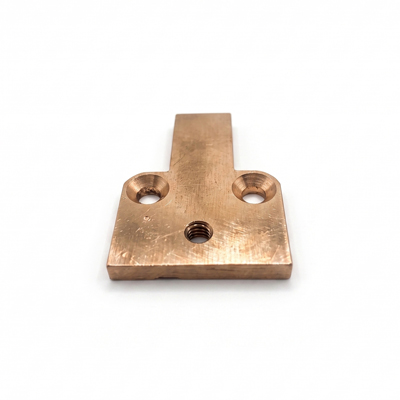
Part Description: Fuse Tab, 200A
Material: Copper
Thickness: 0.188 inch
Thread: 1/4-20 UNC - 2B
Counterbore / Hole Callout: Ø0.228 × 1.000
Countersink: Ø0.438 × 82°
Overall Horizontal Dimension: 2.125 inch
Overall Vertical Dimension: 1.500 inch
Hole Center Horizontal Locations: 0.340 inch and 0.875 inch
Hole Center Vertical Locations: 0.250 inch, 0.750 inch, and 1.250 inch
Profile Reference Dimensions: 1.063 inch, 1.125 inch
Custom copper sheet metal fuse tab fabricated from 0.188 inch copper sheet for a 200A application, with a 1/4-20 UNC-2B threaded feature and Ø0.438 × 82° countersunk hole geometry. The fabricated copper part measures 2.125 inches horizontally and 1.500 inches vertically and follows the hole positions and profile dimensions specified in the customer drawing.
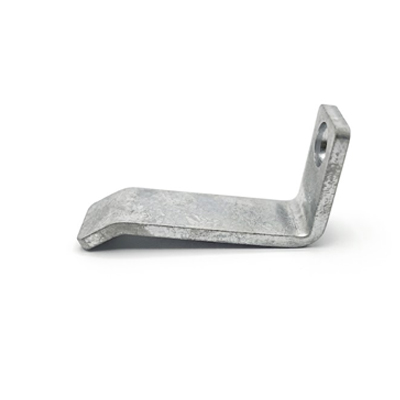
Material: Steel
Part Type: Gearbox Lock Catch
Sheet Thickness: 0.118 inch [3.00 mm]
Hole Diameter: Ø0.354 inch [Ø9.00 mm]
Flat Pattern Width: 0.591 inch [15.00 mm]
Base Length: 1.028 inch [26.10 mm]
Overall Height: 1.799 inch [45.69 mm]
Sloped Section Length: 0.374 inch [9.49 mm]
Top Bend Angle: 30°
Bottom Bend Angle: 90°
End Radius: R0.079 inch [R2.00 mm]
Hole Location: 0.236 inch from the left reference edge
Custom 3 mm sheet metal gearbox lock catch fabricated from a flat sheet profile and formed with a 90° bend and 30° bend. The part features a Ø0.354 inch [Ø9.00 mm] hole, 1.028 inch [26.10 mm] base length, 1.799 inch [45.69 mm] overall height, and R0.079 inch [R2.00 mm] end radius.
| Specification | Details |
|---|---|
| Materials Supported |
Mild steel (CRCA, HR) Galvanized steel Stainless steel 304, 316 Aluminum 5052, 6061, 6063 Brass (grade to be confirmed per requirement) Copper (custom grade) And as per customer requirements |
| Thickness Range | 0.30 mm to 6.00 mm |
| Maximum Blank / Part Size | To be defined based on cutting and bending capacity |
| Cutting Tolerance | ±0.1 to ±0.3 mm (depends on material and thickness) |
| Bending / Forming Tolerance | ±0.5° to ±1.0° (depends on material and bend length) |
| General Fabrication Tolerance | As per customer drawing or agreed standard |
| Standard Finishes Offered |
Powder coating (via partner) Zinc plating (via partner) Anodizing (via partner) Brushing Polishing |
| Inspection & Documentation |
Visual check for burrs Vernier / digital calipers, Go/No-Go thread gauges, height gauges, angle gauges Material test reports / mill heat certificates on request CMM and profile inspection via partners |
| Production Type | Prototype, medium volume, mass production |
| Packaging |
Bag + label for standard orders Master Box + Wooden pallet |
| Lead Time |
Repeat orders: approximately 15-20 working days New orders: 25-30 working days Exact production time depends on the insert design and drawing. |
| Production Type | Prototype, medium volume, mass production |
| Drawings Accepted | STEP (3D), PDF, DXF, and DWG files |
| Tooling Ownership | All tooling are customer-owned Tooling is never reused for other customers |
We make sheet metal products such as brackets, mounting plates, covers, formed duct parts, and other custom sheet metal components according to customer requirements.
L-brackets, U-brackets, Z-brackets, mounting brackets, support brackets, and angle brackets are common sheet metal configurations. Brackets can include bends, holes, slots, flanges, and other formed features according to the required application.
Flat sheet metal plates with mounting holes, slots, cutouts, and bends are used for mounting and support applications.
Sheet metal covers and guards are used to protect components from contact, dust, impact, and other operating conditions. They can include bent flanges, hems, ventilation openings, mounting holes, and folded edges.
Sheet metal parts for electrical panels and cabinets can include panel plates, doors, mounting plates, partitions, brackets, and internal supports. These parts can be cut, punched, bent, and formed according to the enclosure design.
Sheet metal chassis and frames can include bends, flanges, mounting holes, slots, and stiffening features according to the required structure and assembly.
We manufacture sheet metal components for cable tray systems and formed metal channels, including straight sections, bends, brackets, covers, and support parts according to customer requirements.
Sheet metal HVAC duct parts can include duct sections, elbows, transitions, flanges, access panels, and other formed duct components according to the required design.
Automotive sheet metal parts can include brackets, shields, supports, panels, and other formed components according to customer drawings and application requirements.
Sheet metal heat shields are used to reduce heat exposure to nearby components. They can include bends, mounting holes, flanges, beads, and other formed features according to the required design.
Copper and aluminum busbars can be cut, punched, drilled, bent, and formed according to the required electrical and mechanical design. Custom busbar fabrication can include specified dimensions, holes, bends, and other required features.
We perform laser cutting to produce flat sheet metal parts with required shapes and cutouts.
Punching operations are carried out using manual punching, mechanical press punching, and hydraulic press punching depending on the part requirement.
Custom metal stamping is used for repeat-production parts requiring consistent geometry. Stamping is performed using dedicated dies for blanking and piercing operations before secondary forming.
custom sheet metal bending is done using a combination of manual forming and CNC press brake bending. This allows us to produce simple bends as well as repeatable formed parts. Our metal cutting and bending services support both prototype and production sheet metal components.
Forming and hemming operations are supported for panels, covers, and enclosure components. These operations are used to improve strength and remove sharp edges.
We provide welding services using MIG, TIG, and spot welding. Welding is performed for aluminum, steel, and stainless steel parts and assemblies.
Threaded inserts and metal nuts are manufactured and installed as per customer drawings.
Secondary operations such as tapping and countersinking are also supported.
Surface finishing including powder coating, anodizing, and plating is provided through qualified partner facilities. All finishing work is done based on customer specification.
We support assembly and kitting of sheet metal parts. Full fabrication sheet metal assemblies are provided depending on the project requirement.
We process stainless steel grades 304 for sheet metal fabrication. Common applications include enclosures, panels, and structural components. Typical thickness range is 0.3 mm to 3.0 mm. Stainless steel exhibits higher springback during bending, and bend angles are controlled through tooling selection and forming sequence adjustments.
Mild steel grades including CRCA and HR steel are widely used for general fabrication. These materials bend more predictably compared to stainless steel. Typical thickness range is 0.8 mm to 6.0 mm. Thin sections may distort during welding, and proper fixturing is required to control dimensional stability.
Aluminum alloys 6061 and 6063 are processed based on application requirements. 6063 is generally easier to form than 6061 and is preferred for complex bends. Typical thickness range is 1.0 mm to 4.0 mm. Bend radius selection is critical for 6061 to avoid cracking during forming.
Galvanized and pre-coated sheets are used for panels and enclosure components. Typical thickness range is 0.6 mm to 2.0 mm. Care is required during bending to prevent coating damage, and welding is supported with post-fabrication surface protection considerations.
Brass is mainly used for stamped parts and small electrical components such as terminals. It forms easily but is prone to surface marking during handling. Thickness is typically below 3.0 mm for stamping applications.
Copper is used in sheet metal fabrication when high electrical conductivity, high thermal conductivity, formability, and corrosion resistance are important. Copper sheet and strip can be blanked, punched, sheared, formed, bent, and stamped into different electrical and industrial components. Common copper sheet metal parts include busbars, electrical contacts, fuse tabs, switch components, baseplates, and other electrical components.
1. Thin sheet metal increases the risk of distortion during bending and welding.
2. Material behavior varies with alloy type and thickness.
3. Final tolerances depend on material selection, bend geometry, and welding sequence.
4. Drawings should clearly specify material grade and bend details.
Precison Sheet metal fabrication tolerances depend on material type, thickness, and manufacturing sequence. Cutting, bending, and welding each introduce controlled variation.
The tolerance values below are general guidelines for small to medium sheet metal parts.
Laser cutting tolerance is typically within ±0.2 to ±0.3 mm under standard conditions. Achievable accuracy depends on material type and sheet thickness, with thinner sheets generally holding tighter tolerance.
Bending angle tolerance is typically within ±0.5° to ±1.0°. Angle variation is influenced by material springback, particularly in stainless steel and aluminum. Flange length after bending is typically controlled within ±0.5 to ±1.0 mm.
Hole position tolerance for flat laser-cut parts is typically ±0.2 to ±0.3 mm. After bending and welding, positional variation can increase to approximately ±0.5 mm due to deformation and heat input.
Flatness control depends on part size, thickness, and welding sequence. Thin sheet metal for fabrication and large flat panels are more susceptible to distortion, especially after welding.
Dimensional inspection is performed using vernier calipers, height gauges, angle gauges, and Go/No-Go gauges. Final acceptance is based on customer drawings and application requirements.
Tight tolerances, large flat parts, and welded assemblies may increase manufacturing cost or lead time. Tolerance requirements are reviewed during the quotation stage to align manufacturability and expectations.
Sheet metal parts are easier to manufacture when basic design rules are followed. Parts are manufactured as per customer drawings. In some cases, we suggest design changes if a part is not possible to fabricate within normal sheet metal processes.
Bend radius should be selected based on material thickness and alloy. Very tight bend radii increase forming force and tool wear. Short flange lengths are difficult to bend accurately and may deform during forming.
Holes located too close to bend lines or part edges may distort during bending. Adequate clearance helps maintain hole position and part geometry after forming.
Slot length and orientation should be reviewed relative to bend direction. Certain slot geometries may distort during bending depending on part geometry.
Sheet metal has a rolling direction from the mill. Bending across the grain generally reduces the risk of cracking compared to bending along the grain. Grain direction is followed as specified on the customer drawing.
Corner and bend reliefs help prevent tearing and deformation during forming. Parts without proper reliefs may crack after bending.
Some materials exhibit springback after forming. Allowance for angle adjustment may be required to achieve final bend geometry.
We commonly receive STEP and PDF files for sheet metal parts. But DXF and DWG files are also accepted for laser cutting. Drawings should clearly specify material grade, thickness, bend angles, and inside bend radius. Incomplete drawings may increase lead time.
If a design is outside fabrication capability, this is communicated before production.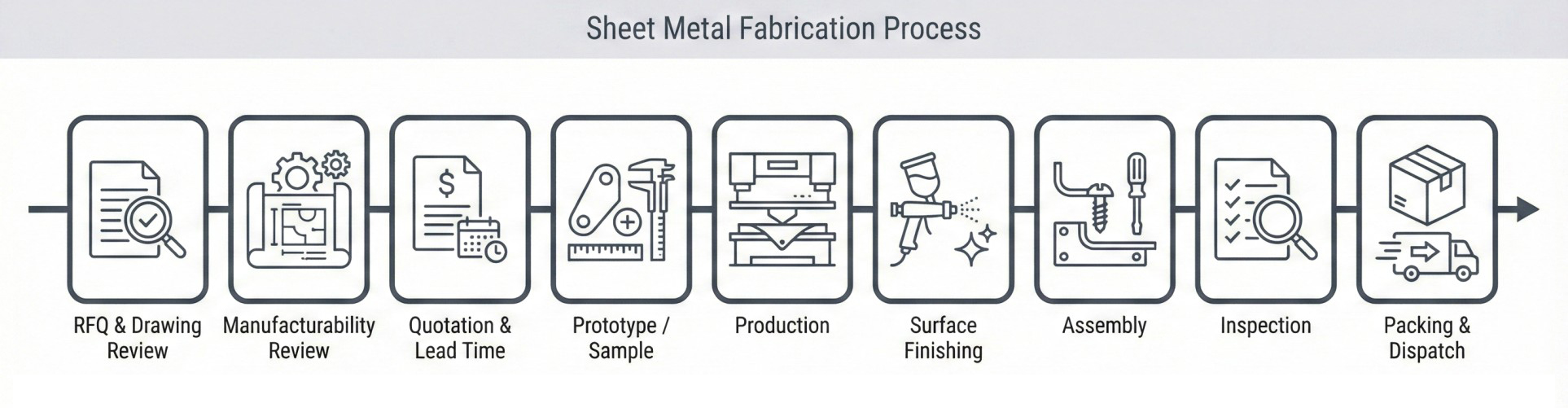
This process starts when the customer sends an RFQ with drawings. After reviewing the RFQ and drawings, we contact the customer if any clarification or design change is required from our side.
We then share the quotation with lead time and shipping details. Pricing is shared clearly based on the drawing and scope.
A prototype is provided when required before mass production. The sample part is shared with the customer for approval.
After approval, we start production. Manufacturing, finishing, assembly, and packaging are done according to customer requirements.
Parts are inspected before dispatch. After final inspection, parts are packed and shipped.
Surface finishing and coating are handled through qualified partner facilities. Finishing is applied based on customer specification and part application.
Common finishing options include anodizing for aluminum parts and zinc or nickel plating for steel parts. Chemical treatment using nitric solution is applied for brass parts when cleaning preparation is required. Wet painting is rare and supported only on specific request. Powder coating is supported but is not commonly applied to sheet metal parts.
Passivation and corrosion treatment are available on request and are not part of standard processing.
Deburring is mandatory for all parts. Sharp edges are manually removed before parts move to finishing or assembly. Cosmetic edge finishing after coating is not performed unless specified in the drawing.
Standard packaging includes polythene bag packing, inner paper boxes, and master cartons. For sea shipments, parts are palletized using wooden pallets.
Custom packaging such as printed boxes or logo branding is supported on request and is chargeable.
Fabricated parts include electrical enclosures, neutral bar, mounting brackets, and terminal covers. These components support equipment mounting, insulation, and protection.
Sheet metal brackets, guards, covers, and support structures are used in industrial machine builds. All parts are produced strictly to OEM drawings.
Applications include sheet metal cabinets, access panels, doors, and rack-mount frames. These components provide mechanical protection and controlled access.
HAVC sheet metal fabrication parts include formed panels, ducts, mounting plates, and structural supports. Design focuses on fit, rigidity, and installation compatibility.
Custom sheet metal parts such as brackets, panels, frames, and formed profiles are supplied for OEM products. These parts are typically used in repeat production programs.
Neither process works best for every sheet metal part. Laser cutting usually fits parts with complex contours, small changing production runs, and designs that need flexible cutting without dedicated punch tooling. Punching can work better for high quantities of repeated holes and shapes because the machine can make each feature with a punch stroke and can also perform operations such as forming, countersinking, tapping, and marking.
The choice also depends on material, thickness, feature geometry, quantity, tooling, and required edge quality.
Yes. Material type affects bend radius, required flange length, deformation, and the way the material behaves during forming. Stronger materials, such as some stainless steels, can resist bending more than softer materials, while some materials may require a larger bend radius to reduce cracking.
Yes, but the hole can deform if you place it too close to the bend. Bending stretches the sheet around the bend area, which can change the hole's shape and position. The required distance depends on material type, material thickness, and bend radius.
A short flange may not give the press brake tooling enough material to support and form the bend correctly. The flange can distort, pull, during bending. Stronger and thicker materials can make this problem more significant because they require adequate tooling support.
The minimum flange length depends on the material, thickness, bend angle, bend radius, and bending equipment. Do not use one fixed minimum length for every sheet metal part. Check the sheet metal fabricators bending guidelines before finalizing the design.
Yes. Press-brake tooling can leave witness marks or die lines on the sheet surface. The depth and appearance of the marks depend on the material, tooling, and bending process.
The marks can matter on cosmetic parts or visible surfaces. A finish applied after forming may hide some marks, but plating thickness may not fully cover brake lines.
To request a quotation, please send your drawing along with RFQ details.
Please include the following information:
After receiving the RFQ, we review the drawings and specifications. If clarification is required, we contact the customer before quotation. Quotation, estimated lead time, and shipping details are shared based on the confirmed scope.