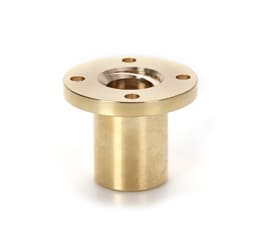
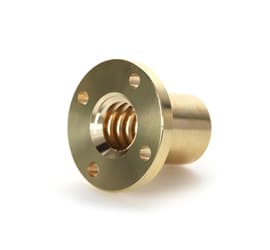
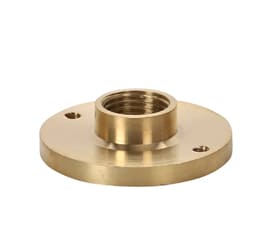
We are a custom brass flange manufacturer from India. We manufacture custom brass flanges according to customer drawings and specifications. We support custom thread sizes, hole, dimensions, and designs as per buyer requirements. For brass flanges, we use CNC turning, milling, threading, boring, step machining, and bolt-hole machining according to the flange design.
We manufacture custom brass flanges in various designs such as brass floor flanges, pipe flanges, companion flanges, threaded flanges, unthreaded brass flanges, swivel flanges, closet flanges, flange bushings, toilet flanges, blind flanges, brass flange adapters, cylinder flanges, Warix flanges, Essex flanges, and immersion-heater flanges. Our brass flanges are used in piping, pumps, heating, hot-water, tank, and plumbing systems.
We support prototypes, as well as medium to high-volume repeat orders. We supply brass flanges to customers in the USA and across European markets, including Germany, France, Spain, Czech republic, the Netherlands, the UK, and Italy.
Request a Quote for Custom Brass FlangeA brass flange is a brass component that connects a pipe, tube, tank, cylinder, pump, valve, or other compatible equipment. It provides a connection point for joining components, with the flange face using bolt holes to connect to a mating flange or equipment. Depending on the design, the pipe-side connection can use threads, solder/sweat, or press connections.
Brass flanges are used in piping, pumps, heating systems, hot-water cylinders, tanks, immersion-heater connections, and plumbing systems. The flange design and connection method depend on the application and the connected components.
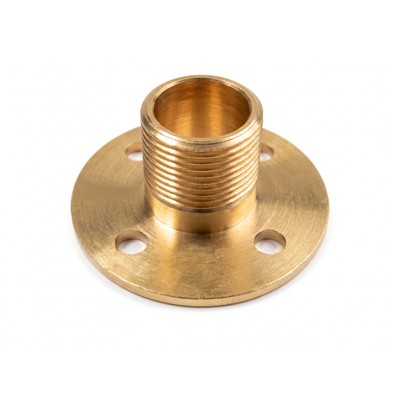
Material: Brass
Flange Type: Threaded flange
Thread: 3/4 inch BSP
Flange Outside Diameter: Ø62 mm
Bolt Circle Diameter: PCD Ø44.5 mm
Boss Outside Diameter: Ø26 mm
Internal Diameter: Ø19 mm
Mounting Holes: 4 × Ø6.8 mm
Overall Length: 29.5 mm
Boss Length: 20 mm
Intermediate Length: 26.2 mm
Flange/Section Height: 26 mm
Internal Height: 19 mm
Flange Thickness: 4.5 mm
Chamfer: 1 × 1 mm
Component Weight: 0.124 kg
Custom CNC turned brass threaded flange with a 3/4 inch BSP internal thread, Ø62 mm flange diameter, Ø26 mm boss diameter, and Ø19 mm internal diameter. The part includes four Ø6.8 mm mounting holes on a Ø44.5 mm PCD, with a 29.5 mm overall length, 4.5 mm flange thickness, and 1 × 1 mm chamfer.
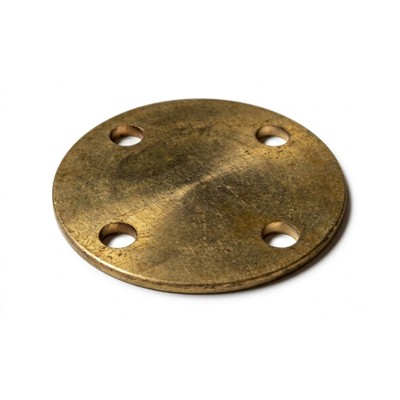
Material: Brass
Flange Type: Unthreaded flange
Outside Diameter: Ø59.0 mm
Bolt Circle Diameter: PCD Ø44.5 mm
Mounting Holes: 4 × Ø6.8 mm
Thickness: 2.0 mm
Unspecified Tolerance: ±0.1 mm
Custom brass unthreaded flange / dummy flange with a Ø59.0 mm outside diameter, PCD Ø44.5 mm, and four Ø6.8 mm mounting holes. The 2.0 mm thick brass flange provides a flat, unthreaded configuration for applications requiring a simple bolted flange plate.
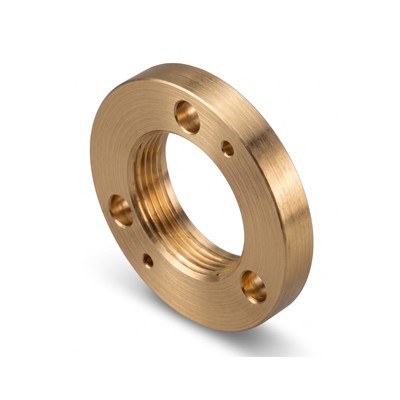
Material: Brass C36000
Flange Type: 7/8-inch swivel flange
Outside Diameter: Ø2.24 inch [Ø56.90 mm]
Bolt Circle Diameter: Ø1.812 inch [Ø46.02 mm]
Bolt Circle Diameter: Ø1.750 inch [Ø44.45 mm]
Mounting Holes: 3 × Ø0.281 inch [Ø7.14 mm] THRU ALL, EQ. SP.
Additional Holes: 2 × Ø0.132 ± 0.002 inch [Ø3.35 ± 0.05 mm] THRU ALL, EQ. SP.
Flange Thickness: 0.312 inch [7.92 mm]
Internal Diameter: Ø1.145 +0.005 / -0 inch [Ø29.08 +0.13 / -0 mm]
Secondary Diameter: Ø1.350 +0.005 / -0 inch [Ø34.29 +0.13 / -0 mm]
Internal Step: 0.163 ± 0.001 inch [4.14 ± 0.03 mm]
Radius: R0.030 inch [R0.76 mm]
Angular Dimension: 30°
Deburring Requirement: Remove all burrs and sharp edges (R0.01 inch max)
Weight: 0.238 lb
Custom brass 7/8-inch swivel flange manufactured from Brass Round C36000 grade with a Ø2.24 inch flange diameter, Ø1.812 inch and Ø1.750 inch bolt circles, and three Ø0.281 inch through holes. The brass flange also includes two Ø0.132 inch through holes, a 0.312 inch thickness, stepped internal diameters, and R0.030 inch radius for the swivel flange design.
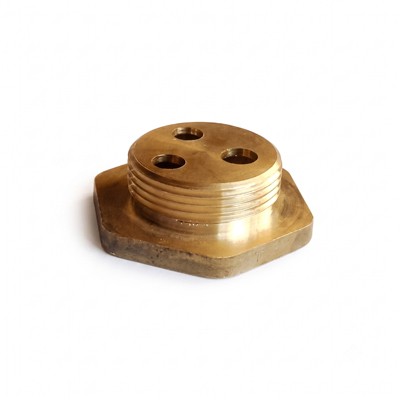
Material: Brass CuZn40Pb2
Flange Type: Immersion heater flange
Overall Flange Diameter: Ø54.5 mm
Outer Circular Diameter: Ø52 mm
Secondary Diameter: Ø50.5 mm
Inner Diameter: Ø35.2 mm
Lower Diameter: Ø38.7 mm
Mounting Holes: 3 × Ø8.3 mm
Additional Hole Feature: Ø8.1 mm
Mounting Hole Center Dimension: 22.5 mm
Horizontal Hole Position: 11.5 mm
Flange Height: 20 mm
Overall Height: 26.3 mm
Chamfer: 2 mm at 45°
Angular Feature: 30°
Threaded Feature: M6
Free-Dimension Tolerance: ISO 2768-m
Weight: 0.104 kg
Brass immersion heater flange manufactured from CuZn40Pb2 with a G 1 1/4" thread, Ø54.5 mm flange diameter, and three Ø8.3 mm mounting holes. The flange includes stepped internal diameters, an M6 threaded feature, and R1, R2, R2.5, and R5 profile radii, making it suitable for immersion heater fittings and assemblies.
| Specification | Details |
|---|---|
| Manufacturing Method | CNC machining for custom brass flanges Forged blanks or cast blanks sourced through suppliers when required by the flange design |
| Materials | Brass C36000 Brass CW614N (CuZn39Pb3) Brass IS 319 Custom brass grade according requirements |
| Flange Types | Custom brass flange designs according to drawing |
| Thread Types | NPT, BSP/BSPT, metric, and other specified thread types according to drawing |
| Dimensional Control | Vernier / digital caliper inspection Dimensions checked according to customer drawing |
| Thread Control | Go / No-Go thread gauge |
| Surface Inspection | Visual surface inspection for machining condition, burrs, and visible defects Plating thickness in microns can be reported when requested |
| Measurement Report | Dimensional measurement report available on request |
| CMM Report | CMM inspection and report available through a partner on request |
| Mill / Material Report | Mill test report / material certificate available on request |
| Surface Finish | Machined finish according to drawing Tin plating and nickel plating available through approved partners Tumbled finish according to requirement |
| Drawings Accepted | PDF, DWG, DXF, STEP |
| MOQ | Medium to high-volume repeat orders preferred MOQ depends on part geometry, drawing, and production requirements |
| Lead Time | Repeat orders: approximately 15-20 working days New orders: 25-30 working days Exact production time depends on the flange design and drawing |
| Inspection Documentation | Dimensional report, CMM report, and mill/material report available on request |
| Packaging | According to customer packaging and shipping requirements |
We manufacturer custom brass flanges according customer requirements. We make different types of custom brass flanges, including brass pipe flanges, cylinder and tank flanges, immersion-heater flanges, and mounting and plumbing flanges. The flange geometry determines how it connects, where it installs, and what it is intended to do.
| Brass flange type | Design and shape | Where used | How it connects |
|---|---|---|---|
| Threaded Brass Flange | Circular flange with a threaded bore and bolt holes around the flange. | Threaded pipe and equipment connections. | Screw the compatible male-threaded pipe into the flange, then bolt the flange to the mating connection. |
| Blind Brass Flange | Solid circular flange with bolt holes and no central flow opening. | Closing the end of a flanged pipe or an unused connection. | Place a gasket between the mating faces and bolt the blind flange to the matching flange. |
| Unthreaded Brass Pipe Flange | Flange with no internal pipe thread; brass and bronze versions use a braze-socket connection | Low-pressure piping that uses a non-threaded pipe connection. | Braze the pipe into the socket, then bolt the flange to another flat-face flange with a gasket. |
| Brass Companion Flange | Flange body with a pipe connection and a bolting face, threaded and sweat versions. | Connecting piping to another bolted flange or flat-face component. | Join the pipe on the connection side, then bolt the companion flange to the mating flange. |
| Brass Flange Adapter | Adapter body transitions from a pipe connection to a flanged end. | Connecting PEX or other piping systems to flanged equipment. | Make the pipe-side connection, then bolt the flange side to the mating component. |
| Brass flange type | Design and shape | Where used | How it connects |
|---|---|---|---|
| Surrey Flange, also known as S-Type or S Flange | Top-entry cylinder flange with separate top and side connections. | Hot-water cylinders supplying pumped shower systems. | Fit it to the cylinder's hot draw-off; the side outlet supplies the pump and the top connection serves the open vent arrangement. |
| Warix Flange | Top-entry cylinder flange with the pump and vent connections arranged differently from a Surrey flange. | Hot-water cylinders where the Warix arrangement suits the installation. | Connect the flange to the cylinder's top hot draw-off; the top outlet supplies the pump and the side connection takes the vent. |
| Essex Flange | Side-entry flange fitted through the wall of a cylinder or tank. | Hot-water cylinders, tanks, and boilers that need a side connection. | Make the required hole in the vessel and fit the flange through the wall from the outside. |
| No-Stop Essex Flange | Essex-style side-entry flange that allows the connecting tube to extend into the vessel. | Tanks and cylinders, including dip-tube and pumped shower applications. | Fit it through the vessel wall and pass the connecting pipe into the cylinder. |
| Danzey Flange | Top-entry hot-water-cylinder flange with a BSP female pump connection and tube outlet. | Hot-water cylinders and power-shower pump installations. | Fit it to the top of the cylinder and connect the pump-side pipe to the specified outlet. |
| Brass flange type | Design and shape | Where used | How it connects |
|---|---|---|---|
| Mechanical Immersion-Heater Flange | Brass flange with a threaded section that passes through the cylinder wall and a female heater connection. | Copper hot-water cylinders that need an immersion-heater connection. | Pass the threaded section through the cylinder wall, seal the joint with the specified washer, and screw the heater into the flange. |
| Soldered / Sweat Immersion-Heater Flange | Flange with a solder-type cylinder connection and a threaded heater outlet. | Cylinders designed for soldered flange attachment. | Solder the flange to the cylinder connection, then fit the compatible immersion heater to the threaded outlet. |
| Domed or Inclined Immersion-Heater Flange | Angled flange body designed to suit a curved or domed cylinder surface. | Cylinder installations where the mounting surface is domed | Fit the flange to the prepared cylinder opening so the angled body positions the heater correctly. |
| Brass flange type | Design and shape | Where used | How it connects |
|---|---|---|---|
| Brass Floor Flange | Flat mounting base with a central pipe connection and fixing holes. | Plumbing and other installations that require a pipe to be fixed to a floor. Common size is 1/2 and 2 inch brass floor flange | Connect the pipe to the flange and secure the flange to the mounting surface with suitable fasteners. |
| Brass Wall / Trim Flange | Covering flange with a central opening. some models use a set screw. | Covering pipe openings through walls | Slide the flange over the exposed pipe and secure it against the finished surface. |
| Brass Canopy / Cover Flange | Shallow stamped brass cover used for surface mounting. | Ornamental and surface-mounting applications. | Place the cover around the supported tube and secure it as part of the mounting assembly. |
| Brass Sink Flange | Open central flange designed to leave a clear drain passage. | Kitchen and bathroom sink and basin drain assemblies. | Fit the flange into the compatible sink assembly and seal the mating surfaces as specified by the drain manufacturer. |
| Brass Toilet / Closet Flange | Circular flange with a central opening and mounting holes for securing the toilet and connecting to the drain pipe. | Toilet and closet drain installations. | The flange connects to the drain pipe and bolts or screws to the floor, while the toilet mounts to the flange. |
We manufacture brass flanges from different brass grades according to customer requirements. Different brass grades provide different machinability, strength, corrosion resistance, casting and forging properties. Material grades are selected according to customer drawings and specifications.
Copper-zinc-lead free-machining brass. C36000 is a U.S. recognized machining grade, and it contains approximately 60 to 63% copper and 2.5 to 3.0% lead under the UNS composition range and has a 100 machinability rating. It's not a lead-free potable-water alloy. Good for CNC-machined flange bodies, threaded parts, and adapters.
CW614N is the European free-machining brass grade commonly associated with CuZn39Pb3. It provides high machinability and is better for CNC turning parts, threaded flanges, and precision-machined flange parts.
CW617N is CuZn40Pb2 and is widely used for hot-forged brass components. It is a hot-working/stamping grade. It's designed for hot forming/forging parts and is suitable for complex forged flange components. Good combination of hot-workability and machinability, and a good choice for forged blank flanges.
C37700 is the U.S. forging brass grade. Its composition contains approximately 58 to 61% copper and 1.5 to 2.5% lead. It's suitable for hot forging. A better choice when forming the flange near its final shape before machining the critical surfaces. Generally used for forged flange bodies, forged fittings, valve components, and pressure-related components.
IS 319 is an Indian material specification, and it covers free-cutting brass bars, rods, and sections. IS 319 is not equivalent to UNS C36000 as a whole.
Lead-free and potable water are not exactly the same thing. Lead-free means a weighted average lead content of not more than 0.25% across wetted surfaces for applicable plumbing fittings. Lead-free brass grades include CW724R, CW510L, and C69300.
Manufacturers heats brass stock into its hot-working range and presses it into a die. The result is a forged flange with the basic shape, the manufacturer then machines the bore, threads, face, and bolt hole according to the design and drawing. C37700 and CW617N are suitable for forged brass components. C37700 is specifically classified as forging brass, and CW617N as a hot-working/stamping alloy.
Forged brass can be efficient for repeated flange geometries and can reduce machining compared with producing the entire shape from oversized bar. The forging method can be suitable for high-volume production.
Casting has a different approach from forging. The manufacturer melts the copper alloy and pours it into a mold to create the flange shape. After solidification, machining can finish the sealing faces, bore, threads, and other dimensional features. The casting method can be useful for complex flange geometry, larger sections, and geometries that are inefficient for forging.
| Factor | Forged brass | Cast brass |
|---|---|---|
| Starting process | Heated stock formed in a die | Molten alloy poured into a mold |
| Best fit | Repeated forged shapes and strong formed sections | Complex cast geometry and suitable larger/irregular forms |
| Typical relevant alloys | C37700, CW617N, suitable lead-free forging alloys | Alloy depends on casting specification |
| Machining | Usually machines critical surfaces after forging | Usually machines critical surfaces after casting |
| Material selection | Choose a forging-grade alloy | Choose a cast-alloy grade |
| Production choice | Strong option for repeat production | Useful when the geometry favours casting |
We make different connection types of custom brass flanges according to customer requirements. Brass flange connections include threaded, solder/sweat, press-to-flange, PEX-to-flange, and flange-to-flange connections.
Brass threaded flanges have a pipe-side connection with internal or external pipe threads, depending on the flange design. The flange then connects to the mating flange with bolts and the required sealing arrangement. Mostly used in threaded piping, pump connections, and equipment connections.
Solder/sweat connection method does not use pipe threads. The pipe-side connection uses a solder/sweat cup. The tube enters the socket, and the installer makes the soldered joint. The flange side then bolts to the mating flange. Generally used in copper tubing systems, potable-water installations, and hydronic/heating systems.
Press-to-flange connection uses the press connection method. The pipe enters the press fitting, and the joint forms with the specified press tool and fitting system. The flange brass side bolts to the mating flange. Used in commercial plumbing, heating systems, and water systems.
PEX connection on one side, brass flange on the other. The PEX side uses the specified PEX joining system. The flange side bolts to the mating flange. Generally used in PEX piping, plumbing, HVAC systems, and transitions from PEX to flanged equipment.
Two matching flange faces meet around the pipe/equipment connection. The two flange faces align, the gasket is positioned by the joint design, and bolts/nuts clamp the assembly. This method connects pumps, valves, piping equipment, and removable equipment.
We manufacture custom brass flanges according to customer drawings and specifications. Depending on the flange design, material grade, quantity, and required geometry, we use machining, hot forging, casting, and sometimes a combination of these processes. Secondary machining produces the required faces, holes, bores, threads, and other critical features.
We review the customer drawing to identify the flange geometry, material, critical dimensions, tolerances, threads, hole locations, and surface finish. We then select the suitable manufacturing route and machining operations for the part.
We follow the brass grade according to customer requirements from the product drawing. We purchase material from our trusted supplier. Depending on the flange design, the supplier provides brass bar, forged blanks, and cast blanks for further machining. We verify the required alloy, grade, material condition, and diameter.
The manufacturing route depends on the flange design. For parts that require direct machining, we receive suitable brass bar. When the design requires forging or casting, we source the required forged or cast blank through our suppliers.
CNC turning machines the circular flange features, including the outside diameter, bore, shoulders, and other rotational surfaces shown on the drawing.
We machine the flange face to the required thickness, flatness, and surface finish according to the drawing. We drill the required bolt holes to the specified diameter and location. CNC positioning controls the bolt-hole pattern around the flange.
We bore the internal opening when the flange drawing requires a controlled bore diameter, concentricity, and internal surface finish.
We machine internal or external threads according to the customer drawing and specified thread standard. The machining method depends on the thread size, flange design, and required tolerance.
We use CNC milling and secondary machining when the flange drawing includes slots, flats, recesses, off-center holes, and other features that turning alone cannot produce.
We remove machining burrs and unwanted sharp edges after machining. The finishing method depends on the flange geometry and drawing requirements.
Surface finishing depends on the customer drawing via a trusted partner. Tin plating, nickel plating, or tumbled finish according to requirements.
We inspect critical features during production and check the finished flange against the approved drawing. Depending on the tolerance and geometry, inspection can include dimensional measurement, thread checks, and surface checks.
Finished brass flanges are packed according to customer packaging and shipping requirements.
Brass flanges are used in piping, pumps, heating, hot-water, tank, and plumbing systems.
In piping systems, threaded, unthreaded, companion, and blind brass flanges are used for pipe and equipment connections, depending on the flange design and application.
Threaded, solder, and press configurations are used in circulator pumps, hydronic heating systems, and pump isolation assemblies.
Brass flanged components connect pumps and other equipment in hydronic heating and cooling systems. Mostly used are brass pump flanges and brass flange adapters.
Surrey, also known as S-type or S flange, Warix, Essex, and other cylinder flanges connect hot-water cylinders to pumped shower systems.
Brass tank flanges and Essex flanges are used in pipe connections through tanks and cylinders.
Brass immersion-heater flanges provide the mounting and threaded connection for immersion-heater elements.
Brass flanges connect compatible piping, valves, pumps, and equipment in plumbing and water systems. Commonly used are threaded companion flanges, sweat companion flanges, and flange adapters.
Brass companion flanges and flange adapters connect compatible valves, pumps, and other flanged equipment to the piping system.
Brass floor, wall, trim, canopy, and sink flanges serve mounting, covering, and plumbing-fixture connections.
For a bolted flange joint, the need for a gasket depends on the flange design and joint specification. Where the joint uses a gasket, install the specified gasket between the mating faces and ensure that the flange surfaces and gasket align correctly.
Yes, a brass flange can mate with a cast-iron or steel flange when the two components have compatible dimensions, face design, bolts, gasket, pressure and temperature requirements. The different metals can also create galvanic-corrosion concerns when they contact each other in an electrically conductive environment, so the material combination and service conditions need to be considered. Some commercial flange products use coatings or other barriers specifically to prevent galvanic corrosion between dissimilar metals.
A brass flange connection can leak when the gasket does not seat correctly, the flange faces are misaligned or damaged, or the bolts apply uneven or insufficient load. Incorrect gasket positioning can also prevent uniform sealing.
The flange may be experiencing dezincification, a corrosion process that selectively removes zinc from brass and leaves a copper-rich structure. Depending on the environment, dezincification can produce white corrosion deposits and later change the brass surface toward a copper color. Water chemistry, chloride content, pH, temperature, stagnant conditions, and the brass alloy can affect the risk. Severe dezincification can weaken and perforate the brass.
A brass flange can crack when mechanical stress combines with a corrosive environment, particularly when the alloy is susceptible to stress-corrosion cracking. uneven bolt loading can also place additional stress on a flange. Certain environments containing ammonia and other aggressive chemicals can promote stress-corrosion cracking in susceptible brass alloys. The actual cause requires checking the alloy, loading, installation, and service environment.
To request a brass flange quotation, send your drawing and RFQ details.
Please include:
Send your RFQ and drawings to receive a quotation with pricing and indicative lead time.