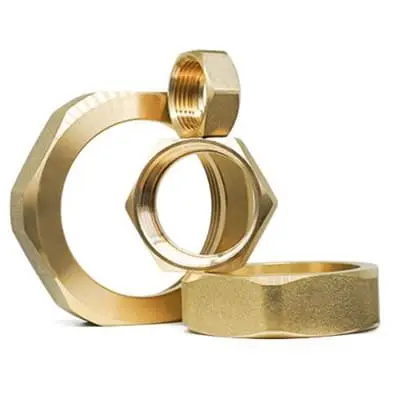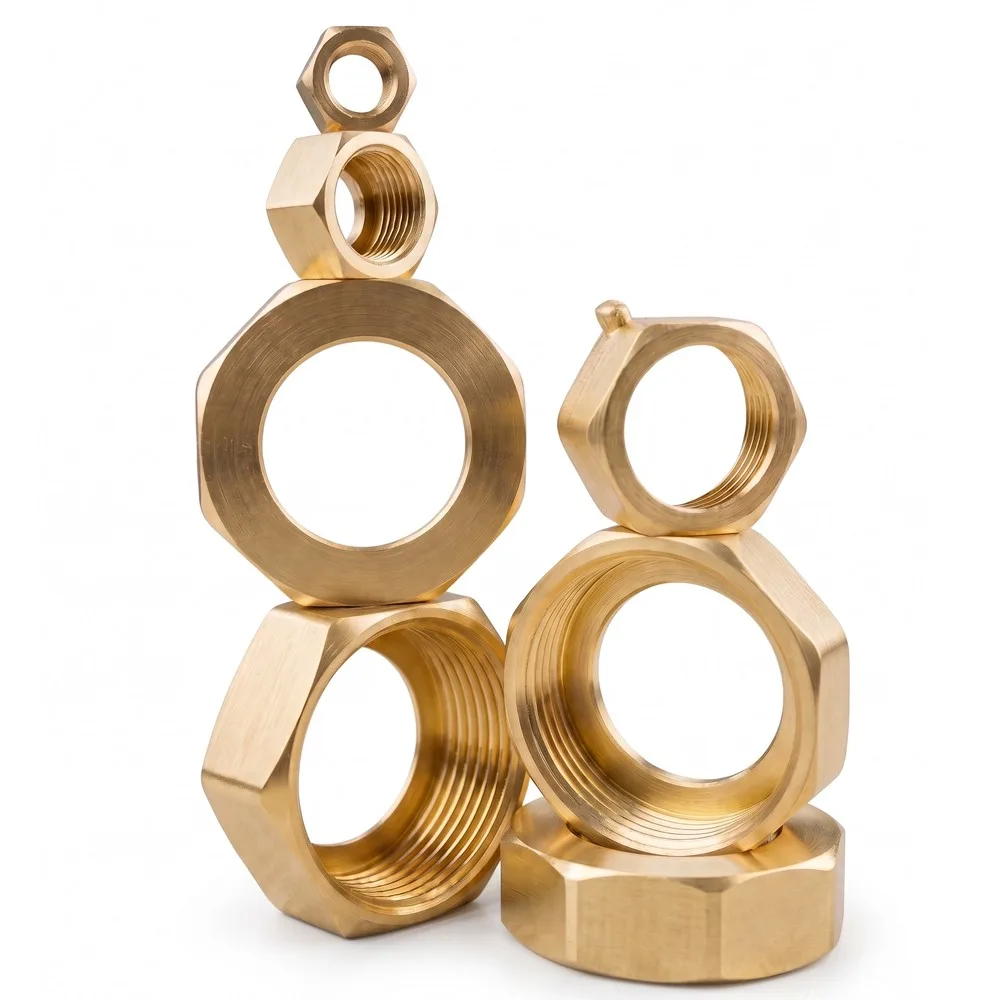


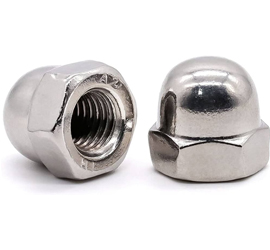
Custom Brass Nuts Made to Customer Drawings
A brass nut is an internally threaded brass alloy mechanical fastener. It mates with an external thread on a compatible fastener, typically a bolt, to hold components together and create a threaded joint. Brass nuts are used in electrical equipment, cable glands and conduit fittings, Marine Equipment and Hardware, pipe fittings, general machinery, and automotive.
We are a custom brass nut manufacturer and supply brass nuts to OEMs, distributors, and industrial buyers in the United States, Asia, and across European markets, including Germany, France, Spain, the Czech Republic, the Netherlands, the UK, and Italy.
All our custom brass nuts will be manufactured according to the customer's drawing and sample. Custom thread sizes, shapes, dimensions, thread systems, and designs according to customer requirements. We manufacture various types of brass nuts such as brass hex nuts, lock nuts, acorn nuts, bolt nuts, check nuts, dome nuts, square nuts, wing nuts, flange nuts, coupling nuts, and custom nuts according to the drawing. We perform CNC turning, drilling, boring, tapping, milling, secondary machining, and other machining operations according to the brass nut design. Custom brass grades are supported according to customer requirements, along with both metric and inch thread configurations.
We support medium- to high-volume production requirements. Samples and a small batch are also supported for quality and testing.
Send Your Drawing for a Custom Brass Nuts QuoteRecent OEM Brass Nut Projects
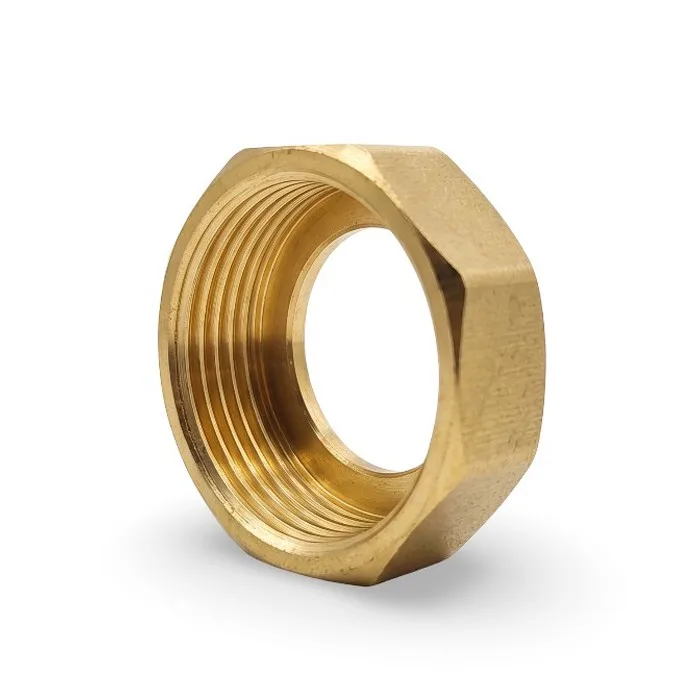
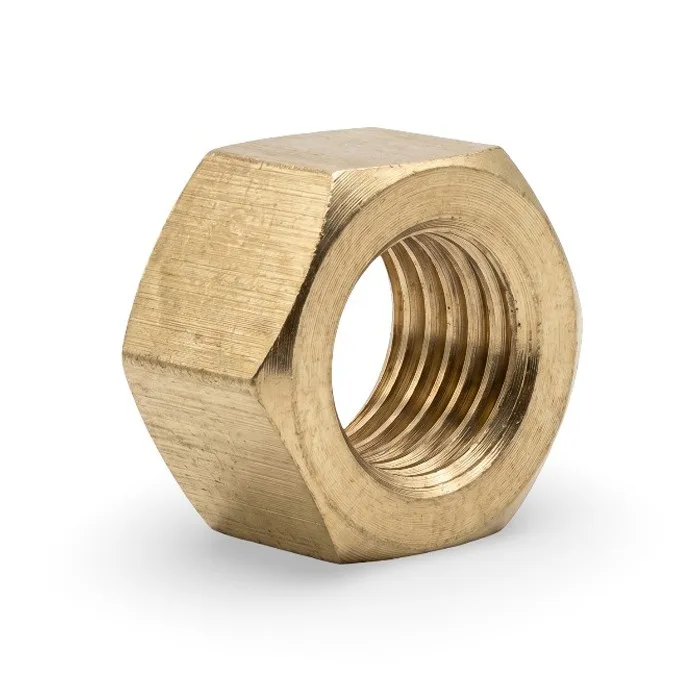
Custom Brass Hex Nut with G 5/4 Inch Thread
Material: Brass IS 319 Grade 1
Nut Type: Hex nut
Thread: G 5/4 inch
Thread / Diameter: Ø38.95 mm
Across Flats (SW): 46 mm
Outer Diameter: Ø49 mm
Diameter: Ø46 mm
Inner Diameter: Ø29 mm
Overall Thickness: 14 mm
Internal Dimension: 3 mm
Internal Step: 0.8 mm
Internal Step: 0.5 mm
Chamfer: 1.35 mm
Angular Feature: 30°
Manufacturing Process: Forging and CNC machining
We manufacture this brass hex nut with a G 5/4 inch thread, 46 mm across flats, and a 14 mm overall thickness. The brass nut combines a Ø49 mm outer profile, Ø46 mm diameter feature, Ø29 mm inner diameter, stepped internal geometry, and a 60° internal angle for threaded connection and fastening applications.
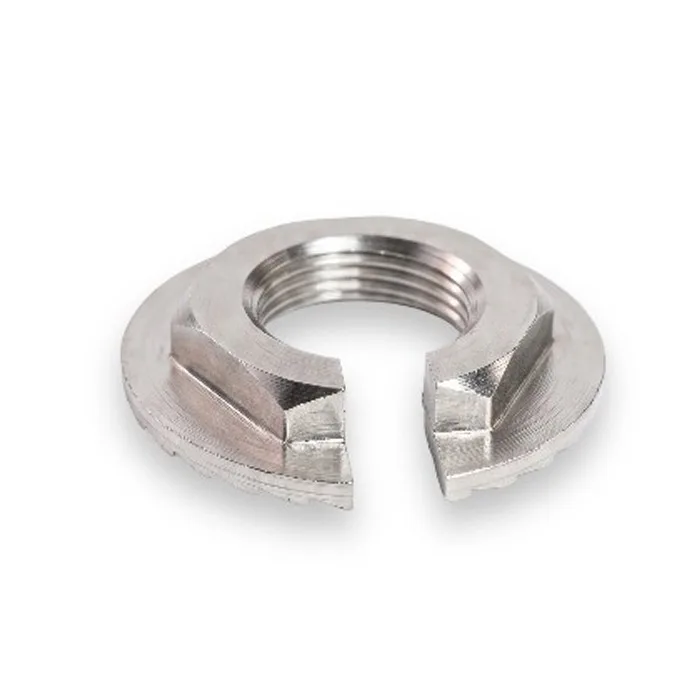
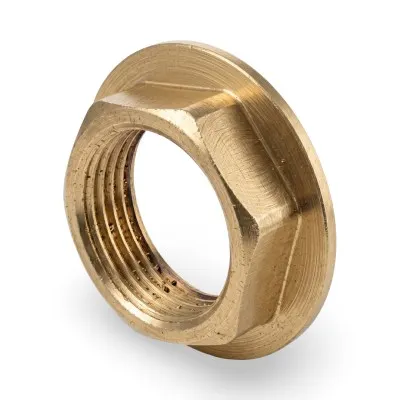
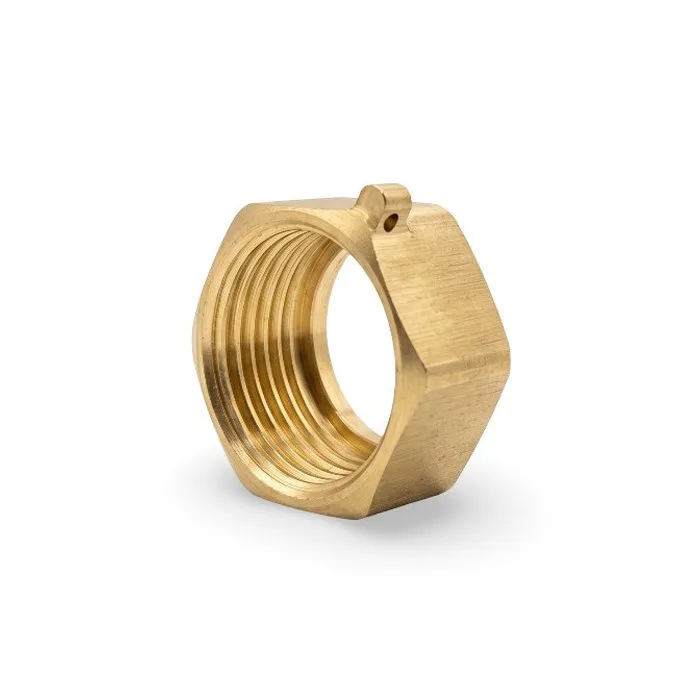
Custom Serrated Flange Lock Nut
Material: Brass IS 319 Grade 1
Finish: Nickel plated
Nut Type: Flange nut
Thread: 5/8-24
Overall Diameter: 23.81 mm
Overall Thickness: 6.00 mm
Opening Width: 6.00 mm
Radial Dimension: R11.91 mm
Additional Dimension: 1.78 mm
Manufacturing Process: CNC machining, threading, and slot milling
We manufacture this custom brass slotted flange nut with a 5/8-24 thread, 23.81 mm outside diameter, and 6.00 mm overall thickness. The nickel-plated brass lock nut features a split flange profile with a 6.00 mm opening, R11.91 mm radius, and 1.78 mm dimensional feature.
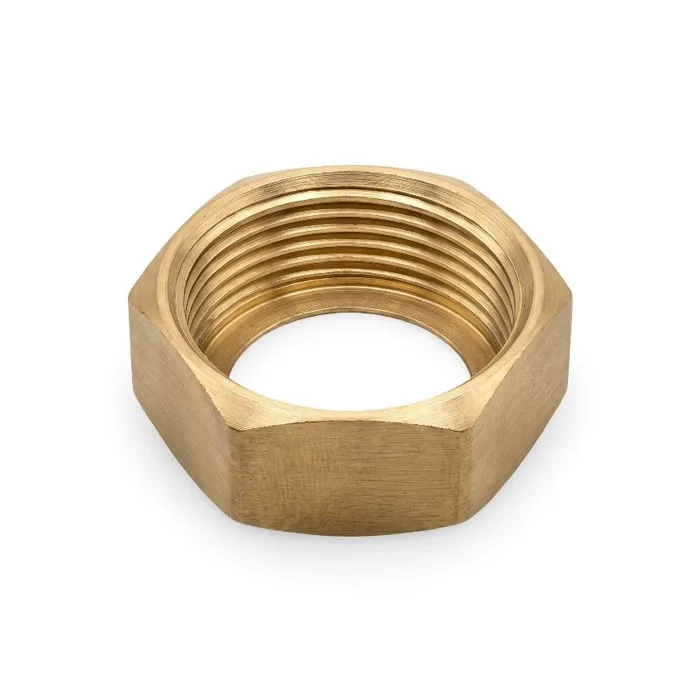
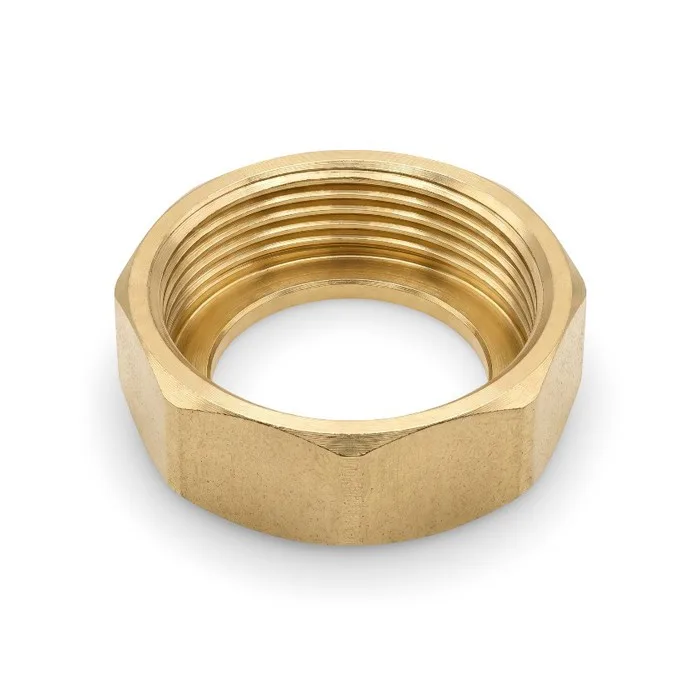
Custom Brass Hex Nut, G 1 1/4 Inch Thread
Material: Free-cutting brass
Nut Type: Hex nut
Thread: G 1 1/4 inch
Across Flats: 45 mm
Internal Diameter: Ø29 mm
Reference Dimension: 51 mm
Axial Dimension: 18.50 mm
Additional Dimensions: 1.50 mm
Manufacturing Process: Forging and CNC machining
We manufacture custom brass hex nuts with a G 1 1/4 inch internal thread, 45 mm across flats, and a Ø29 mm internal diameter. The brass nut features an 18.50 mm axial dimension, a 51 mm overall reference dimension, and a stepped internal profile with 1.50 mm sections.
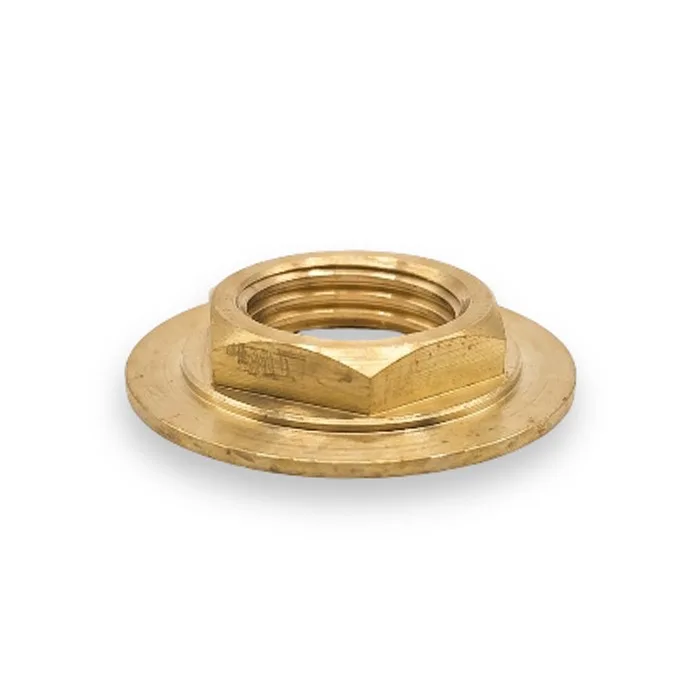
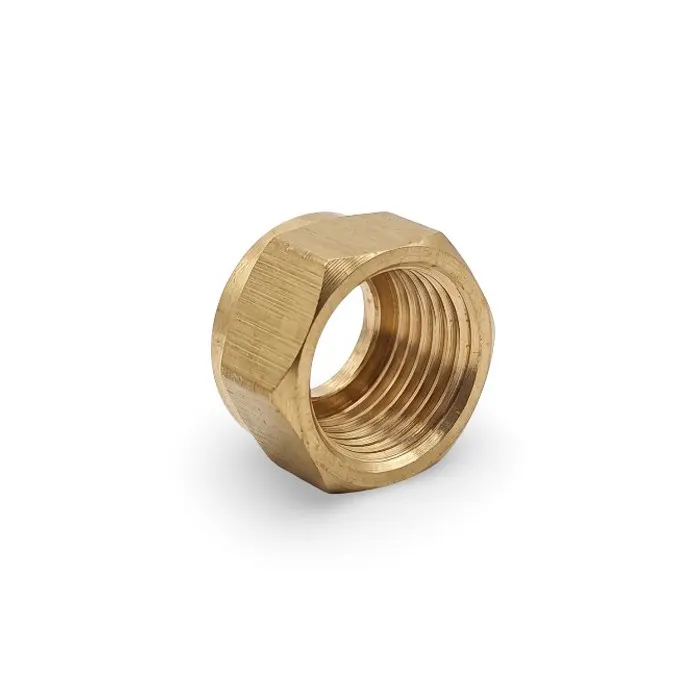
Custom Brass Flange Nut with 1/2 Inch BSP Thread
Material: Brass
Nut Type: Hex flange nut
Thread: 1/2 inch BSP
Across Flats (AF): 24.6 mm
Diameter: Ø40 mm
Diameter: Ø30.7 mm
Overall Height: 8 mm
Flange Thickness: 2.8 mm
Step: 0.8 mm
Chamfer: 2 × 45°
Chamfer: 1.5 × 45°
We manufacture this custom brass flanged hex nut with a 1/2 inch BSP internal thread, 24.6 mm across flats, and a Ø40 mm flange diameter. The brass flange nut features a Ø30.7 mm body, 8 mm overall height, 2.8 mm flange thickness, 0.8 mm step, and 2 × 45° and 1.5 × 45° chamfers.
Brass Nut Specifications & Capabilities
| Item | Specification |
|---|---|
| Brass Grade | Brass, including C36000, CW614N / CuZn39Pb3, IS 319 Grade I, and customer-specified brass grades |
| Nut Types | Custom brass nut according to drawing. |
| Manufacturing Process | CNC turning, machining, threading, milling, secondary machining, cold forming, forging, and machining of forged blanks according to the nut design |
| Thread System | Metric, UNC, UNF, BSP, BSW, BSF, BA, NPT, fitting-specific threads, and customer-specified thread systems |
| Thread Size | According to the specified nominal diameter, pitch, TPI, thread series, and customer drawing |
| Nut Design | Standard, thin, high, narrow, reducing, flange, slotted, knurled, coupling, insert, fitting, and customer-specific designs |
| Surface Finish | Natural brass, tin plating, nickel plating, tumbled finish, and customer-specified finishes |
| Tolerance | General tolerance ±0.10 mm, tighter tolerances according to drawing. |
| Inspection | Dimensional and thread inspection according to drawing requirements, using calipers, thread gauges, and other suitable measuring equipment |
| Material Certification | Available on request according to order requirements |
| Drawing Formats | STEP, PDF, DXF, DWG, and customer-specified formats |
| Packaging | Poly bags, boxes, master cartons, pallets, and custom packaging |
| MOQ | Based on part geometry, material, tooling, quantity, and production requirements |
| Lead Time | According to quantity and production requirements |
| Tooling Ownership | All tooling are customer-owned Tooling is never reused for other customers |
Types of Brass Nuts
We manufacture brass nuts in different shapes and sizes according to the drawing. Common types include hex nuts, check nuts, wing nuts, dome nuts, flange nuts, knurled thumb nuts, coupling nuts, square nuts, and slotted nuts.
Brass Hex Nuts
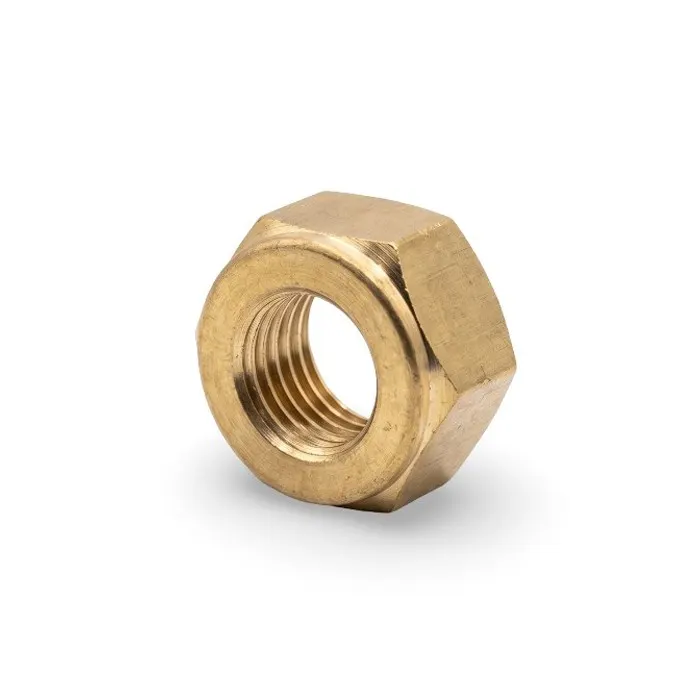
Brass hex nuts have six flat sides for tightening with a wrench. We make them in standard thin, high, narrow, and other profiles for diffrent spaces and according to fastening requirements.
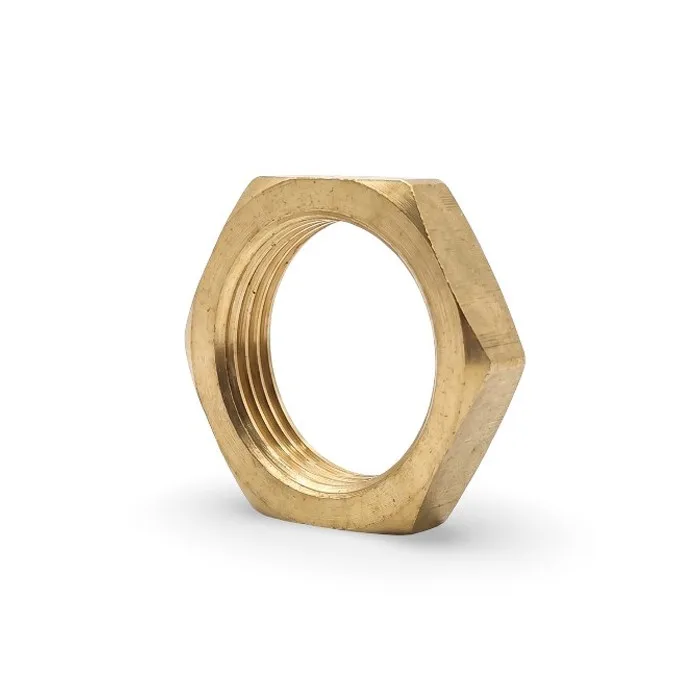
Brass Check Nuts / Brass Jam Nut / Brass Thin Nuts
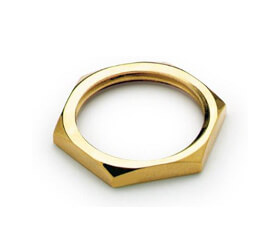
Check nuts have a thin hex profile for assemblies in limited space. Check nuts work with another to create a jammed connection and help secure a threaded assembly. Their thinner body gives less load-carrying capacity than a regular nut.
For more details, visit our brass check nut product page.
Brass Wing Nuts
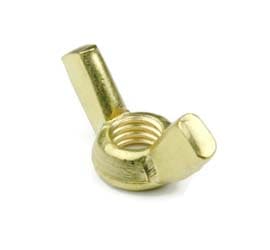
Wing nuts have two wing projections that provide a grip for hand tightening. They are useful in assemblies that need frequent installation and removal without a wrench. Their hand-tightening design characteristic does not suit applications that require high installation torque.
For more details, visit our brass wing nut product page.
Brass Dome Nuts
Brass dome nuts have a closed and rounded top that covers the exposed end of the mating fastener. The dome protects the projecting thread and gives the assembly a finished appearance. Hexagon domed cap nuts commonly use a hex body for wrench tightening.
For more details, visit our brass dome nut product page.
Brass Knurled Thumb Nuts
Knurled thumb nut's knurled textured outside surface that gives the fingers a firm grip during installation. Thumb nuts suit light-duty assemblies needs frequent hand adjustment. Some designs include a flange to suit the mounting arrangement.
Brass Coupling Nuts
Coupling nuts have a longer body with female threads along the body. They connect two externally threaded parts, such as threaded rods and studs. Their length provides thread engagement on both connected parts.
Brass Square Nuts
Square nuts have four flat sides and an internally threaded hole. The square profile can help prevent the nut from turning when the nut sits inside a matching recess, channel, or opening.
Brass Slotted and Castle Nuts
Slotted and castle nuts have slots cut into the upper part of the nut. A cotter pin can pass through the slots and a matching hole in the mating fastener to help prevent nut rotation. This design suits assemblies that require a mechanical retention method.
Brass Flange Nuts
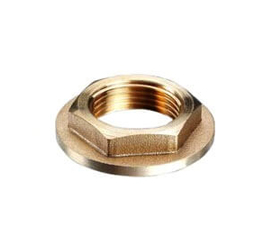
Brass flange nut have an integrated flange beneath the nut body. The flange spreads clamping pressure across a wider area and can reduce the need for a separate washer.
Brass Flare Nuts
A brass flare nut is an internally female-threaded nut used with a flared tube and a compatible flare fitting body. The nut is placed on the tube before the tube end is flared. During assembly, the nut draws the flared tube against the mating fitting seat. This produces the sealing contact at the flare interface and is used for a metal-to-metal flare connection.
For more details, visit our brass flare nut product page.
Brass Compression Nuts
Brass compression nuts form part of compression fitting assemblies. The nut tightens against the fitting body, compressing the ferrule against the tube and forming the sealing connection.
Brass Insert Nuts
Brass insert nuts are threaded inserts made from brass that provide an internal thread in plastic and metal parts. Their outer features, such as knurls, barbs, and undercuts, help retain the insert in the surrounding material.
For more details, visit our brass insert nut product page.
Brass Grades for Nuts
We manufacture brass nuts as per the customer's requirements mentioned in the drawing. If the brass grade is not mentioned in the product drawing, then our default brass grade is IS-319 Grade I free-cutting brass.
U.S. grade
UNS C36000 is a recognized U.S. free-cutting brass grade. It is commonly used for screw-machine parts and is available in rod, bar, wire, and shape forms.
European grade
CW614N / CuZn39Pb3 is a European free-machining brass grade.
Indian grade
IS 319 is an Indian Standard for free-cutting brass supplied as bars, rods, and sections.
Brass Nut Sizes and Threads
We manufacture brass nuts in different nominal thread sizes and thread systems according to customer requirements.
Metric Brass Nut Sizes
Metric threads use the nominal diameter and thread pitch.
For example, M6 × 1.0 means:
- M = metric thread
- 6 = nominal thread diameter in mm
- 1.0 = thread pitch in mm
ISO 261 defines the general metric thread system. ISO 965 covers metric thread tolerances.
| Metric thread Size | Standard Coarse Pitch |
|---|---|
| M3 | 0.5 mm |
| M4 | 0.7 mm |
| M5 | 0.8 mm |
| M6 | 1.0 mm |
| M8 | 1.25 mm |
| M10 | 1.5 mm |
| M12 | 1.75 mm |
| M16 | 2.0 mm |
| M20 | 2.5 mm |
| M24 | 3.0 mm |
These values represent standard metric coarse pitches.
Note: This table shows selected common metric thread sizes with standard coarse pitches. It is not a complete list of metric thread sizes.
Metric Fine Threads
Some brass nuts use metric fine-pitch threads, such as M6 × 0.75, M8 × 1.0, M10 × 1.25, M12 × 1.25, M16 × 1.5, and M20 × 1.5. ISO provides standards for metric fine-pitch nuts and thread tolerances.
U.S. Inch Thread Sizes
Unified inch threads use the nominal diameter and threads per inch.
For example, 1/4-20 UNC uses a 1/4 inch nominal diameter and 20 threads per inch. ASME B1.1 defines the Unified inch thread system.
| Unified Inch Thread Size | UNC | UNF |
|---|---|---|
| 1/4 in. | 20 TPI | 28 TPI |
| 5/16 in. | 18 TPI | 24 TPI |
| 3/8 in. | 16 TPI | 24 TPI |
| 7/16 in. | 14 TPI | 20 TPI |
| 1/2 in. | 13 TPI | 20 TPI |
| 5/8 in. | 11 TPI | 18 TPI |
| 3/4 in. | 10 TPI | 16 TPI |
| 1 in. | 8 TPI | 12 TPI |
Note: This table shows selected common Unified inch thread sizes for UNC and UNF threads. It is not a complete list of Unified inch thread sizes.
Other Thread Systems
Brass nuts can also use thread systems according to the application, such as BSP, BSW, BSF, BA, NPT, and fitting-specific threads. These thread systems have different specifications and should not be treated as one general-purpose thread system.
Brass Nut Manufacturing Process
We manufacture brass nuts according to customer drawings, material grade, dimensions, thread, and flare type. Depending on part requirements, we choose a production route of cold forming, forging, or machining from brass rod. Our main manufacturing operations include material preparation, forging when required, machining, threading, deburring, finishing, inspection, and packaging.
1. Drawing Review
Our first step in the manufacturing process starts with a review of the customer drawing and details. We check all details, including brass grade, tube OD, thread size and pitch, hex, nut length, nut type, tolerances, and surface finish, before production starts.
2. Raw Material Procurement
Next, we follow the brass grade according to customer requirements from the product drawing. We purchase material from our trusted supplier. Depending on the nut design, the supplier provides brass bar and forged blanks for further machining. We verify the required alloy, grade, material condition, and diameter.
3. CNC Turning and Machining
After material purchase, we perform CNC machining according to the product drawing. CNC turning and related machining operations can produce the outer profile, overall length, tube-side bore, internal clearance, and other part features according to the nut design.
4. Thread Machining
We machine internal threads according to the required thread standard, diameter, and pitch as per the product drawing.
5. Milling and Secondary Machining
We perform additional milling and secondary machining according to the nut design. This can include chamfers, counterbores, slots, reducing features, special body dimensions, and other features that turning alone cannot produce.
6. Deburring and Cleaning
After machining, burr and loose machining debris are removed from the brass nut. We clean parts so threads, bores, and finished surfaces are free from material that could interfere with assembly.
7. Surface Finishing
Surface finishing depends on the customer drawing. Natural brass, tin plating, and nickel plating are finish specifications. Tumbling is a mass-finishing process used when required.
8. Dimensional and Thread Inspection
We inspect the brass nut against the customer drawing. Depending on the part requirements, inspection can include overall dimensions, hex size, bore dimensions, thread diameter, thread pitch, thread fit, and other critical features. Thread gauges, calipers, and other measurement equipment can be used according to requirements.
9. Final Inspection and Packaging
After inspection, the final step is final inspection and packaging. Standard packaging includes a poly bag, a small box, a master box, and a wooden pallet for the sea route. Custom labeling and packaging are also supported according to customer requirements.
Applications of Brass Nuts
Our brass nuts are used in various applications such as electrical equipment, marine hardware, machinery, tube fittings, and plastic assemblies.
Electrical Equipment
Brass hex nuts are used to secure electrical equipment, circuit board assemblies, and mounting brackets inside enclosures. Brass panel nuts suit electrical panels when available space is limited.
Cable Glands and Conduit
Brass conduit locknuts secure threaded conduit fittings to threaded entries and enclosure knockouts. Nickel-plated brass versions are used in industrial, automation, panel-building, power, and marine installations.
Marine Equipment and Hardware
Brass hex nuts are used in marine equipment assemblies, boat hardware, and related fastening applications.
General Machinery and Equipment
Brass hex nuts can be used for fastening machinery and equipment.
Fluid Tubing Connections
Brass compression nuts form part of compression fitting assemblies for tubing connections. The nut works with the compression sleeve and fitting to create a sealed connection on suitable tubing.
Flared Tube Connections
Brass flare nuts are used with flared fittings in systems such as refrigerant lines, fuel lines, propane lines, and natural gas lines. The nut clamps the tube flare against the fitting body to create the metal-to-metal seal.
Automotive and Communications Equipment
Brass threaded inserts are used in automotive and communications equipment to provide reusable threads in plastic components.
Visible Hardware
Brass cap nuts are used where the exposed end of a fastener needs protection and a finished appearance. Brass and plated brass versions also suit decorative hardware applications.
Brass Nut FAQs
1. Can brass nuts corrode?
Yes. Brass resists corrosion in many environments, but some brass alloys can suffer dezincification, especially under certain water and marine conditions. Corrosion performance depends on the brass alloy and service environment.
2. Are brass nuts electrically conductive and nonmagnetic?
Yes. Brass conducts electricity and is essentially nonmagnetic. Electrical conductivity varies with the brass alloy.
3. Are brass nuts suitable for high-load fastening?
Brass nuts can suit some load-bearing fastening applications, but they are not automatically suitable for high loads. The required load capacity depends on the brass alloy, temper, nut dimensions, thread engagement, and joint design.
4. Are brass nuts weaker than steel nuts?
Generally, yes. Common brass alloys have lower mechanical strength than many common steel fastener materials, but the actual strength depends on the alloy, grade, temper, and nut design.
5. Can brass nuts be used with stainless steel bolts?
Yes, but the material combination needs corrosion assessment in wet environments. Brass and stainless steel have different electrochemical potentials, so galvanic corrosion can occur when both metals contact an electrolyte.
6. Are brass nuts suitable for drinking-water applications?
Yes, when the specific brass component meets the applicable drinking-water requirements. In the United States, regulated plumbing products must meet the lead-free requirement, which sets a weighted average limit of 0.25% lead across wetted surfaces. NSF/ANSI/CAN 61 addresses contaminant leaching and health effects, while NSF/ANSI/CAN 372 addresses lead content.
Request a Brass Nuts Quote
To request a brass nut quotation, send your drawing and RFQ details.
Please include:
- Brass grade specification
- Quantity requirement (one-time, repeat, or blanket order)
- Critical dimensions and tolerance requirements
- Required delivery timeline
- Shipping terms (EXW, DAP, or DDP)
Send your RFQ and drawings to receive a quotation with pricing and indicative lead time.
Send Your Drawing for a Custom Brass Nut Quotation