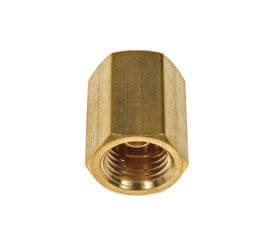
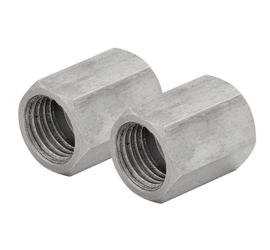
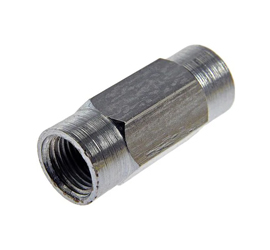
A brake line union is an inline fitting that joins two sections of brake tubing into one sealed, continuous hydraulic circuit. Also called a brake line joiner, brake pipe joiner, or brake line connector depending on the market, it is the standard solution whenever a damaged or corroded section of hard line is cut out and a replacement section must be spliced in.
We manufacture brake line unions and other brake line fittings for OEM buyers, distributors, automotive parts wholesalers, and fleet suppliers worldwide. Our range covers inverted flare unions, bubble flare unions, bulkhead unions, double flare connectors, compression unions, and banjo unions, available in brass, stainless steel, and carbon steel, in SAE imperial and metric DIN sizes.
A brake line union is a double-ended fitting with internal threads and a sealing seat on each end. Two brake line tube nuts, one from each section of line, thread into opposite ends of the union body, pulling the flared tube ends tight against the internal seats. This creates a sealed joint that withstands the high hydraulic pressure of an active brake system.
| Type | How It Works | When to Use | Flare Compatibility |
|---|---|---|---|
| Inverted Flare Union | Tube nuts with an inverted (inward) flare seat on both ends. The most common type for North American vehicles. | Standard choice for USA, Canada, and any vehicle built to SAE brake specifications. | Inverted flare (double flare) only. Both sides must match. |
| Bubble Flare Union | Tube seats accept a rounded bubble (outward dome) flare. Governs European brake systems. | European vehicles, Audi, BMW, VW, Mercedes, Renault, Peugeot, Volvo, Fiat, and others. Metric thread (M10x1, M12x1). | Bubble flare (ISO flare) only. Used with DIN 74234 brake fittings. |
| Double Flare Connector | A union specifically designed for double-flared tube ends to provide a secure metal-to-metal seal. | OEM assemblies and brake systems requiring double-flared tube connections. Common on North American vehicles. | Double flare only. Both the flare type and thread specification must match. |
| Bulkhead Union | A union with an extended body, lock nut, and mounting flange, designed to pass through and mount in a firewall, bulkhead, or chassis panel. | Custom brake line routing through firewalls or frame sections. Common in kit car builds, race vehicles, and heavy vehicles. | Available in inverted flare (SAE) or bubble flare (DIN) depending on specification. |
| Compression Union | Seals using a sleeve (ferrule) compressed by a nut, no flaring of the tube required. | Low-pressure fuel, pneumatic, and some hydraulic applications. Not recommended for primary hydraulic brake lines. | No flare, compression sleeve. Not suitable for high-pressure hydraulic braking. |
| Banjo Union | Hollow bolt with a banjo fitting that allows brake fluid to pass through while providing a compact connection. | Connecting brake hoses to calipers, master cylinders, and other hydraulic components where a fixed-angle connection is impractical. | Banjo fitting style. Uses copper or aluminum crush washers for sealing. |
Brake line unions are commonly manufactured from brass, steel, and stainless steel. Each material offers different properties depending on the application requirements.
Steel brake line unions provide high strength and are commonly supplied with zinc plating for corrosion protection. They are suitable for high-pressure hydraulic brake systems. Carbon steel grades are selected according to customer and application requirements.
Common material: Zinc-plated carbon steel
Brass brake line unions provide excellent corrosion resistance in moisture and road salt environments.
Common grade: C36000 free-cutting brass
Stainless steel brake line unions provide excellent corrosion resistance, high strength, and long service life. They do not require protective surface coatings like carbon steel.
Common grades: SS304, SS316, SS316L
| Material | Corrosion Resistance | Strength | Cost | Best For |
|---|---|---|---|---|
| Brass | Good, no coating needed | Medium | Medium | Aftermarket repair, OEM assembly, standard road vehicles |
| Steel (zinc plated) | Requires zinc coating. Corrosion resistance depends on coating condition and environment. | High | Low | OEM factory assemblies, short-term budget supply |
| Stainless Steel | Excellent | Good | High | Racing, high-performance builds, premium replacement |
Selecting the correct union size is critical. The tube OD and thread type on each side of the union must exactly match the brake line and tube nut being used. A mismatch will not provide a proper seal, and a mismatched fitting can leak under brake pressure. Use the chart below as a reference for common SAE brake line union sizes. 3/16 brake line unions and 1/4 brake line unions are among the most commonly manufactured sizes for automotive brake systems.
| Tube OD | Thread Size | Standard | Vehicle Market | Union Type |
|---|---|---|---|---|
| 3/16" (4.75 mm) | 3/8"-24 UNF | SAE | Most North American passenger cars and light trucks | Inverted flare union, most common in aftermarket repair |
| 1/4" (6.35 mm) | 7/16"-24 UNF | SAE | US trucks, SUVs, medium-duty vehicles | Inverted flare union, commonly used for larger brake lines |
| 5/16" (7.94 mm) | 1/2"-20 UNF | SAE | Heavy-duty trucks and commercial vehicles (depending on brake system design) | Inverted flare union for larger brake line applications |
For bulkhead unions, common tube OD and thread sizes are similar to those listed above. The main difference is the extended body and panel mounting nut.
| Control Item | Details |
|---|---|
| Raw Material Sourcing | raw material sourced according to specified material requirements. |
| Material Verification | Material certificates supported according to customer and order requirements. |
| CNC Machining | CNC turning, threading, drilling, chamfering, and other machining operations performed according to part requirements. |
| Flare Seat Inspection | Flare seat dimensions and sealing surfaces inspected according to drawing requirements. |
| Thread and Dimensional Inspection | Thread size, thread fit, and critical dimensions verified using measuring instruments and gauges. |
| Surface Finish and Plating Support | Natural brass, zinc plating, passivation, and other specified surface finishes supported according to material and customer requirements. |
| Sample Development | Samples can be provided before mass production for testing and approval. |
We manufacture brake line unions according to customer drawings and specifications. We do not sell standard parts or maintain stock.
| OEM Manufacturing Support | Details |
|---|---|
| Custom Manufacturing | Manufactured according to customer drawings, samples, and specifications |
| Material Options | Brass, zinc-plated steel, carbon steel, mild steel, and stainless steel according to customer requirements |
| Production Volume | Medium and high production runs supported. Very low-volume production orders are not accepted. |
| Sample Development | Samples and small batches can be provided for testing and approval before mass production. |
| Custom Requirements | Thread sizes, flare types, dimensions, materials, and surface finishes manufactured according to customer requirements. |
| MOQ | According to product drawing and specification |
| Lead Time | Approximately 4-5 weeks for bulk production orders |
| Packaging | Export cartons, bulk packs, and custom labeling according to customer requirements |
No. Bubble flare and inverted flare unions use different sealing surfaces. The flare type on the brake line and the union must match to create a proper seal.
Not with a standard brake line union. Both thread size and flare type must match. If the thread sizes are different, a brake line adapter is required.
No. Brake line unions seal at the flare seat, not on the threads. Thread sealant or PTFE tape should not be used on flare fittings.
Yes, provided the thread size, tube size, and flare type are compatible. Material alone does not determine compatibility.
A brake line union connects two brake lines with the same thread size and flare type. A brake line adapter connects components with different thread sizes, thread types, or flare standards.
Measure the brake tube outside diameter (OD), identify the thread size, and confirm the flare type before selecting a union. All three specifications must match the brake line.
To request a quotation for brake line union fittings, please send your drawing or sample.
Please include the following information:
After receiving the RFQ, we review all details. If clarification is required, we contact the customer before quotation. Quotation, estimated lead time, and shipping details are shared based on the confirmed scope.