

Brake Line Fittings for Hydraulic Brake Connections
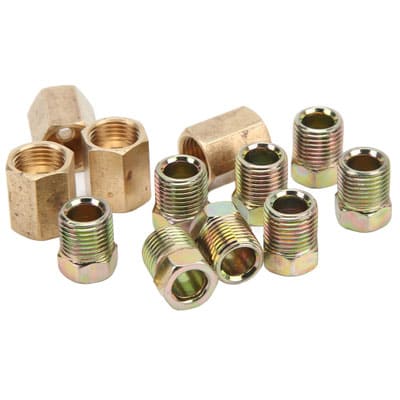
We are a manufacturer of brake line fittings components such as brake line inverted flare elbow, union, tee, adapter, tube nut, connector, and banjo bolts.
We also manufacture OEM brake line fittings according to customer requirements and drawings. We support custom materials such as brass, carbon steel, mild steel, stainless steel, copper, and aluminum. Parts are manufactured for prototype and production requirements.
We provide samples and small batches for testing before mass production, but very low quantities and small-run orders are not supported.
What are brake line fittings?
Brake line fittings connect different parts in a hydraulic brake system. Their main function is to create a secure and leak-proof connection so brake fluid can pass safely from one component to another. They are used between brake lines, calipers, master cylinders, and other brake system parts. Brake lines and fittings are important for brake performance and vehicle safety.
Brake Line Fittings Products
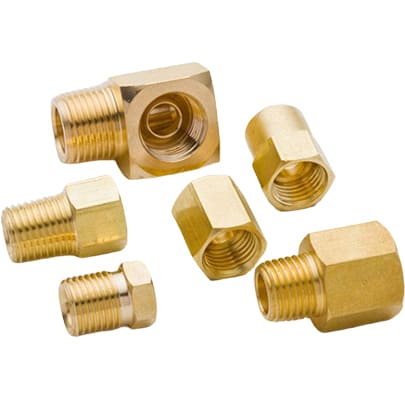
Different brake line fitting parts are used for different brake line connections and routing conditions. Every brake line part has its own geometry and serves a different purpose. We make OEM brake line fittings according to customer drawings and requirements.
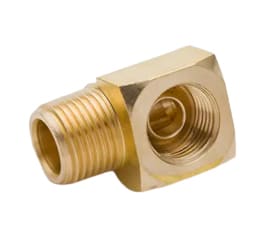
Brake Line Elbows
Brake line elbow fittings are used when installation space is limited and brake line direction needs to change. They help route brake lines without sharp tube bending. Brake line 1/4 flare elbow fittings are commonly used in hydraulic brake systems.
Brake Line Tube Nuts / Flare Nuts
Tube nuts are used to connect flared brake lines to brake components, and they are used in hard brake line connections such as master cylinders, brake hoses, wheel cylinders, and distribution blocks. Tube nuts are used in brake tube fittings
Brake Line Union Connectors
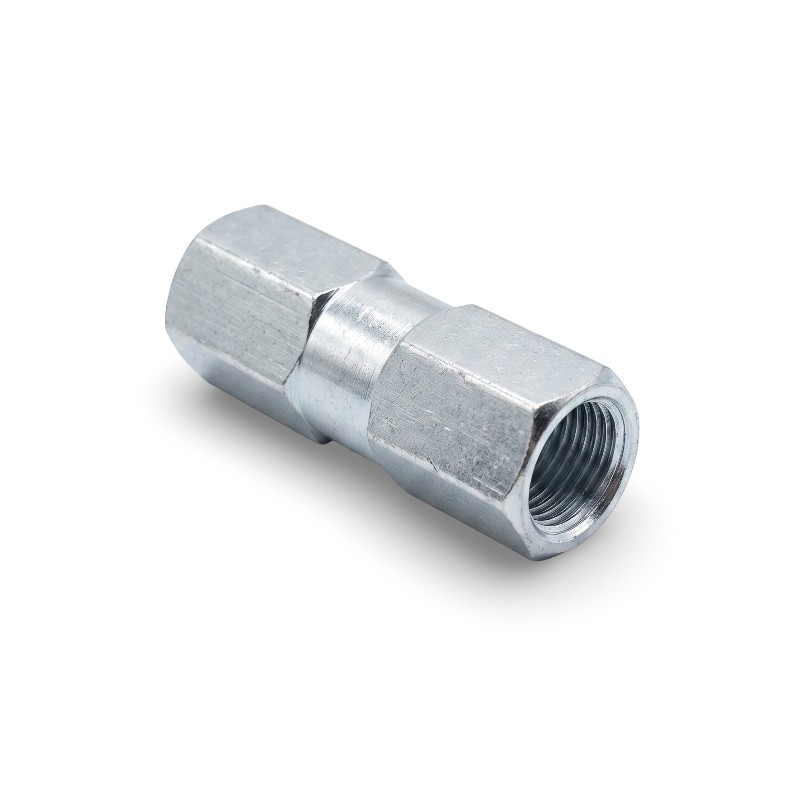
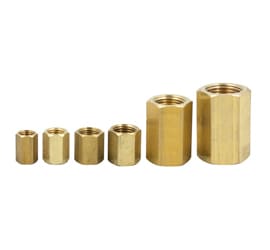
Brake line union fittings and brake line connectors connect two brake lines together and are mostly used for extending and repairing brake lines. 1/4 and 3/16 brake line union sizes are commonly used for hydraulic brake line connections.
Brake Line Adapters
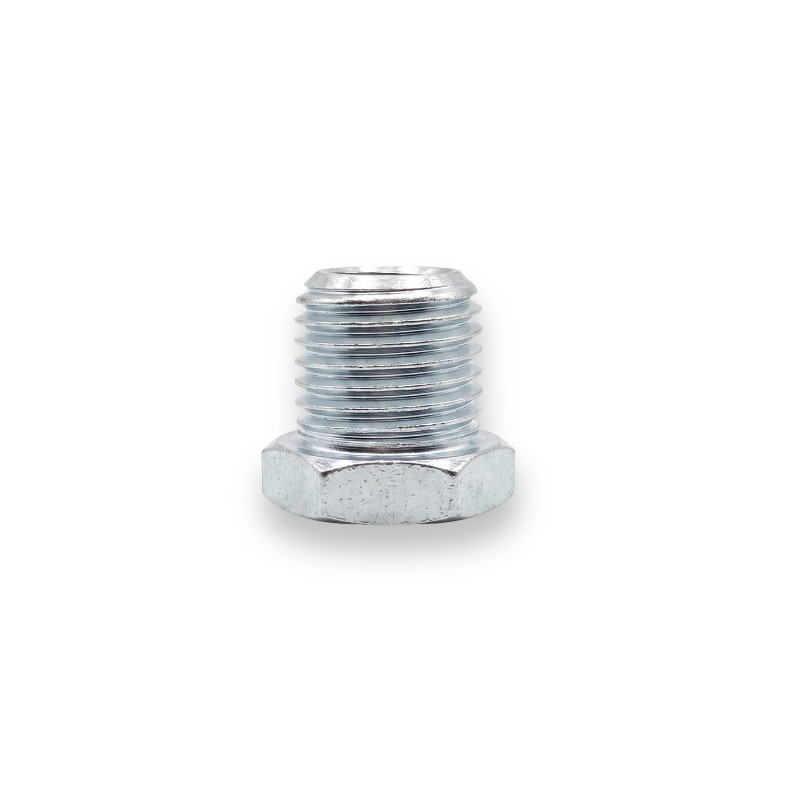
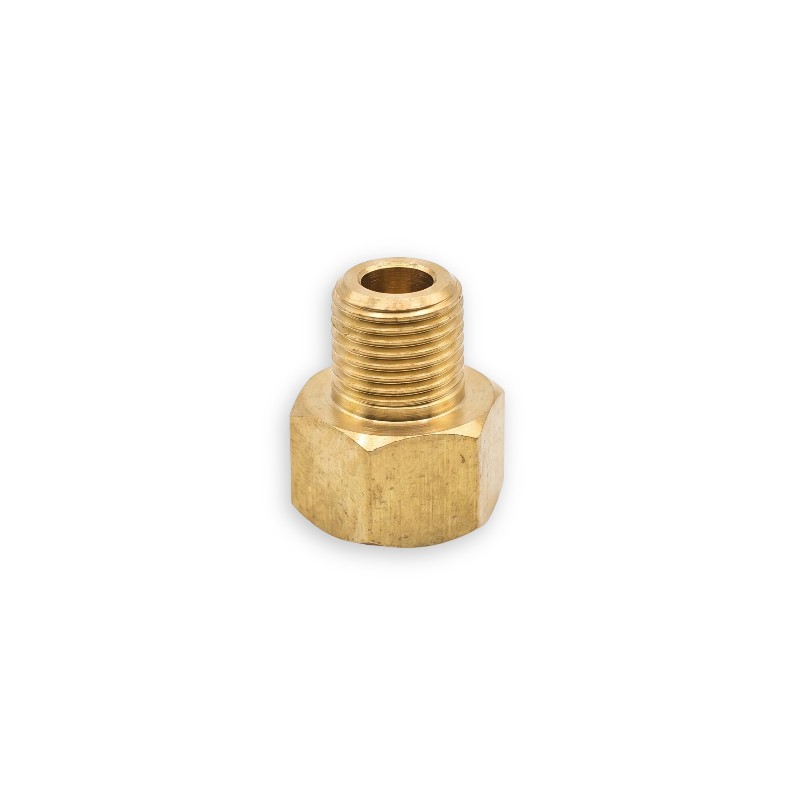
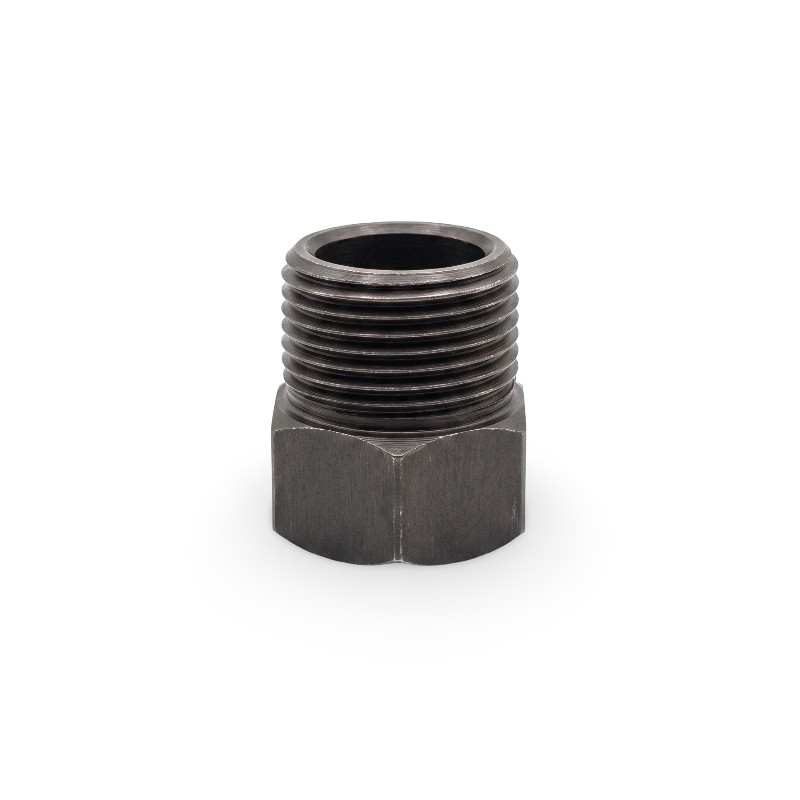
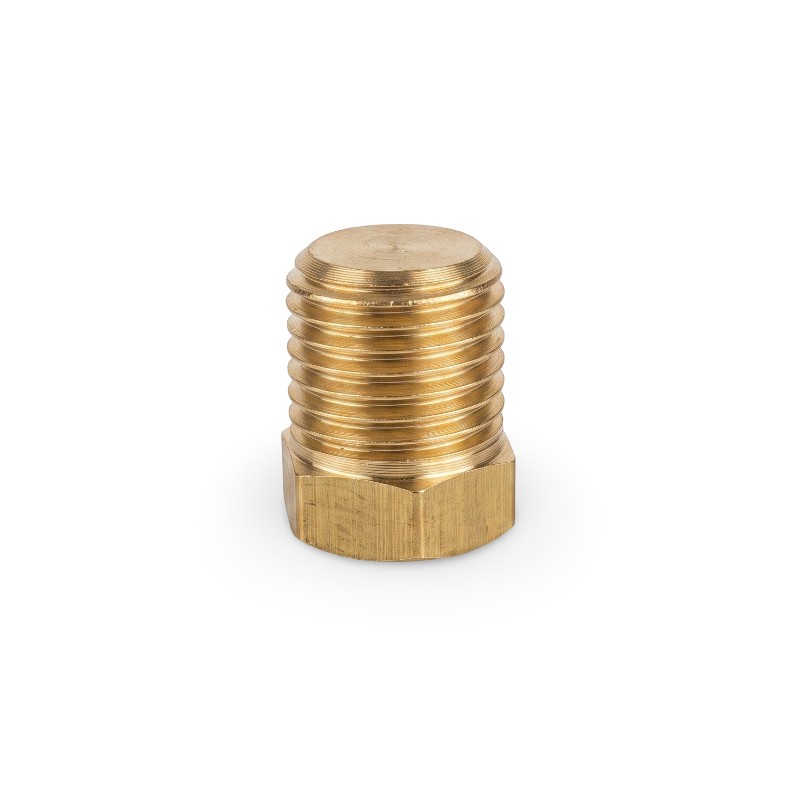
Brake line adapter fittings connect different thread sizes and fitting types, such as male and female thread connections. Adapters are useful when brake components use different thread standards and connection styles.
Brake Line Tee
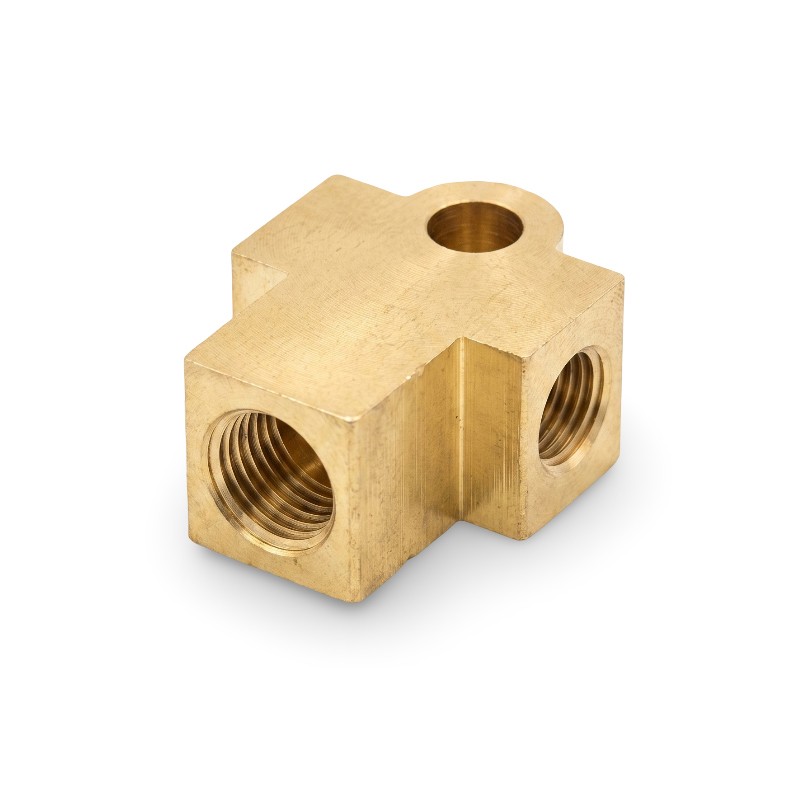
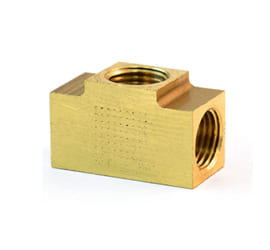
Brake line tee fittings are used to split one brake line into two directions and are useful in brake line routing and hydraulic brake distribution systems.
Brake Line Banjo Bolts
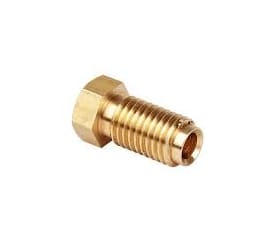
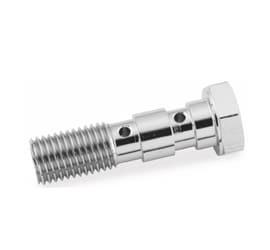
Banjo bolts are used where connection space is very limited and are mostly used in brake calipers and master cylinders. Banjo fittings allow hydraulic brake fluid flow through the bolt and fitting assembly. They also keep hose connections compact.
Recent OEM Brake Line Fittings Projects
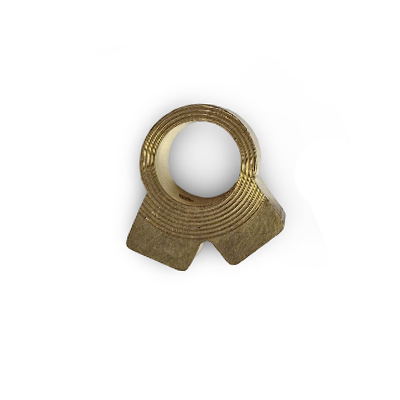
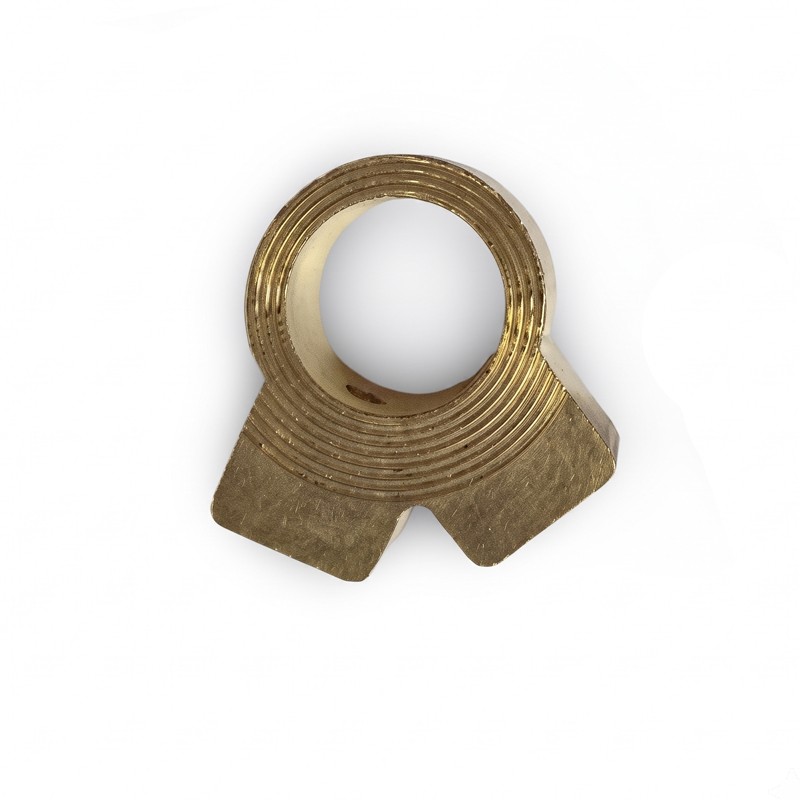
Brass Brake Line Master Cylinder Two Way Y Fitting
Material: Brass
Thread: 3/16"
Outside diameter: Ø15.22 mm
Application: Brake line master cylinder connection
Brass brake line Y fitting used for master cylinder connection in hydraulic brake systems. The part has two threaded brake line ports and a rear hole for banjo bolt mounting at the back of the master cylinder. Inverted flare-style seats are used inside the fitting.
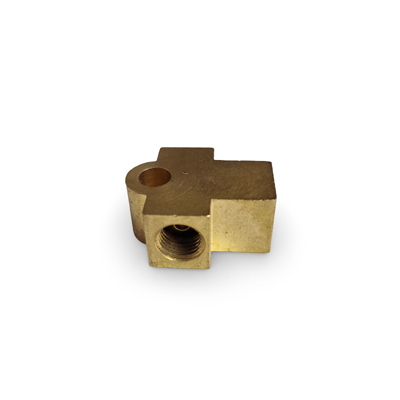
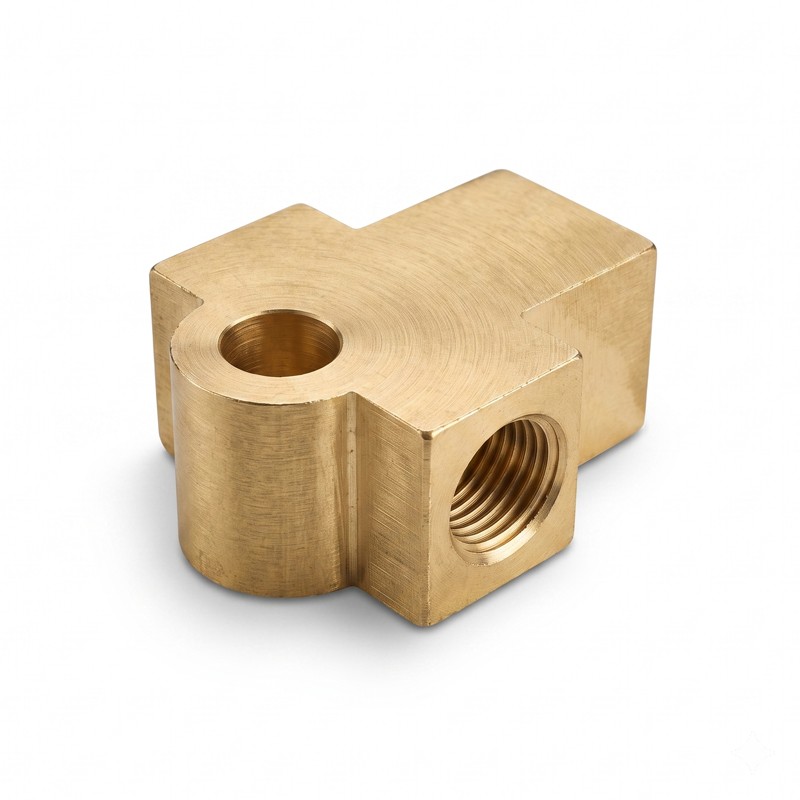
Brass Brake Line Tee Fitting
Material: Brass
Bottom Port: 3/8-24" Thread, Inverted flare female
Side Port: 3/16" thread
Mouting Port: Ø7 mm
Overall Height: 31.65 mm
Application: Fitting tee brake axle
Brass brake line tee fitting with inverted flare female side ports and a straight female threaded branch port with mounting hole. Used for hydraulic brake line connection on axle-mounted brake systems, where multiple brake lines connect through a single fitting body.
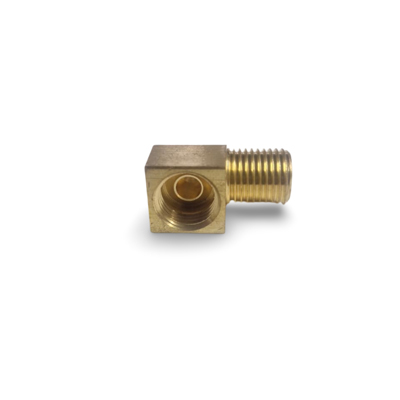
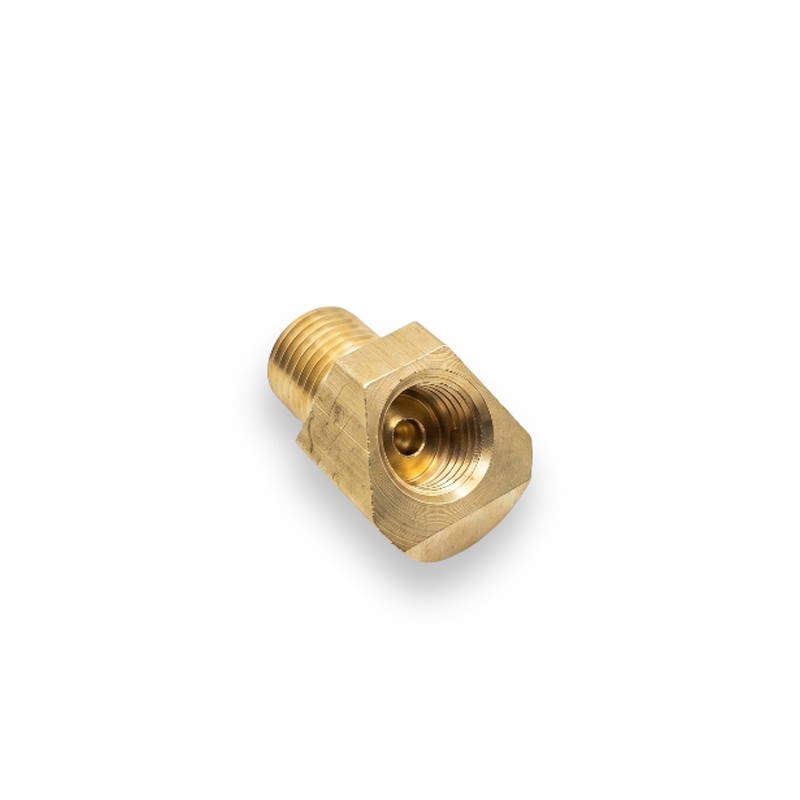
Brass Brake Line Elbow Fitting
Material: Brass
Male Thread: 1/8" NPT
Female Thread: 1/4"
Body Type: Elbow fitting
Overall Length: 23.25 mm
Body Size: 13.7 mm
Application: hydraulic brake
Brass inverted flare elbow fitting with male and female threaded flare connection.Used on hydraulic brake, fuel, and transmission lines to connect tubing with threaded ports. The internal inverted flare seat creates a metal-to-metal seal, while the male pipe thread connects into internally threaded fittings.
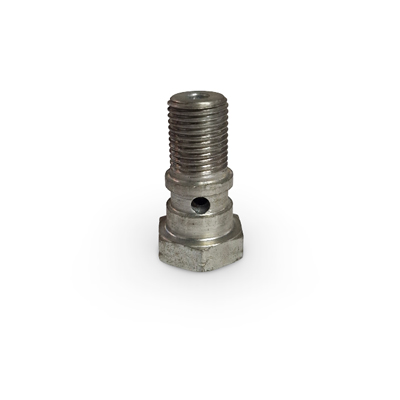
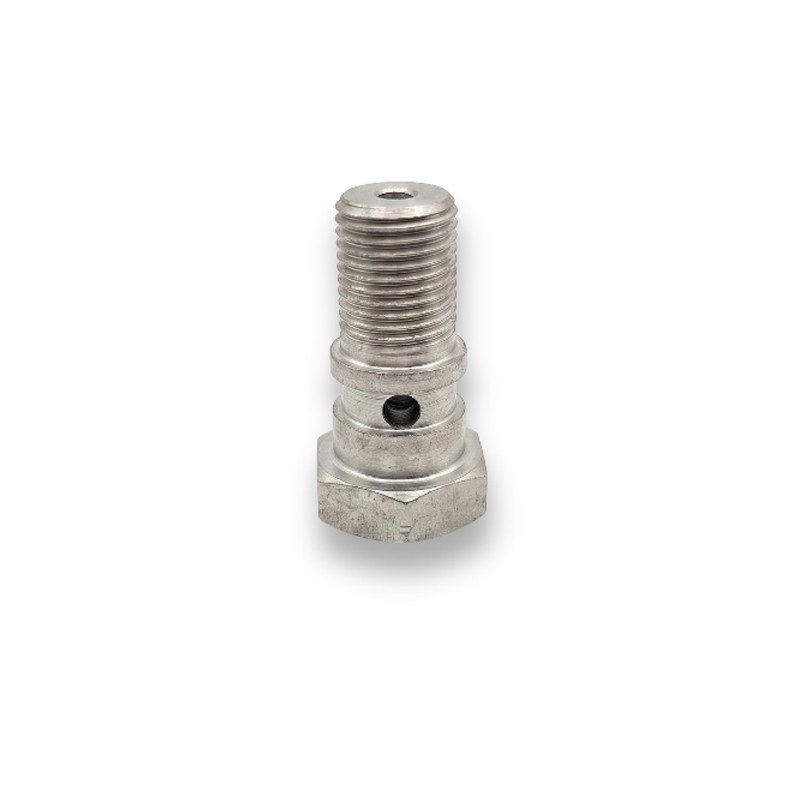
OEM Mild Steel Zinc Plated Banjo Bolt Fitting
Material: Mild steel
Finish: Zinc plated
Overall length:: 35.7 mm
Hex size: 19.0 mm
Male thread: 1/2-20 SAE
Groove: 0.4 mm deep × 60°
Application: Hydraulic brake connection
Mild steel zinc plated banjo bolt with a cross-drilled fluid passage and threaded shank for hydraulic line connection in a compact assembly. Banjo bolts are hollow bolts used to connect a fluid line to a hydraulic component. In brake assemblies, the seal is made with two copper crush washers, one on each side of the banjo fitting.
Brake Line Fitting Connection Types
The two main common flare-end types used in automotive hydraulic brake tubing.
1. SAE Inverted Double Flare
Mostly used in older American and Japanese brake systems The end of the metal tube is flared, then folded inward to form a 45° double flare. The tube nut slides over this flare and tightens it against a matching inverted seat in the port.
2. ISO Bubble Flare
The end of the metal tube is formed into a rounded bubble. The tube nut pushes this bubble against the concave seat of the matching port. This is common in European and British vehicles and other metric-based brake systems.
Brake Line Fitting Materials
Common materials used in brake line fittings are brass, carbon steel, stainless steel, and mild steel. For sealing washers and brake line tubing, copper alloy and aluminum are also used.
Carbon Steel
Carbon steel brake line fittings are used in OEM brake line systems and high-strength brake connections. Zinc-coated and plated brake line fittings are common in brake line assemblies.
Steel gives better strength and thread durability compared to brass. Banjo bolts are commonly made from steel because brake caliper connections need higher tightening strength. Steel is not rust-proof, so coating and plating become important.
Brass
Common brass brake line fittings include tube nuts, adapters, tees, connectors, and flare elbows. C360 and forged grade C377 are commonly used brass grades.
Brass provides smooth machinability, corrosion resistance, and clean threads. But brass is softer than steel, so it is not recommended for high-impact parts.
Stainless Steel
SS304 and SS316 are common grades used in stainless steel brake line fittings. Stainless steel is used where long service life and corrosion resistance are important.
Stainless steel fittings are commonly used in performance vehicles, marine applications, and corrosive environments. But stainless steel costs more compared to carbon steel because machining is harder.
Aluminum
Aluminum brake fittings are mainly used in lightweight and racing applications. Aluminum fittings are commonly found in some aftermarket AN brake line systems and custom brake setups.
Copper
Copper alloy tubing is commonly used in brake line systems because it resists corrosion and bends more easily during brake line routing. Copper is also used in sealing washers for banjo bolt connections.
Pure copper brake fittings are not common choice because copper thread deform easily.
Brake Line Fitting Sizes and Thread Types
Brake line fittings can be made in different sizes and thread standards. 1/4 and 3/16 brake line fittings are commonly used for hydraulic brake line connections. The thread type must match the flare seat and tube size for leak-proof connections. SAE and metric thread types are both common in brake systems.
Common Brake Line Tube Sizes
| Tube OD | Metric Equivalent | Typical Usage |
|---|---|---|
| 3/16" | 4.75 mm | Most passenger vehicles |
| 1/4" | 6 mm | Trucks and larger systems |
| 5/16" | 8 mm | Heavy-duty and hydraulic systems |
Common SAE Brake Line Thread Sizes
| Tube Size | Common Thread | Flare Type |
|---|---|---|
| 3/16" | 3/8"-24 UNF | SAE Inverted / Double Flare |
| 1/4" | 7/16"-24 UNF | SAE Inverted / Double Flare |
| 5/16" | 1/2"-20 UNF | SAE Inverted / Double Flare |
Common Metric Brake Line Thread Sizes
| Tube Size | Metric Thread | Flare Type |
|---|---|---|
| 4.75 mm | M10×1.0 | ISO Bubble Flare |
| 6 mm | M12×1.0 | ISO Bubble Flare |
| 8 mm | M14×1.5 | ISO Bubble Flare |
Manufacturing and Quality Control
We manufacture OEM brake line fittings according to customer drawing and sample requirements. We do not maintain stock for all configurations and do not support very low-volume production, but samples and small batches are supported before mass production. Bulk quantity production is supported with volume-based pricing. MOQ depends on product drawing and manufacturing process.
Inspection and Manufacturing Control
| Check / Process | Details | Status |
|---|---|---|
| Thread inspection | Thread size, thread fit, and thread correctness verification | In-house |
| Dimensional inspection | Basic dimensions and critical sizes checked using measuring instruments | In-house |
| Profile inspection | Part profile and fitting geometry inspection according to drawing requirements | In-house |
| CNC turning operations | CNC turning, CNC milling, threading, drilling, and chamfering operations for brake fitting components | In-house |
| Manual secondary operations | Manual lathe and secondary machine operations according to part requirement | In-house |
| Deburring and edge finishing | Burr removal and edge cleaning after machining operations | In-house |
| Pressure testing | Pressure resistance and sealing performance testing | Supported through trusted partner |
| Material verification | Raw material confirmation and material test report support | Supported |
| Vernier and digital caliper inspection | Basic dimensional measurement and inspection | In-house |
| Thread gauge and plug gauge inspection | Internal and external thread verification | In-house |
| CMM inspection | Coordinate measuring inspection and dimensional reporting | Supported through trusted partner |
| Coating thickness inspection | Coating thickness and plating inspection report support | Supported through trusted partner |
| Plating and surface finish | Nickel plating, zinc plating, blackening, and other surface finishes | Supported through trusted partner |
OEM Production Policy
| Production Policy | Details |
|---|---|
| OEM manufacturing | Made according to customer drawing and sample |
| Stock policy | No stock product for all configurations |
| Production volume | Medium and high production runs supported |
| Very low volume | Not preferred for all fitting types |
| Sample development | Samples supported before mass production |
| Mass production start | Starts after sample approval |
Brake Line Fitting Finishes and Platings
For brass brake line fittings, natural brass and nickel-plated finishes are mostly preferred. For steel fittings, zinc-plated and nickel-plated finishes are commonly preferred. All brake line fitting finishing and plating work is not done in-house and is completed through trusted partners.
| Finish / Plating | Common Base Material | Technical Purpose |
|---|---|---|
| Natural Brass | Brass | Used where additional plating is not required. Brass provides good corrosion resistance for brake fitting components. |
| Nickel Plated | Brass | Improves corrosion resistance and surface appearance. |
| Zinc Plated | Steel | Common corrosion-resistant coating used on steel brake fittings. |
| Zinc-Nickel Plated | Steel | Provides improved corrosion resistance compared to standard zinc plating in automotive environments. |
| Black Oxide / Blackening | Steel | Surface conversion finish used for appearance and light corrosion protection on steel components. |
Brake line Fittings Packaging
Brake line fittings components are packed according to material type, fittings size, shipping method and surface finish condition. Small fittings are packed in poly bags and standard cartons with controlled quantity packing. Bulk orders are packed in master cartons and wooden boxes for sea shipment.
Threaded fittings and plated parts are handled carefully to reduce thread damage, surface scratches, and moisture exposure during transport
Brake Line Fitting Applications
Brake line fittings are used in hydraulic brake systems to connect rigid brake tubing, flexible brake hoses, master cylinders, brake calipers, wheel cylinders, proportioning valves, and hydraulic distribution blocks. Compatibility depends on tubing size and flare standard. Here are common brake line fitting applications.
Automotive Hydraulic Brake Systems
Brake line fittings are mostly used in passenger vehicles, light trucks, commercial vehicles, and trailer brake systems.
Union fittings, tees, adapters, and elbow fittings are used in automotive hydraulic brake systems. These fittings connect steel or copper-nickel brake tubing between the master cylinder and wheel brake assemblies.
Brake Caliper and Master Cylinder Connections
Brake line fittings are used at brake calipers, master cylinders, brake proportioning valves, and hydraulic distribution blocks.
Banjo bolt fittings are commonly used at brake caliper and master cylinder ports. Adapters, tees, and other threaded fittings are also used to connect different brake tube sizes, thread standards, and brake line configurations.
Brake Line Routing and Junction Connections
Brake line unions, tees, elbows, and adapters are used at hydraulic junction points and brake line routing locations.
Brake line Fittings FAQ
1. What type of fitting is used for brake lines?
Most brake lines use flare fittings with matching tube nuts, adapters, unions, elbows, tees, and banjo bolts depending on the connection point. In flare fittings, the seal is made by the flare and seat, not by the threads.
2. Are brass brake line fittings safe for automotive use?
Do not consider brass compression fittings as brake line fittings. Brass brake line fittings are used in automotive brake applications, but they should only be used when the part is specifically designed for brake service and the flare type, thread size, and seat style all match the system.
3. What is the difference between inverted flare and compression brake fittings?
Both are different. Inverted flare fittings seal at the flare seat, and compression fittings grip the tube with ferrules instead of a flare seat. For automotive brake lines, flare-seated fittings are the standard choice, and compression fittings are generally not recommended for brake-line use.
4. What size brake line fitting do I need?
The correct fitting size depends on the tube outside diameter and must match the thread and flare standard. Common automotive brake-line sizes include ¼” and 3/16”. Metric sizes are also used in many vehicles. Thread size alone is not enough because the flare style must also match.
5. Do brake line fittings require thread sealant?
No, for flare fittings. The seal is made at the flare and seat, so thread sealant is not used on the flare connection itself. Sealant only applies to pipe-thread style connections, not to flare joints.
6. Can the same thread size be used with different brake line flare types?
No. Thread size alone is not enough. SAE inverted flare and ISO bubble flare use different seats and are not interchangeable.
7. Are banjo bolts the same as flare fittings?
No, they are not the same fittings. Banjo bolts are a separate connector style used at brake component ports such as calipers and master cylinders with proper sealing washers.
Request for Quotation (RFQ)
To request a quotation for brake line fittings, please send your drawing or sample.
Please include the following information:
- Material and finish requirement
- Thread type and flare standard
- Quantity requirement (one-time, repeat, or blanket order)
- Required lead time
- Shipping destination
- Shipping terms (EXW, DAP, or DDP)
After receiving the RFQ, we review all details. If clarification is required, we contact the customer before quotation. Quotation, estimated lead time, and shipping details are shared based on the confirmed scope.