
Custom CNC Machining vs. Off-the-Shelf: When is the Investment Worth the Cost?

Have a Question?

Custom CNC Machining vs. Off-the-Shelf: When is the Investment Worth the Cost?

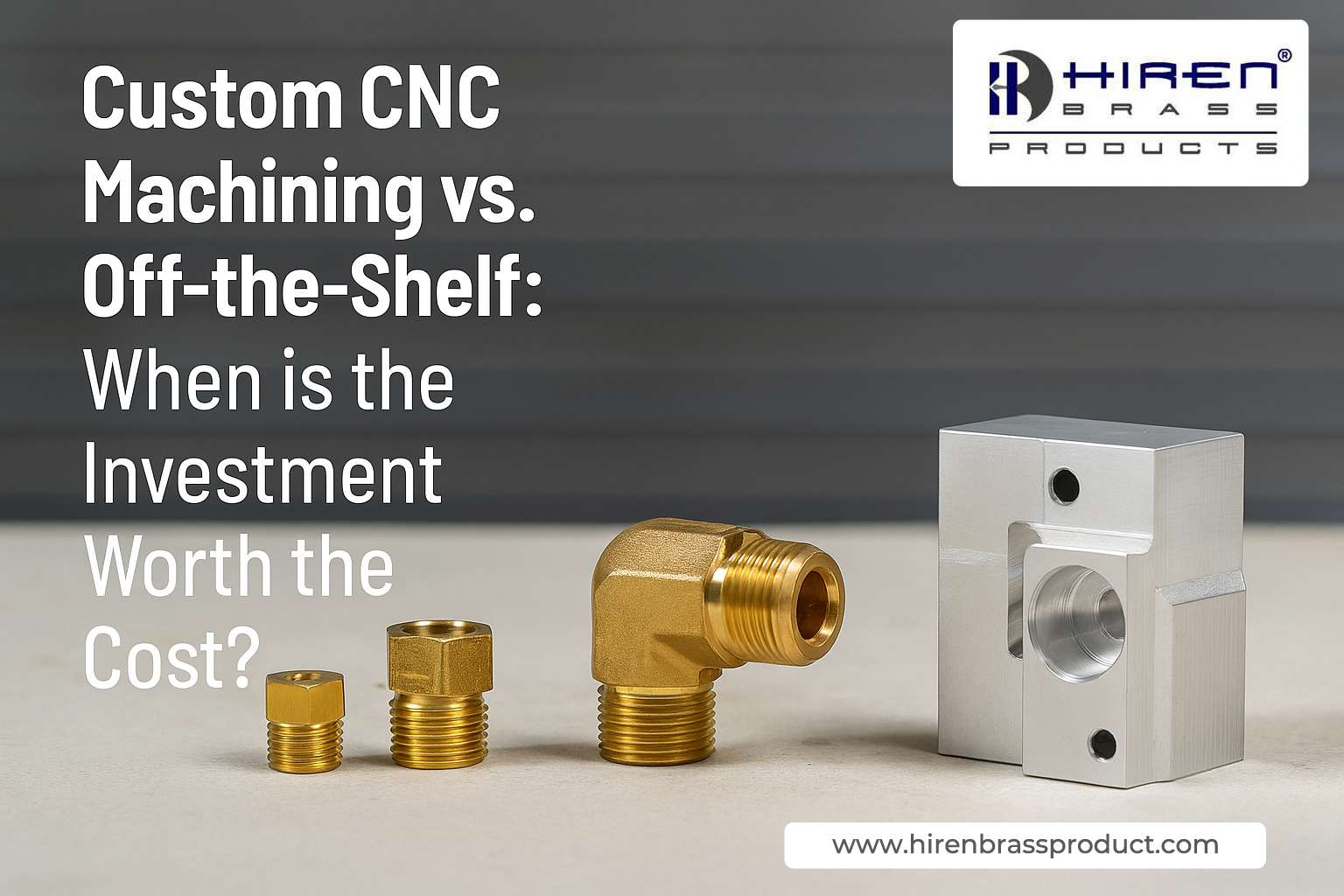
cnc machining vs shelf banner

Choosing between custom CNC machining and off the shelf components is not a small decision. It changes cost, quality, and how your product behaves in the real world. Many engineers chase speed and grab a shelf part because it arrives fast and fits close enough. That decision works when the job is simple. It fails when tolerances tighten.

Custom cnc parts solve those gaps with fit and function that a shelf part cannot match. The machining cost looks higher at the start. The lifetime cost can drop when the part stops failures, cuts assembly time. Off the shelf parts win when the design bends around them without hurting performance. Custom machining wins when the part must match your drawing with no compromise.

This guide breaks that choice into clear steps so you can see when the investment pays back and when it does not.

Defining the Two Paths: Custom Machining vs Off the Shelf Parts

cnc machining parts

Custom CNC machining builds a part exactly to your drawing. The supplier cuts material to your geometry, holds your tolerance, and matches your surface finish. Every dimension, angle, and fit comes from your specification. This path gives full control, but it needs programming, fixturing, and setup before the first part exists. For example cnc turned part and cnc milling parts, and mix turned and milled parts.

Off the shelf parts follow a different rule. These components already exist in a catalog. Their sizes, tolerances, and materials are fixed. You cannot change anything. You adapt your design to them. They ship fast and cost less because they are produced in large batches long before your project starts. The tradeoff is that they may not match your drawing, and they rarely support tight tolerances. For example some standard brass fittings parts for plumbing.

Projects use both paths. Custom machining fits designs that depend on precise geometry. Shelf parts fit designs with margin for adjustment. The right choice depends on how much accuracy your assembly needs and how much compromise it can accept.

The Initial Appeal of CNC Custom vs Shelf Components (Speed and Simplicity)

Shelf components are fast. You place an order and the part arrives. No drawings. No CAM. No setup. That speed helps when the design does not depend on a tight fit. It also helps when the part sits in a non critical area of the assembly. A control panel bracket, a simple spacer, or a common fastener fits this rule.

The simplicity comes from predictability. You know the unit price. You know the lead time. You know the vendor has stock. You do not deal with tolerance stack up, tool access, or cnc machining restrictions. You avoid back and forth with the supplier. You avoid sampling rounds. The entire process stays clean.

Shelf parts work best when your assembly can adapt to them. If the hole size shifts by one millimeter, the design still works. If the finish is basic, the product still looks correct. When the part is not critical, speed beats customization.

Comparing Speed and Simplicity: Off the Shelf vs Custom CNC

Off the shelf parts arrive faster because they already exist in stock. You do not wait for machining, tooling, or sampling. You place an order and receive the part. The process stays simple because the geometry, finish, and tolerance are fixed at the catalog level.

Custom CNC parts need more time because the part does not exist before you order it. The cnc parts manufacturer must write the program, build the fixture, run a sample, and verify the geometry. Every step adds work, and the lead time stretches with complexity.

Simplicity also differs. Off the shelf parts remove engineering decisions because the design must adapt to the catalog. Custom machining increases decisions because the geometry depends on your drawing. You choose the tolerance, the material, and the surface finish. You control the fit. The process becomes more detailed but also more precise.

Projects need this comparison before choosing a path. Speed and simplicity shift based on how much flexibility the design can accept. Off the shelf parts reduce work. Custom cnc machining increases control.

Upfront Unit Price: Off the Shelf vs Custom CNC Cost

Off the shelf parts win on the first invoice. The price stays low because the part is mass produced. The supplier has already paid for tooling, setup, and inspection. You only pay for the single unit.

Custom machining adds fixed cost before the first part appears. A cnc parts manufacturer must charge for setup, programming, and cycle time. The cost climbs when the order is small. The price drops when the batch grows. This is why custom cnc parts look expensive in early stages.

Upfront price cannot judge every project, but it does matter when the part is simple and the service life is short. A replacement spacer, a plain bracket, or a non critical block usually makes sense as an off the shelf item. A turned part with tight shoulders, a milled part with matched geometry, or a feature that controls load cannot follow the same rule. These cases force custom cnc machining because the geometry sets the function.

Design Constraints: Adapting Your Product to the CNC Shelf

A design only fits an off the shelf part when the geometry matches what the catalog already offers. The shape, hole size, material, and mounting pattern stay fixed. You change your product to match the shelf component. You do not change the part. This limits your design freedom. It works only when the assembly does not depend on precise alignment or a controlled fit.

Custom cnc machining flips this rule. You design the part first. The supplier cuts material to match your drawing. You control the features. You control the tolerance. You control the geometry. The part adapts to your product instead of the other way around. This is the main difference when the design must follow strict functional requirements.

Some products can bend around a shelf part with no loss in performance. Others cannot. The designer must decide how much compromise the assembly can take before the part stops doing its job.

The Criticality of Tight Tolerances and Complex Geometries

Off the shelf parts follow broad tolerance ranges. A typical catalog part holds around ±0.1 mm to ±0.5 mm. The geometry stays simple because simple geometry lowers mass production cost. These limits work for nut, adapters, standoffs, washers, and fittings. They do not work for features that control alignment, preload, or moving interfaces.

Custom cnc machining handles the geometry that shelf parts cannot. A cnc turned part can hold a shoulder within a few hundredths of a millimeter. A cnc milling part can produce a pocket with controlled depth, flatness, and corner radii that match a mating component. aluminum cnc parts can take thin walls or stepped surfaces that need clean tool access. These features protect accuracy and reduce play between connected components.

Complex geometry forces custom work. Deep cavities, compound surfaces, matched housings, precision bores, and bearing seats.Tight tolerance also forces custom work. If a part controls alignment, you cannot rely on shelf tolerances. The geometry decides the path. The function decides the tolerance. Custom cnc machining exists to meet those conditions.

Calculating the True Return on Investment (ROI)

Upfront price does not show the real cost of a part. A part that looks cheap on paper can cost more once you include failures, downtime, and the hours needed to replace it. ROI comes from the lifetime behavior of the part. You must count replacement rate, service access time, inventory holding cost, and the effect of repeated failures on production flow.

Off the shelf parts work when the loads are low and the operating hours are short. Custom cnc parts become more cost effective when the geometry protects accuracy under long cycles. A cnc parts manufacturer controls surface finish, fit, and tolerance, and these factors reduce wear. ROI shifts when the part stays working longer than the catalog alternative. The return grows if the part lowers maintenance hours or removes alignment checks from the schedule.

The correct ROI calculation includes acquisition cost, replacement cost, downtime cost, and the cost of carrying spares. It also includes the effect of dimensional drift on assembly time. You must treat the part as a system, not a single line item.

Lifecycle Cost Analysis: Failure Rates and Replacement Expenses

Lifecycle cost starts with failure rate. A shelf part with a ±0.5 mm bore will wear faster than a custom cnc turned part with a controlled seat. Wear changes alignment, and alignment errors create more force on the mating surface. This chain increases failures over the life of the product. Every failure adds downtime, replacement labor, and the cost of another part.

You must count each real expense. Count the hours needed to reach the part. Count the cost of stopping the line. Count the cost of holding two or three spare units in inventory. A cheap part with a high failure rate drains more money than a custom cnc part that runs stable for years.

Lifecycle cost analysis becomes clear when you model one simple example. A shelf part may cost a few dollars less at purchase. If it fails twice a year and each failure stops a machine for one hour, the downtime cost exceeds the savings. A custom cnc milling part built to drawing can carry the load without premature wear. You pay more at the start and less across the lifetime of the machine.

Operational Efficiency for Industrial Equipment Manufacturers

Operational efficiency matters when the part sits inside a machine that runs every day. Assembly time falls when the part fits clean. Variability in shelf parts raises assembly time because the geometry floats within catalog tolerance. A custom cnc part removes this variation and keeps the assembly consistent across batches. A fixture loads faster. A housing seats without adjustment. A shaft aligns without hand fitting.

A cnc parts manufacturer can match geometry between parts so the assembly worker does not adjust anything. This control reduces line time and scrap. It also reduces training time because the fit becomes predictable. Assembly efficiency grows when the part is built for the machine instead of the machine adapting to the part.

Operational efficiency also comes from fewer interventions. A custom cnc part that holds tolerance keeps a machine running without repeated checks. Misalignment disappears. Noise drops. Heat load drops. The service team touches the machine less. The overall lifetime cost falls even if the initial part cost sits higher.

Beyond the Part: Strategic Advantages of Custom Sourcing

Custom sourcing changes how your supply chain works. The value does not stop at the part itself. It extends into engineering support, revision control, material traceability, and long term stability in production. A cnc parts manufacturer can lock your drawing, lock your tolerance, and hold that standard across every batch. This stability protects you when the product moves from prototype to volume.

Off the shelf parts cannot offer that control. Their dimensions change when the vendor updates a mold. Custom cnc machining removes this risk because the specifications stay tied to your drawing. You decide the grade, the finish, and the geometry. The supplier builds every unit to the same baseline. This keeps your product consistent for years.

A strategic source also supports engineering changes. When your design shifts, the supplier updates the part with the next revision. This support matters when you scale production or build equipment for multiple markets. It also reduces the risk of downtime because the part stays available through a controlled supply channel instead of an unpredictable catalog.

The Long-Term Partnership: Scaling with Industrial Equipment Manufacturers

Scaling requires a supplier that understands production cycles. A cnc parts manufacturer can plan material, fixture sets, and machine capacity to match your forecast. This planning lets you run small batches in early stages and move to larger batches without changing the process. It protects your production schedule because the supplier knows the part, the drawing, and the load path.

A long term supplier maintains CAM programs, holds fixture locations, and keeps inspection data for each part. These records protect consistency when volumes rise. They also reduce lead time because setup becomes repeatable. This stability helps industrial equipment manufacturers that depend on consistent cnc milling parts, cnc turned parts, and aluminum cnc parts.

A partnership reduces risk when you need urgent runs. The supplier already holds your geometry. They can start cutting without rewriting the process. This support keeps machines running and removes the delays that come from stock limits in off the shelf components. A long term relationship gives you predictable quality and smoother scaling.

Request Quote for custom cnc parts that match your drawing and remove design compromises.


×

Get a fast quote

Upload drawings or describe your part. 12 hour quick response.