

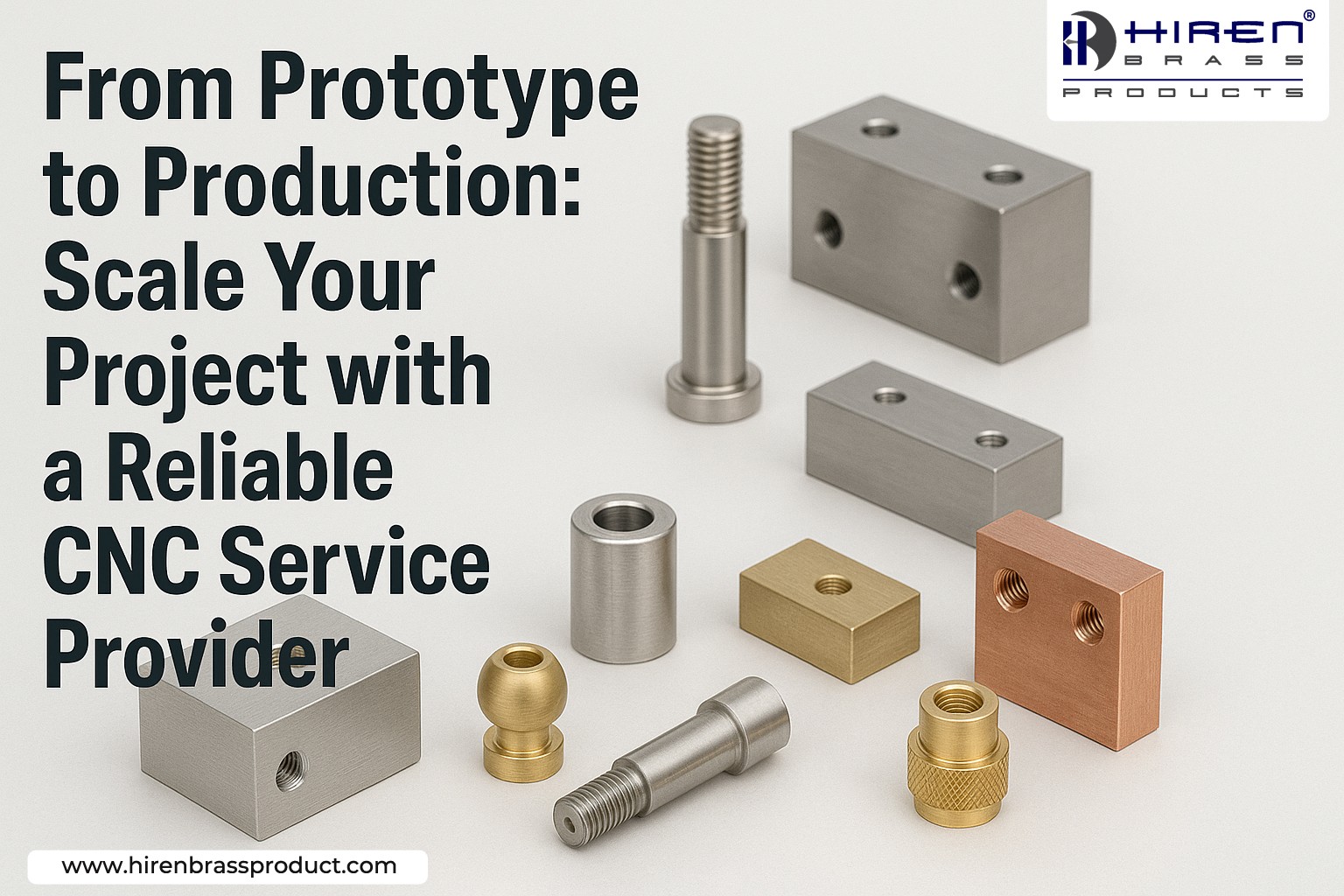
When you are developing CNC machining parts with a supplier, a prototype needed approch. CNC prototype may fit, function, and work, but in production, the same parts need to be made repeatedly with the same specifications.
Before increasing production quantities, the design needs a manufacturability review. DFM can identify machining issues related to geometry, tooling access, tolerances, workholding, setup, and cost while changes are still practical.
In this blog, we'll cover CNC machining for prototype iteration and design validation, DFM review before production, pilot production to validate manufacturing consistency, and what to verify before scaling production.
CNC Machining for Prototype Iteration and Design Validation
Before moving into bulk production, CNC part prototypes give you a physical part to check. You can inspect critical dimensions, test fit with mating parts, check clearances, and verify features such as holes and threads. When you are in the testing phase, prototypes can support material-dependent functional testing as well.
Testing may expose a problem in the design. An incorrect hole position, poor fit, insufficient clearance, and other issues can lead to a CAD revision and another prototype. This design-test-revise cycle helps find problems before larger quantities are ordered.
The tests should match the requirements being checked. A dimensional inspection can confirm specified measurements, while functional testing can show whether the part performs as required. A successful prototype supports design validation for the requirements being tested, but it does not by itself confirm production readiness.
DFM Review Before Production

Design for Manufacturing (DFM) means checking a part design against the CNC process before production. The goal is to identify design and manufacturing issues that can affect machining while changes are still practical.
For CNC parts, the review can cover tool access, internal corner radii, deep pockets, thin walls, holes, threads, tolerances, workholding, and machining setups. Deep features may require longer tools depending on tool access, which can increase deflection and vibration. Small internal corner radii may require smaller tools and extra machining steps. Tight tolerances can also increase machining and inspection time.
A CNC machining service provider can use this review to flag difficult features and discuss practical design changes before production starts. The aim is to keep the required function while making the part easier to machine with the available process and equipment. The DFM review checks whether the design is practical to manufacture; the next point is to confirm that the production process can make conforming parts repeatedly.
Pilot Production to Validate Manufacturing Consistency
A pilot production run checks whether the planned CNC process can make conforming parts before you move into larger production. The supplier runs the part using the intended material, CNC program, tooling, workholding, machining steps, and inspection method. This gives the team production data from the actual manufacturing process.
The supplier then checks the parts against the drawing and other specified requirements. Dimensional measurements can show variation in critical features. A capability study can provide additional evidence about process performance.
If the pilot run shows excessive variation, tooling problems, setup issues, and other process problems, the manufacturer can correct the process and repeat the required checks. The goal is to determine whether the defined process can produce conforming parts under the production conditions evaluated.
What to Verify Before Scaling Production

A successful pilot run does not mean every production run will produce parts that conform to the required specifications. Before you increase production volume, check whether the CNC service provider can support the required quantity, quality requirements, technical needs, and delivery schedule.
Production Capacity and Lead Time
Ask the supplier whether its current capacity can handle your required quantity within the planned schedule. Capacity depends on the available machines, workforce, material supply, production planning, and current workload.
Do not judge capacity by machine count alone. Compare the supplier's actual production capability with your order quantity, repeat-order needs, and delivery dates.
Quality System and Inspection
Check how the supplier controls part quality during production. Review its quality system, inspection equipment, measurement methods, inspection records, and required material documentation.
The exact requirements depend on the project. Some customers may require FAI, PPAP, CMM reports, certificates of conformity, material certificates, SPC, and traceability records. These are not universal requirements for every CNC order.
CNC Manufacturing Capability
Check whether the supplier's equipment and technical capability match your part requirements. Review its CNC milling and turning capability, machine size, material range, ability to meet the required tolerances for the specific part, tooling, finishing, secondary operations, and inspection resources. The important point is to match the supplier to the actual drawing and production requirements.
Communication, Change Control, and Delivery
Production can continue for months after the first order. Check how the supplier handles drawing revisions, engineering questions, quality issues, production updates, material planning, and delivery commitments.
Clear revision control matters because the supplier needs to work from the current technical definition. Supplier performance also needs ongoing attention after production starts.
Before scaling production, make sure the supplier can support the part at the required volume while maintaining the agreed requirements and delivery schedule.
Conclusion
Moving from a CNC prototype to production takes more than a part that works. The design needs to make sense for CNC machining, the production process needs to show consistent results, and the supplier needs to handle the required volume, quality, and delivery schedule.
We manufacture custom CNC machined parts, including CNC turned parts and CNC milling parts, to customer drawings. We also support contract manufacturing for production orders. Send us your product drawing, material, and quantity for a quotation.