


Copper bends look simple until they fail in real service. A small kink can restrict flow, create vibration. Poor bends also thin the tube wall and reduce pressure rating. That is why quality matters more than speed when working with copper.
Custom copper bends become necessary when standard shapes do not fit the layout. HVAC lines, refrigeration loops, heat exchangers, and industrial fluid systems often need exact angles and radii. Each application stresses the metal differently, so one bending method never fits every job.
Copper itself behaves unpredictably if you treat it like steel or aluminum. Soft copper moves easily but collapses if unsupported. Hard copper holds shape better but demands stronger tooling and tighter control. Understanding this behavior prevents scrap and rework.
This guide explains how to design, source, and manufacture custom copper bends correctly. It focuses on real shop practices, common failure points, and practical ways to choose the right manufacturer.
The Fundamentals of Precision: Why Quality Copper Bends Matter
Quality in copper bends decides whether a system performs safely and reliably. A bad bend rarely fails immediately, but it creates hidden weaknesses that show up later in service. This is why precision matters more than speed when bending copper.
Kinking is the most common failure. It collapses the tube and blocks flow. Ovalization changes the round shape of the pipe and weakens the structure. Wall thinning happens when the material stretches unevenly during bending. Cracks can form at stressed points and spread over time. Flow restriction reduces efficiency in cooling, heating, and fluid systems.
These problems become critical in real applications. HVAC and refrigeration lines depend on smooth bends for proper gas flow. Heat exchangers need uniform tubing to maintain performance. Industrial fluid transfer lines must resist pressure and vibration. Copper bus work and grounding bars require stable bends to avoid structural weakness and poor bends create risk in all these systems.
Identifying Industrial Requirements for Custom Copper Bends
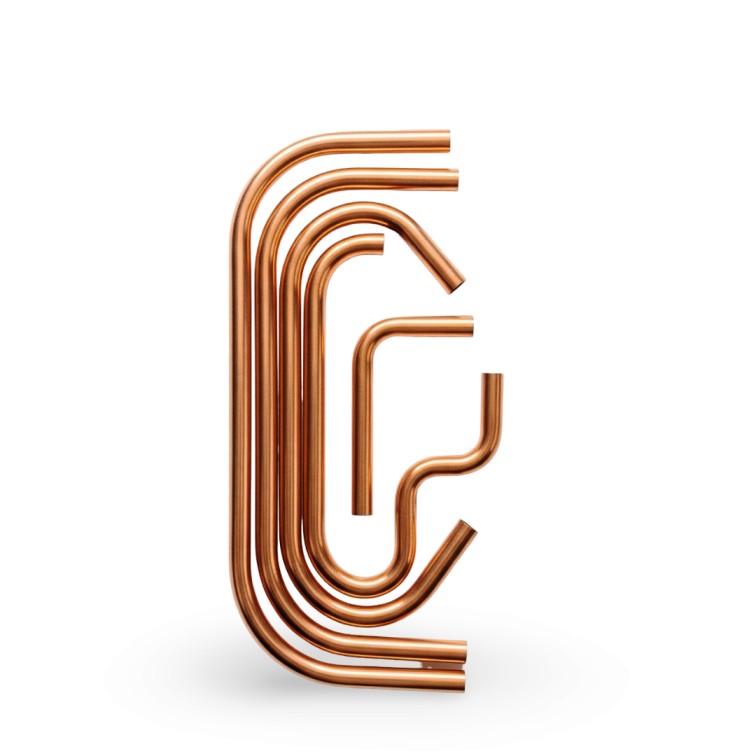
Requirement definition must happen before any bending begins. You must specify the exact bend angle, whether 45 degrees, 90 degrees, or a custom angle. You must also define the bend radius, tight or large, based on space and performance needs.
Tube size matters. Outside diameter and wall thickness directly affect how the copper will behave. Application pressure and vibration levels must be considered because they influence how strong the bend must be. Installation space limits determine how tight the bend can realistically be.
Volume requirements also shape decisions. A single prototype allows more flexibility, but repeat production demands strict consistency. Clear requirements prevent confusion between buyer and manufacturer. They also reduce scrap and rework later.
Understanding the Challenges of Bending Copper Tubing Without Kinking
Copper kinks easily because it is soft and ductile. The material wants to collapse when compressed on the inside of a bend. Soft copper moves quickly but loses shape without proper support. Hard copper resists collapse better but needs stronger force and tighter control.
Thin walls increase risk. Less material means less strength to resist deformation. Fast bending makes the problem worse because the metal has no time to distribute stress evenly. This leads to flattening or buckling instead of a smooth curve.
Poor tooling creates oval shapes instead of round bends. Incorrect dies, weak support, and misaligned equipment distort the tube profile. These distortions weaken the bend and reduce flow efficiency.
Understanding these challenges helps buyers set realistic expectations before manufacturing starts.
Tooling and Techniques: Choosing the Best Copper Tubing Bender
The right tool decides whether a copper bend stays round or collapses. Different jobs need different benders, and choosing wrong creates defects. This section focuses only on tools, not factory processes.
Manual hand benders work for small diameters and simple angles. They suit soft copper when the bend radius is generous and the application is low risk. Installers often use them for on-site HVAC and plumbing adjustments. These tools become unreliable when wall thickness is thin and accuracy matters.
Machine benders perform better when precision and repeatability are required. They control speed, pressure, and support more consistently than hand tools. Industrial jobs that need tight radii, exact angles, or batch production almost always require machines.
Copper hardness dictates tooling choice. Soft copper deforms easily and needs internal support to keep its shape. Hard copper resists collapse but demands stronger force and slower bending. Using the wrong bender for the material is the fastest way to create kinks, flattening, or cracks.
Soft Copper Bender vs. Hard Copper Bender: Material-Specific Tools
Soft copper bends easily but collapses just as easily. A simple hand bender can work only when the tube has proper internal support. Many installers use an internal mandrel, sand filling, or a spring bender to hold the tube round during bending. Without this support, soft copper tends to flatten and kink.
A spring bender slides over the tube and resists inward collapse. Sand filling adds internal pressure that helps the tube keep its shape. Mandrels sit inside the tube and physically support the wall through the bend. All three methods exist to protect soft copper, not to make bending faster.
Hard copper behaves differently. It holds shape better because the material resists deformation. However, it requires more force to bend and punishes weak tools. Manual benders often struggle with hard copper unless the tube is small and the radius is large.
Industrial and heavy-duty machine benders suit hard copper best. They apply steady pressure at controlled speed and reduce cracking risk. Slower bending helps the material flow without tearing.
Choosing between soft and hard copper tools comes down to material behavior, tube size, and accuracy needs. Using the right bender saves scrap, time, and rework later.
Advanced Manufacturing Methods for Industrial Copper Tubing
Industrial copper bending relies on controlled machines. Factories use CNC bending systems when repeatability matters across hundreds of parts. The machine follows programmed angles, radii, and lengths so every bend matches the drawing. This consistency reduces scrap and eliminates manual variation.
Mandrel bending becomes critical for tight radii. A mandrel sits inside the tube and supports the wall as it curves. This prevents collapse and keeps the bore round through the bend. Shops use mandrels whenever thin walls, tight radii, or high-pressure applications are involved.
Rotary draw bending delivers the cleanest geometry for precision work. The tube clamps firmly while a rotating die pulls it around a fixed radius. This method controls wall thinning and surface finish far better than simple push bending. It is common for HVAC coils, heat exchanger lines, and industrial fluid circuits.
Some jobs require heat-assisted bending. Gentle heating makes copper more ductile and reduces cracking risk in harder tempers. Shops apply controlled, localized heat instead of open flame to avoid material damage. Temperature control matters more than brute force.
Good factories focus on three defect risks at every stage. They control wall thinning by matching feed speed to material behavior. They prevent cracks by avoiding sudden stress and sharp tooling. They maintain roundness by using proper dies, mandrels, and alignment.
When these methods work together, copper bends come out smooth, strong, and repeatable.
Sourcing and Partnership: How to Choose a Custom Manufacturer
Choosing a copper bending manufacturer based on price alone is risky. Low quotes often hide weak tooling, poor process control, and inconsistent results. These problems show up later as kinks, thin walls, cracked bends, or late deliveries.
Sample approval must come before volume orders. A first article bend reveals whether the manufacturer truly understands your tube size, wall thickness, and required radius. If the sample is not right, production will not be right.
Material understanding matters more than machine brand. The manufacturer must know how different copper grades behave under bending load. They must respect wall thickness limits instead of forcing the bend. They must stay within realistic bend radius limits for your tube.
Partner with Hiren Brass Products for High-Precision Custom Copper Bends
Hiren Brass Products manufacture custom copper bends strictly to your drawing or sample. We work with both soft copper and hard copper and choose the correct method for each. We support small batch trials as well as repeat production runs. Every job follows controlled processes so each batch matches the last one.