

Online Custom CNC Services: Measuring Efficiency, Quality, and Lead Time

Have a Question?

Online Custom CNC Services: Measuring Efficiency, Quality, and Lead Time

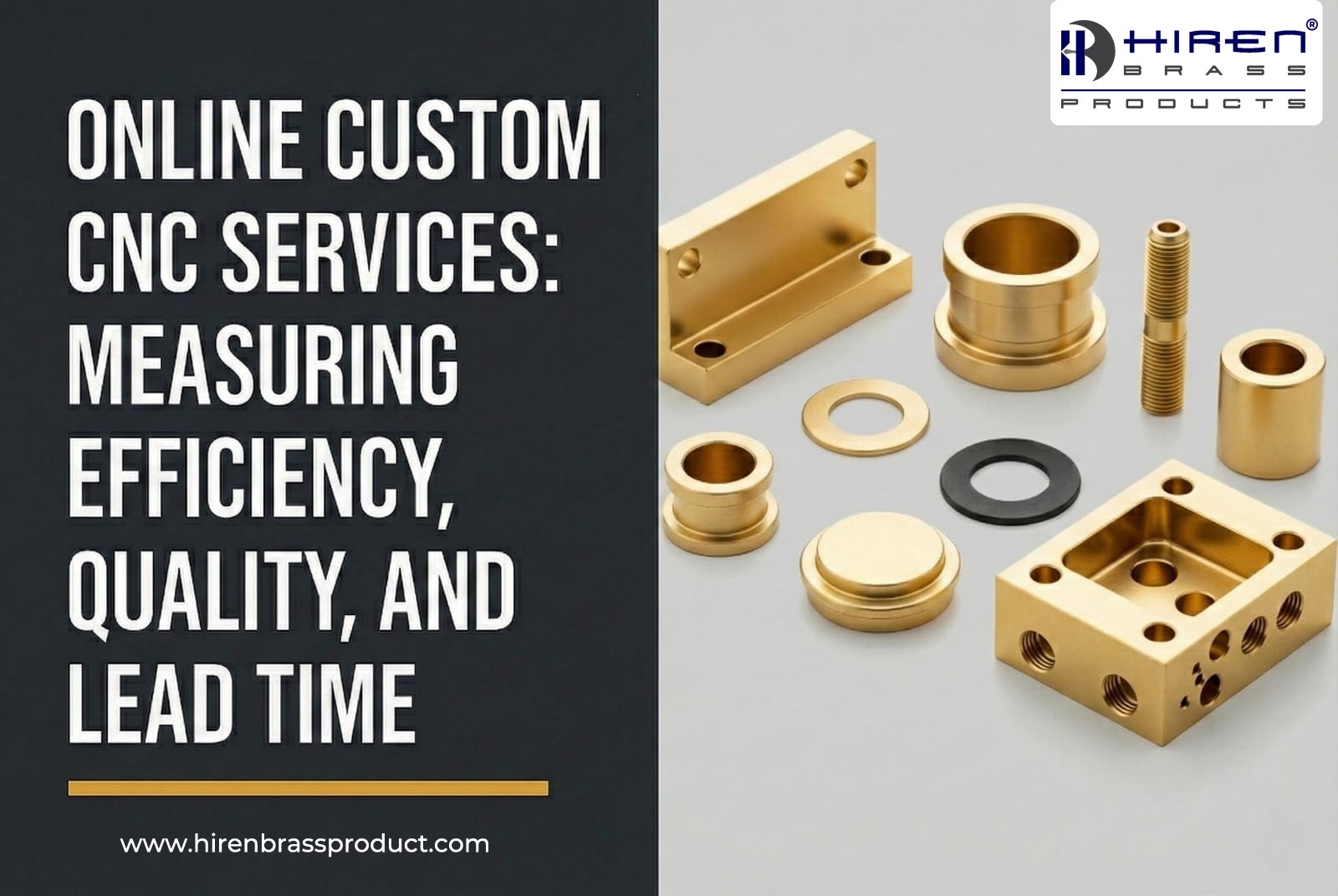
online custom cnc services banner

Online custom CNC machining look fast from the outside. You upload a CAD file and the system gives instant feedback. That convenience helps a project move, but it does not replace the judgment that comes from real machining. A model that looks simple on a screen can change once the cutter hits 6061-T6 or 304 stainless. Software cannot read cutter load or heat buildup. A machinist can.

This blog explains how efficiency, quality, and lead time are measured inside online CNC platforms. These points help you understand what the automated systems handle well and where hands-on machining still protects the project. You will see how digital quoting speeds up early decisions and how controlled machining routines keep tolerance stable.

A reliable CNC partner sits on the other side of this comparison. The partner checks material behavior, tool access, and tolerance risk before the job starts. That step gives production stability that software cannot guarantee. The goal is not to dismiss online CNC services. The goal is to show how a real machining shop evaluates them and how that evaluation helps you pick the right supplier.

This sets the framework for measuring efficiency, quality, and lead time with real engineering logic.

Measuring Efficiency: Streamlined Processes for Custom Machining Service

Online CNC platforms focus on efficiency because speed drives early project decisions. A CAD upload removes slow communication and gives the machinist a clear starting point. This cuts the time normally lost in clarifying drawings or missing dimensions. A stable workflow also improves repeatability because the system reads the same geometry every time.

Efficiency depends on how fast the project moves from review to machining. Digital submission helps because the machinist sees feature depth, tool access, and tolerance targets without delays. Material choice also affects speed. Alloys like 6061-T6 cut clean and help shorten machining time. Steels like 4140 or stainless grades slow the cycle because they load the cutter. Plastics like POM and PEEK react differently under heat, so they need controlled feeds.

Online CNC systems avoid delays when communication stays clear. The information remains inside one platform. This prevents incomplete messages and keeps the job moving. These efficiency gains set the baseline that customers use when comparing different CNC services.

The Speed of Instant Quoting for Custom CNC Machining

Instant quoting removes a major bottleneck in early project stages. A CAD file upload gives the system enough data to estimate machining time and material use. This means you do not wait for a manual quote that may sit idle in someone’s inbox.

The quoting engine reads features and tolerances and gives a fast cost estimate. This helps teams make decisions without losing days. You move into machining sooner because the price and timing appear immediately after the file upload.

Instant quoting also improves planning. You see the projected lead time while reviewing the design. This removes uncertainty and helps the project advance with a clear schedule.

This is one of the strongest efficiency advantages offered by online CNC workflows.

Guaranteeing Quality: The Foundation of Reliable Custom CNC Machining Services

custom cnc milled parts

Quality in CNC machining depends on control, not convenience. Online CNC systems check geometry fast, but they cannot judge how the tool behaves once it hits the material. A model might show perfect symmetry, yet the part can shift if the cutter loads the wall or if heat moves the dimension. A reliable machining service builds quality through routines that hold the toolpath stable and the tolerances predictable.

Certified materials support this stability. Alloys like 6061-T6, 304, 316, and 4140 behave in specific ways under machining forces. Plastics like POM and PEEK react differently when heat builds in the cut. A controlled shop checks these behaviors before the job starts. This prevents drift that software cannot detect.

Inspection keeps the process grounded. A machinist checks critical dimensions during the run, not only after the batch finishes. This stops bad parts early and protects the final fit. Shops that rely only on digital checks miss these early warning signs. A real machining routine prevents that failure.

This section sets the baseline. The next section explains how expertise shapes this control.

Partnering with Leading Experts in Custom CNC Services

Expert support changes the outcome of a job. A machinist reads a CAD file and sees cutter access, tool reach, and feature risk immediately. Software cannot judge how a deep pocket behaves under tool pressure. A machinist can. This first review blocks problems that slow production or reduce accuracy.

Material knowledge strengthens the process. Aluminum cuts fast with sharp geometry. Stainless grades need controlled feed to avoid work hardening. Plastics move when heat rises in the cut. An experienced machinist adjusts the path, the cutter, and the coolant to match the material. This keeps the part inside tolerance.

DFM input becomes another advantage. A machinist can identify thin walls that flex, corners that trap the cutter, and features that push cycle time too high. Correcting these issues before machining begins saves cost and prevents redesign.

Partnering with experts gives you stability. The shop holds the routine. The inspection stays consistent. The part behaves the same way across prototype and production. This is the quality foundation that online automation cannot match.

Optimizing Lead Time: Faster Delivery for Custom CNC Machining

Lead time improves when the machining workflow stays organized. Online CNC systems help by collecting project data in one place. The machinist sees the model, the material, and the tolerance requirements without sorting through scattered messages. This avoids delays in the early review stage.

Real lead time, however, depends on how the shop controls its schedule. A CNC provider that understands tool setup, machine availability, and part complexity can place each job in the right position. This reduces idle time and keeps production steady. Materials like 6061-T6 move through the shop faster because they cut clean. Harder alloys take longer and require better planning.

Lead time also improves when communication stays clear. Misalignment between the engineering team and the shop slows progress. A structured workflow avoids this problem by keeping every detail visible from the start. The next sections explain how scheduling and logistics shape the final delivery speed.

Dynamic Scheduling and Resource Allocation for Quicker Turnaround

A CNC shop shortens lead time when it uses dynamic scheduling. The machinist assigns each job based on cycle time, cutter load, and material behavior. A simple aluminum CNC part may run immediately because it needs minimal setup. A complex steel milled part needs a specific machine and receives placement based on available tooling.

Resource allocation matters. Operators move between machines when the workload shifts. This prevents bottlenecks and keeps the process active throughout the day. Automated job tracking also helps by showing which machine finishes next. This keeps the next part ready before the toolpath ends.

Dynamic scheduling reduces dead time. The shop reacts to real conditions instead of following a rigid queue. This improves turnaround without cutting quality.

Streamlined Logistics and Final Part Inspection

Lead time extends beyond machining. Packing and logistics affect the final delivery speed. A controlled shop uses clear packing methods that protect CNC parts from scratches and deformation. This prevents rework and avoids delays caused by damaged shipments.

Inspection must happen before the parts reach the packing station. A machinist checks critical dimensions such as bores, slots, and thread fit. This review stops drift that appears late in the run. A good inspection routine keeps the shipment accurate and prevents returns.

Logistics planning completes the process. The shop chooses the right carrier, prints traceable labels, and organizes batches to reduce handling time. This keeps the delivery predictable for USA customers and supports faster inventory planning.

These steps turn machining time into real delivery speed.

Ready to Experience the Difference? Partner with Hiren Brass Products Today

A reliable CNC partner protects your project from delays, tolerance drift, and unstable communication. We run controlled machining routines, so the part behaves the same way from prototype to full production. You get consistent output because the tooling stays documented and the inspection steps stay fixed.

Our team understands how aluminum, steel, stainless, and engineered plastics react under real cutting conditions. That experience guides the toolpath, the cutter choice, and the feeds that hold accuracy. This keeps the job predictable and prevents last-minute surprises that slow delivery.

We support custom CNC parts when the design needs tight control. You can send a drawing or a sample, and we machine the part to your requirement with repeatable quality. This helps you build stable assemblies without redesign.

If you want controlled machining, direct communication, and a supplier that understands real production behavior, you can move your project to us with confidence.


×

Get a fast quote

Upload drawings or describe your part. 12 hour quick response.