

Brass spacers and standoffs often look similar, but they do not serve the same purpose. One part creates space between two surfaces. The other also adds a threaded fixing point. A wrong choice can change alignment, reduce thread engagement, or leave the assembly loose after tightening.
Many buyers check only the outside shape and miss the thread detail. That usually creates mistakes during replacement.
This guide explains the difference in function, common shapes, material advantages, size checking, and why manufacturing quality affects final fit.
What is a Brass Spacer? (And How It Differs from a Standoff)
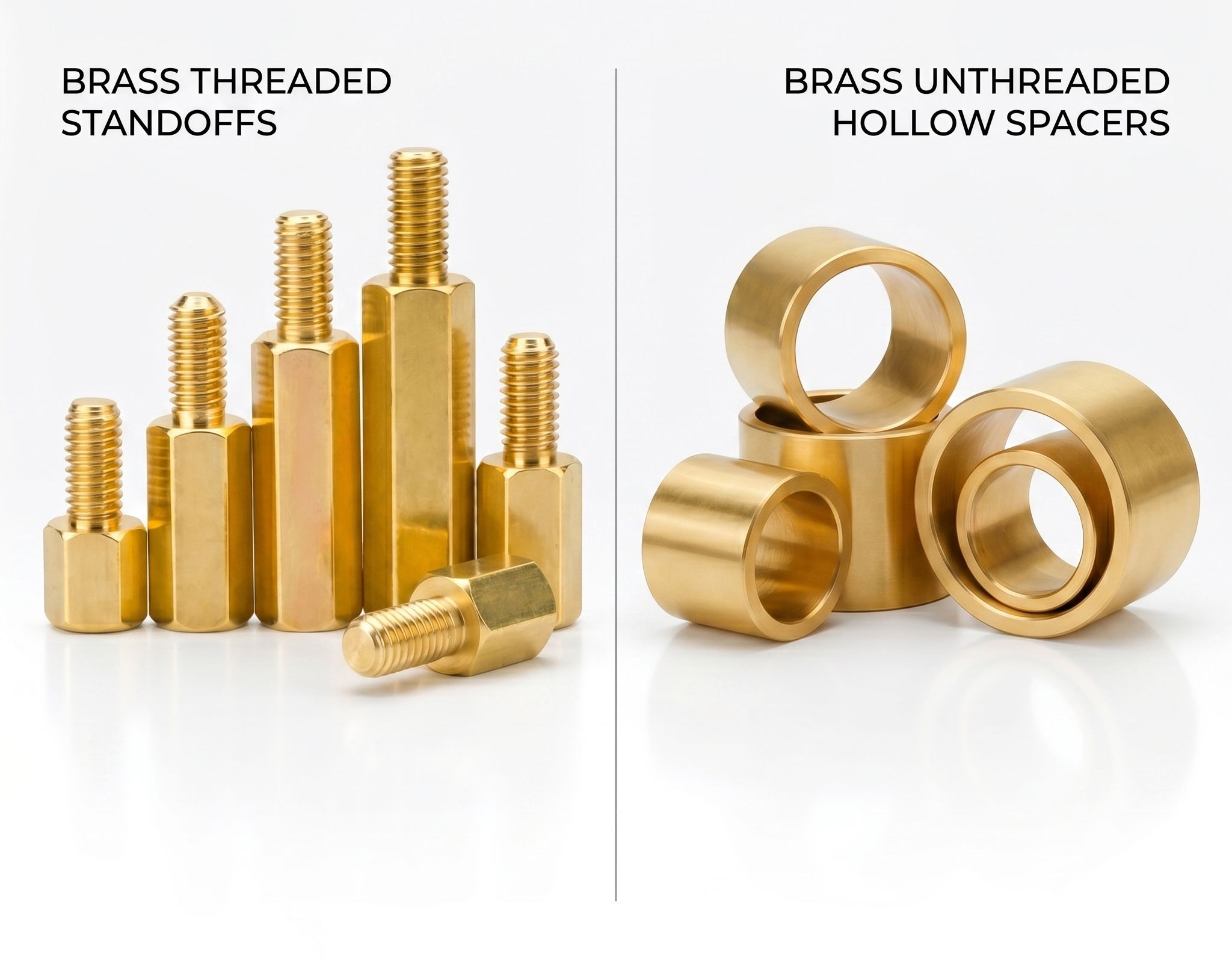
A brass spacer creates distance between two parts. It keeps a fixed gap and helps maintain alignment during assembly. A standoff also creates distance, but it adds a threaded connection at the same time.
Both parts often look similar from outside. The main difference appears when fastening starts. A spacer needs a separate bolt to pass through. A standoff becomes part of the fastening point itself.
Spacers: The Non-Threaded Gap Fillers
A spacer usually has a plain body with a through hole. It sits between two parts and holds the required distance during tightening.
The bolt passes through the spacer when the assembly closes. The spacer body carries the load along its full length.
This type is common in panel mounting, bracket spacing, and simple mechanical assemblies where thread is not needed inside the spacer.
Standoffs: The Threaded Fasteners
A standoff includes thread inside, outside. One part fastens directly into the standoff during assembly.
This creates spacing and fastening in one part. It also removes the need for a separate nut in many layouts.
Threaded standoffs are common in PCB mounting, control panels, and enclosure assemblies where repeated fastening is required.
Most Common Shapes for Your Project
Shape affects how a brass spacer fits during assembly. It also affects machining time and tightening method. Some shapes work better when the part stays fixed by bolt pressure. Some shapes help when direct tightening is needed during installation.
Round Spacers: Smooth and Cost-Effective
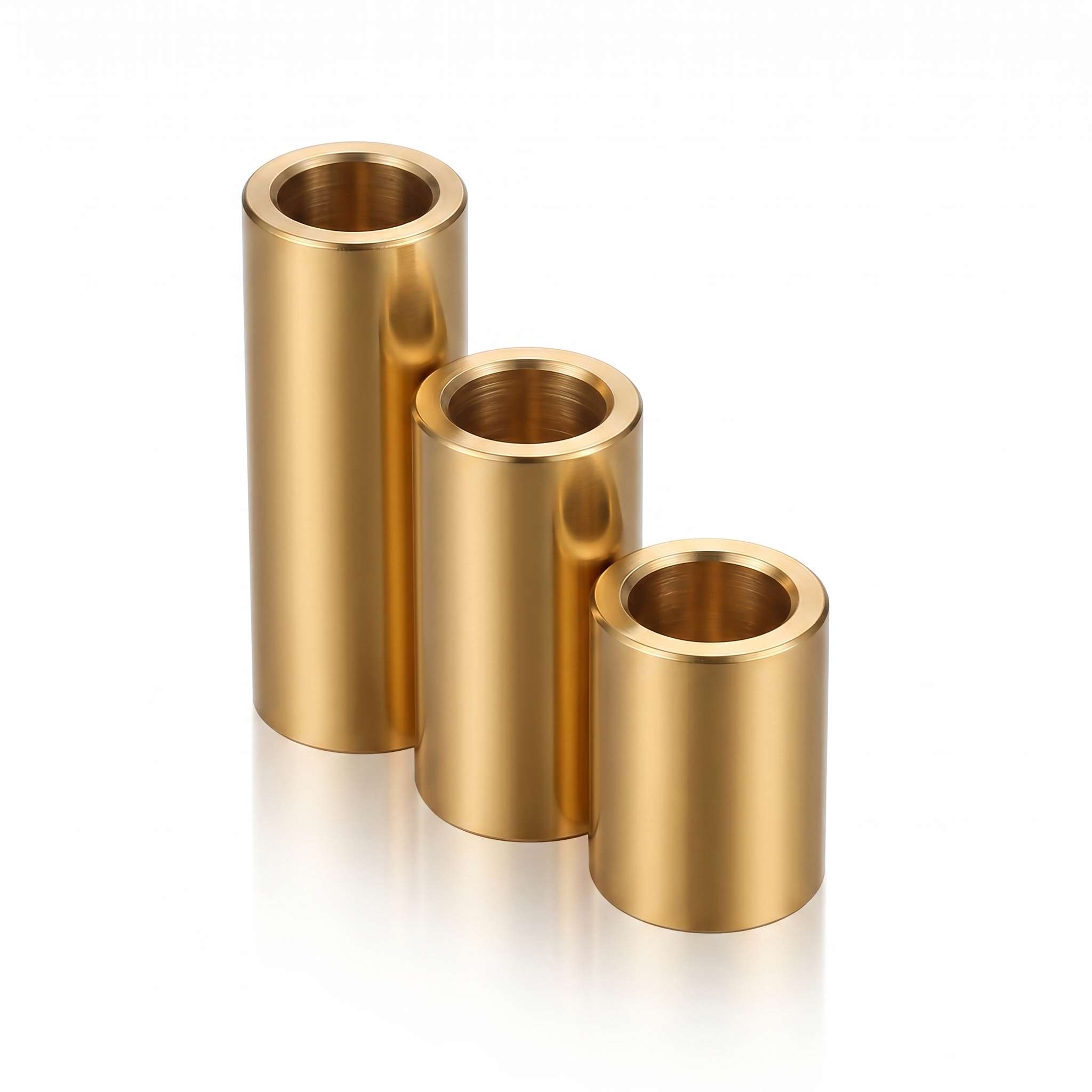
Round spacers are the simplest type to machine. A turning process produces the full body with less cutting time. This keeps production cost lower in large quantities.
They are common in simple assemblies where a bolt passes through the center and tightening happens outside the spacer body.
Hexagonal Spacers: Best for Wrench Tightening

Hexagonal spacers give a flat grip for a wrench. This makes tightening easier when the spacer itself must stay fixed.
The hex body also helps in narrow assemblies where fingers cannot hold the part during installation.
This shape is common in threaded brass parts where tightening torque matters.
Male-Female Standoffs: For Stacking Circuit Boards
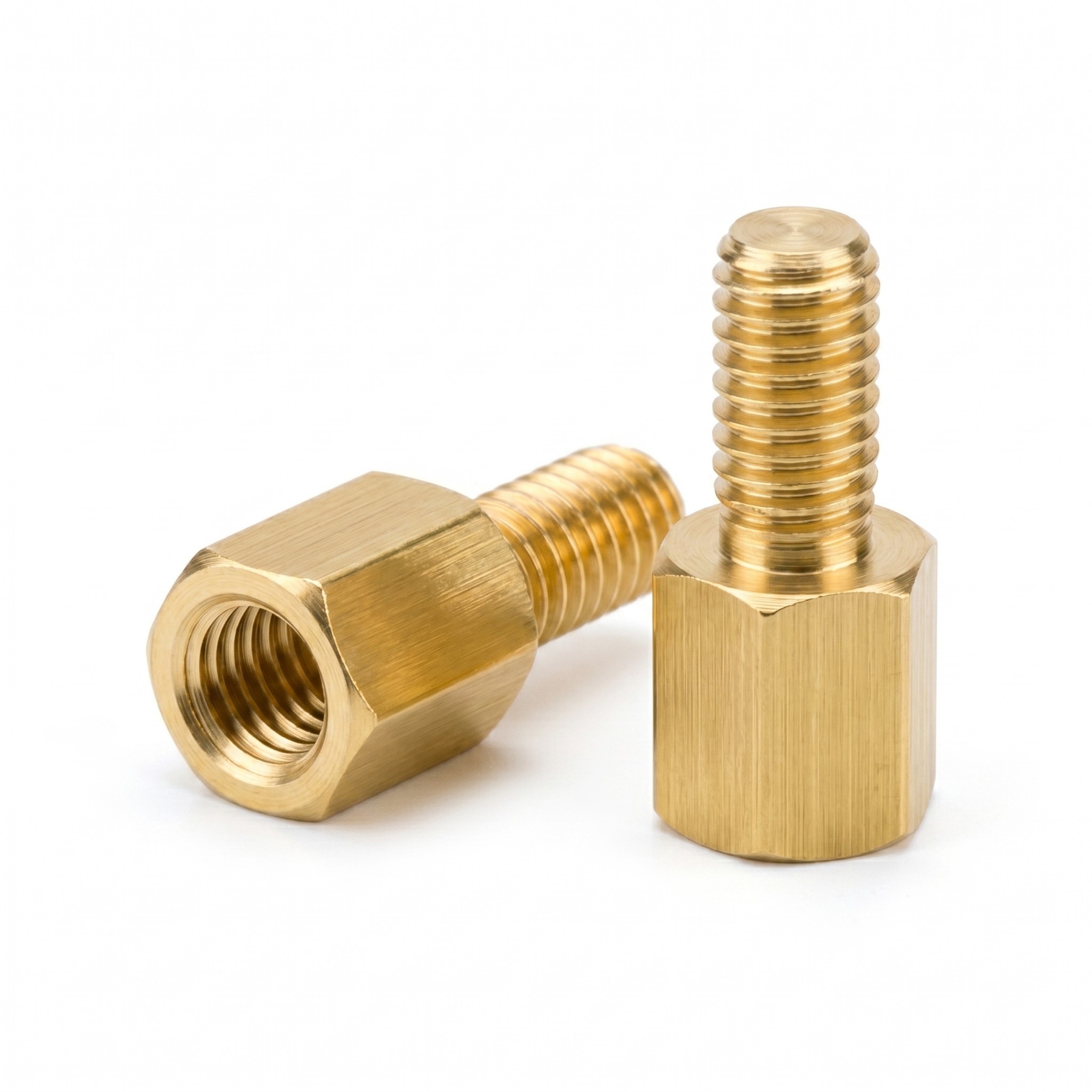
A male-female standoff has an external thread on one side and an internal thread on the other side. This allows one board to mount above another without adding extra hardware.
This design is common in PCB assemblies, control panels, and compact electronic modules where fixed spacing must stay accurate.
Why Pros Choose Brass Over Aluminum or Plastic
Brass is often selected when the part must hold thread strength over repeated assembly. Threads stay more stable than plastic under tightening load. Compared with an aluminum spacer, brass resists surface damage better in small threaded sections.
Material choice also affects conductivity and service life. In many assemblies, brass gives a better balance between strength, machinability, and corrosion resistance.
Corrosion Resistance: No Rust in Damp Areas
Brass does not form rust like steel. The surface stays stable when moisture remains around the part for long periods.
This helps in electrical enclosures, outdoor panels, and humid working areas where small hardware stays exposed.
A light oxide layer can appear over time, but it stays on the surface and does not spread like rust.
Electrical Grounding: Perfect for Electronics
Brass conducts current well enough for many mounting applications. This helps when the spacer also supports a grounding path inside the assembly.
PCB mounts, terminal blocks, and control panels often use brass when conductive hardware is required.
A copper spacer carries current better, but brass gives more thread strength in small machined parts..
Top 3 Industries Using Brass Spacers Today
Brass spacers are used where fixed distance, thread reliability, and clean machining matter. Small size does not reduce their importance because spacing errors affect full assembly fit.
1. Electronics
Electronics assemblies use brass spacers to hold PCB boards at a fixed height. This keeps tracks clear from the base plate and prevents contact between layers.
They are also used inside enclosures where neutral bar and control boards need stable spacing during service.
2. Automotive
Automotive assemblies use brass spacers in sensor brackets and dashboard modules where small threaded parts must stay stable under vibration.
They also appear in low-load electrical mounting points where conductive hardware helps during assembly.
3. Industrial Machines
Industrial machines use brass spacers in control panels, sensor mounts, and light support sections where exact spacing keeps parts aligned.
These parts are common where repeated maintenance requires clean threads and easy removal.
How to Measure and Identify the Right Size
Start with body length. Measure the full spacer from one end to the other because length controls the final gap in the assembly.
Then check the outer diameter. A larger diameter gives more contact area, but it also needs enough space around the mounting point.
If the part has thread, check the thread size before replacement. Diameter alone is not enough because pitch must also match.
Hex parts also need across-flat measurement. This tells you which wrench size will fit during tightening.
A small size error changes assembly pressure. Wrong length can bend the mounted part.
Why Quality Manufacturing Matters
Small brass parts fail first when machining control is poor. Burrs at the edge slow assembly and damage nearby surfaces during tightening.
Thread accuracy also matters because a small pitch error stops proper engagement. The part may enter by hand and still lock before full seating.
Length must stay consistent across the batch. A small variation changes board height, bracket pressure, and alignment.
Surface finish also affects fit in close assemblies. Rough edges create handling problems in small electronic and mechanical parts.
At Hiren Brass Product, brass spacers and standoffs are produced to drawing, thread standard, and required tolerance for repeat assembly use.
Send your drawing for RFQ.