

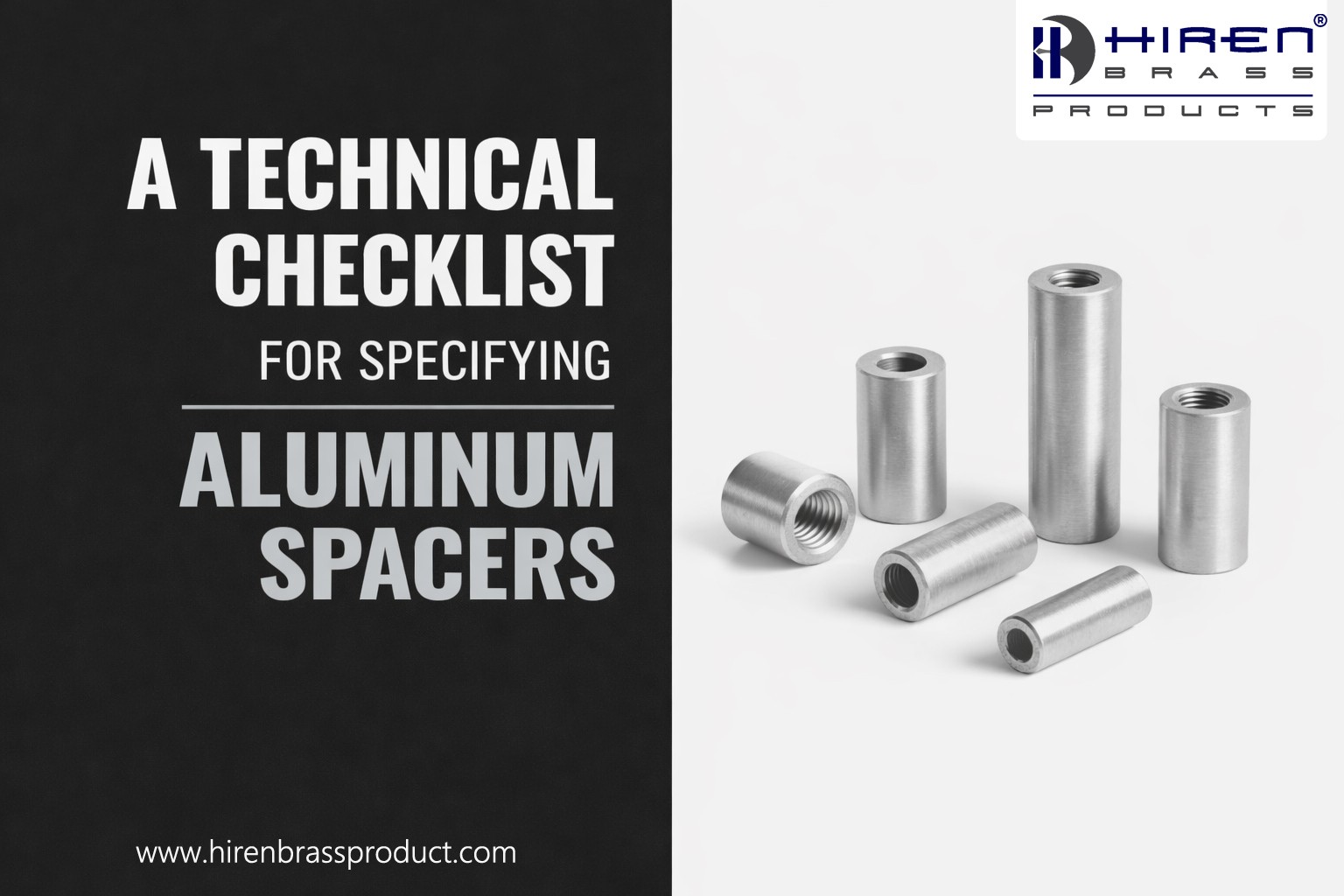
Aluminum spacers look like simple parts, but small mistakes cause real problems. Wrong diameter, weak wall thickness, and poor tolerance can break alignment in an assembly. Bolts may lose proper clamping force, and vibration can loosen the joint.
Engineers often specify only length and hole size when ordering aluminum spacers. That is not enough for many applications. Wall thickness, thread type, material grade, and load conditions also affect performance.
This checklist explains the key points engineers should review before ordering spacers. It covers dimension control, threaded aluminum spacers, aluminum bolt spacers, and when custom aluminium spacers make more sense than stock parts.
1. Dimension and Tolerance: Beyond the Basics of Aluminum Spacers
Metal spacers are used to control distance and maintain alignment between parts. If the dimension is wrong, the assembly will not clamp correctly. Even small variation in spacer length can change bolt preload and create vibration problems.
Diameter tolerance also matters. The internal diameter must match the bolt size so the spacer sits correctly. The outer diameter must provide enough material strength while still fitting the assembly space.
Surface finish and tolerance become more important when the spacer supports load. Poor dimensional control can shift the position of the connected components. This affects alignment and long-term stability.
For most assemblies, engineers should define spacer length, internal diameter, outer diameter, and tolerance clearly before manufacturing aluminum spacers.
Determining Wall Thickness Requirements
Wall thickness controls the strength of the spacer. Thin walls can deform under bolt tightening force. This deformation reduces clamping stability in the joint.
The relationship between inner diameter and outer diameter determines wall thickness. A larger bolt hole reduces the available material around the spacer body. Designers must keep enough wall thickness to resist compression and bending.
Material grade also influences wall performance. Softer aluminum alloys may require thicker walls to support the same load. In some applications engineers use copper spacers when higher strength and conductivity is needed. In high-load assemblies, increasing outer diameter is often safer than reducing the bolt size.
Proper wall thickness prevents collapse during tightening and helps aluminum spacers maintain their shape during service.
2. Internal Geometry: Clearance Holes vs Thread Engagement
The internal hole of a spacer determines how it works in the assembly. A clearance hole allows the bolt to pass through freely. The clamping force then comes from the bolt and nut outside the spacer.
Threaded spacers hold the bolt directly inside the spacer body. This removes the need for a nut on the opposite side. It is useful when space is limited.
Engineers must decide this based on the assembly design. Clearance holes suit simple bolt-through joints. Threaded aluminum spacers are better when the spacer itself becomes part of the fastening system.
When to Spec Threaded Aluminum Spacers vs Unthreaded Sleeves
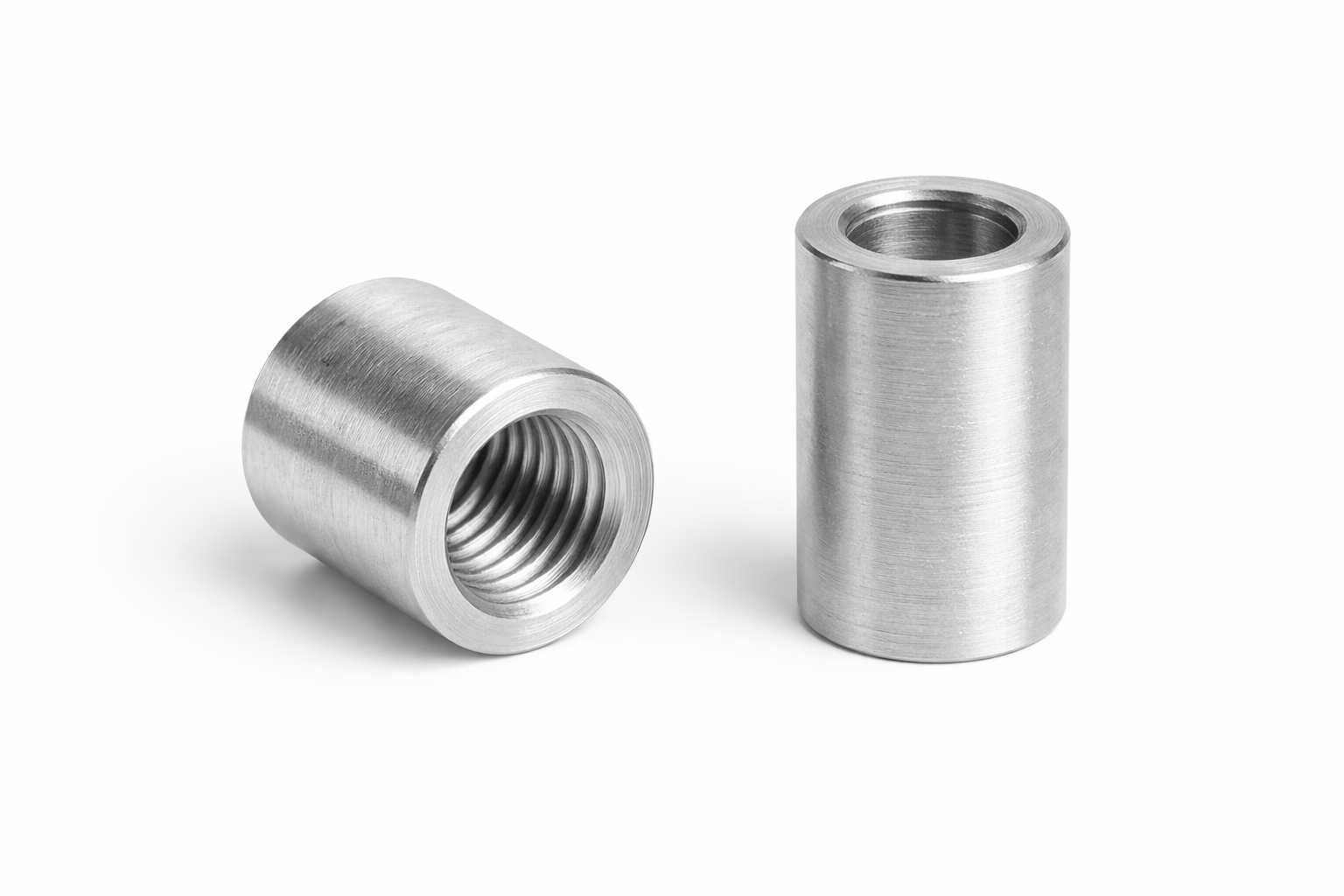
Threaded aluminum spacers are used when the bolt must engage directly into the spacer. This is common in electronic mounts, panel assemblies, and compact mechanical structures.
Unthreaded sleeves are used when the bolt passes completely through the spacer and clamps with a nut. This setup handles higher clamping loads because the threads are not inside the aluminum body.
Choosing the correct internal geometry prevents thread damage and improves assembly reliability.
3. Material Grade and Finish: Durability in Corrosive Environments
Aluminum spacers perform differently depending on the alloy and surface finish. Some grades machine easily but have lower strength. Others provide better corrosion resistance and structural stability. Some assemblies use brass spacers when higher corrosion resistance is required.
Choosing the correct grade and finish helps spacers survive moisture, chemicals, and outdoor exposure. Anodizing is often used to improve corrosion resistance and surface durability.
| Aluminum Grade | Key Characteristics | Typical Spacer Use |
|---|---|---|
| 6061-T6 | Good strength, corrosion resistance, excellent machinability | General aluminum spacers |
| 7075-T6 | Very high strength, lower corrosion resistance | High-load spacers |
| 6063 | Softer alloy, good corrosion resistance | Light duty spacers |
| 2024 | High fatigue strength, poor corrosion resistance | Aerospace spacers |
Assessing the Limitations of Aluminium at Home Depot
Off-the-shelf aluminum stock often lacks precise tolerances required for engineered assemblies. Hardware store material may vary in diameter, finish, and straightness.
These materials are suitable for simple repairs or non-critical applications. They are not ideal when assemblies require tight tolerance.
For production assemblies, custom aluminum spacers provide better dimensional control and repeatability.
4. Application-Specific Design: Load Bearing and Vibration
Spacers often carry compressive load when bolts are tightened. If the spacer collapses, the joint loses clamping force and the assembly becomes unstable.
Load conditions must be considered during spacer design. Higher bolt torque increases compressive stress on the spacer body. Proper outer diameter and wall thickness help distribute this load.
Vibration also affects spacer performance. Repeated movement can loosen fasteners and damage weak spacer walls. A well-designed spacer maintains alignment and supports stable bolt preload during operation.
Optimizing Aluminum Bolt Spacers for High-Load Assemblies
Aluminum bolt spacers are commonly used in assemblies where bolts pass through multiple components. These spacers maintain the correct distance between parts and prevent crushing during tightening.
For high-load joints, the spacer must resist compression. Increasing outer diameter and maintaining adequate wall thickness improves load capacity. The spacer length must also match the clamping stack accurately.
Proper design keeps aluminum bolt spacers stable under torque and vibration, helping the assembly maintain consistent clamping force.
5. Procurement Strategy: Standard Stock vs Custom Fabrication
Standard aluminum spacers are easy to source and work well for simple assemblies. They are useful when the dimensions match the design and the tolerance requirements are not strict.
Problems appear when the assembly needs precise length, special diameter. Off-the-shelf spacers rarely match these exact requirements. Engineers then add washers and modify parts, which reduces assembly accuracy.
Custom aluminium spacers allow the design to match the application exactly. Length, internal diameter, outer diameter, and threads can follow the engineering drawing without adjustment during assembly.
The ROI of Choosing Custom Aluminum Spacers for Large-Scale Projects
Large production runs require consistency between every part. Small dimensional variation can affect bolt preload and alignment across multiple assemblies.
Custom aluminium spacers reduce these risks because the dimensions follow controlled machining processes. Each spacer matches the design specification without manual adjustment.
For large projects, accurate parts reduce assembly time and prevent rework. This improves production efficiency and helps maintain consistent product quality.
Precision Manufacturing: Why Hiren Brass Product is Your Global Partner for Custom Spacers
Many assemblies require spacers with exact dimensions and consistent machining quality. Small variation in length, diameter, and thread accuracy can affect alignment and bolt clamping force. Reliable manufacturing ensures that every spacer performs the same in production.
Hiren Brass Products manufactures aluminum spacers, aluminum bolt spacers, threaded aluminum spacers, and custom aluminum spacers according to engineering drawings and specifications. Each part is machined with controlled dimensions and repeatable processes to support stable assembly performance.