

Metal spacer selection starts with fit, not material alone. Length controls the gap between parts. Diameter affects contact area and support during tightening.
Aluminum is common where low weight and easy machining matter. It is widely used in brackets, panels, electronics, and light mechanical assemblies.
This guide explains spacer function, material grades, common shapes, size checking, and why machining quality affects final fit.
What Are Aluminum Spacers and Why Use Them?
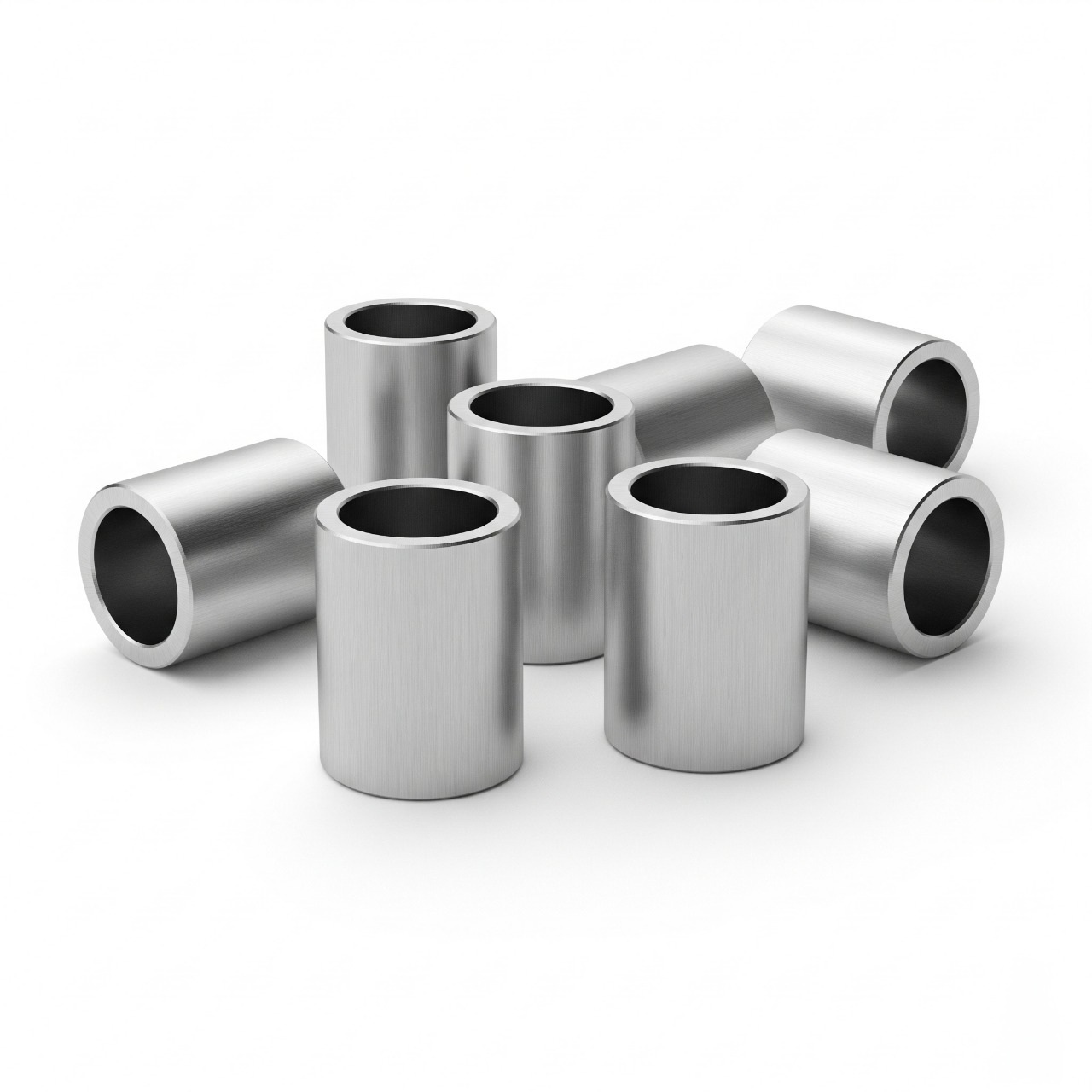
An aluminum spacer holds a fixed gap between two parts. It keeps components aligned while the bolt applies clamping force. The spacer body carries the load across its full length during tightening.
Aluminum works well for spacers because the material stays light and machines cleanly. It allows accurate length control and smooth surface finish in small parts. A copper spacer is usually chosen only when conductivity matters more than weight.
These spacers appear in brackets, control panels, electronics assemblies, and light mechanical structures where stable spacing is required.
Choosing the Right Material Grade for Aluminum Spacers
Material grade affects strength, machinability, corrosion behavior, and final cost. Some grades are selected for easy machining. Some are chosen when the spacer must carry more load and hold tighter thread strength.
| Material Grade | Main Advantage | Common Use |
|---|---|---|
| 6061 aluminum | Good machinability and corrosion resistance | General spacers, brackets, electronics, light assemblies |
| 7075 aluminum | High strength for compact sections | Higher load parts, tight threaded sections |
| 2024 aluminum | High strength and good fatigue resistance | Structural parts where corrosion stays controlled |
| 6063 aluminum | Smooth finish and easy forming | Light-duty parts where appearance matters |
| 2011 aluminum | Very fast machining | High-volume precision parts with simple geometry |
| 5052 aluminum | Strong corrosion resistance | Low-load parts exposed to moisture |
6061 remains the most common choice because it balances machining ease, strength, and corrosion resistance. 7075 is used when higher strength is required in smaller sections. Other grades are selected when surface finish, machining speed, and environmental exposure becomes more important.
Popular Types of Aluminum Spacers
Spacer shape affects how the part fits during assembly. It also changes machining time and handling during installation. Some shapes work better when the spacer only holds distance. Some shapes help when tightening access is limited.
Round Spacers for Simple Clearance
Round spacers are the most common type in general machining work. The body is easy to turn and needs fewer machining steps.
This keeps production cost lower in larger quantities. Round spacers are widely used where a bolt passes through the center and the spacer only maintains distance.
Hex Spacers for Easy Tightening
Hex spacers provide flat sides for wrench grip. This makes handling easier when the spacer must stay fixed during tightening.
The shape also helps in narrow assemblies where fingers cannot hold the part securely. Hex spacers are common when thread engagement and tightening control matter during assembly.
When Standard Sizes Are Not Enough for Aluminum Spacers
Standard spacers work in many assemblies, but fixed catalog sizes do not solve every fit problem. A small difference in length can change pressure across the joint. A mismatch in bore size can also reduce alignment accuracy.
Custom aluminum spacers are used when the assembly needs exact length, specific diameter, and controlled thread details. This is common in brackets, electronics, panels, and machine parts where standard hardware leaves extra play.
Perfect Fit for Your Specific Application
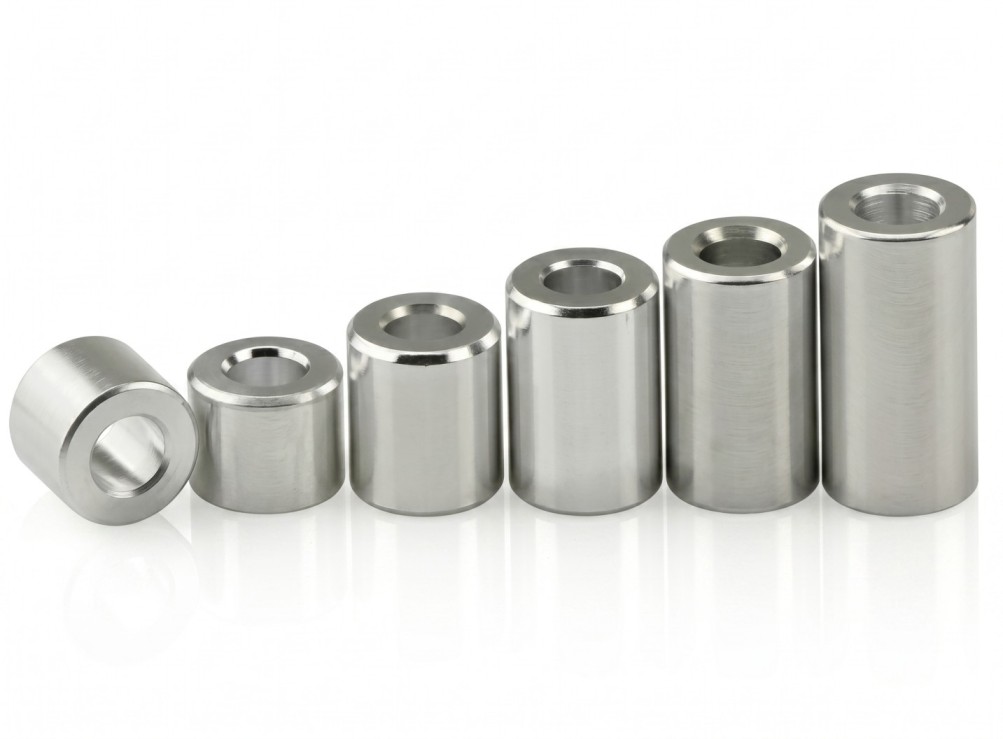
A custom spacer follows the actual drawing instead of the nearest available size. This helps when mounting distance must stay exact across repeated assemblies.
Special outer diameter, inner bore, and length are often required when the spacer works inside limited space.
High-Quality Aluminum Machined Components
Custom CNC machining keeps dimensions consistent across the batch. Clean edges also help during assembly because burrs often create fit problems in small parts.
Threaded aluminum parts also need accurate pitch and depth when fastening starts directly inside the spacer body.
How to Measure for Your New Spacers
Start with body length because this dimension sets the gap between the two mounted parts. Measure from one flat end to the other. Even a small length difference changes clamping position after tightening.
Next check the outer diameter. This shows how much contact area the spacer provides around the mounting point. A larger diameter can support load better when space allows.
Then measure the inner diameter if the spacer has a through hole. The bore must clear the bolt without excess play. Too much clearance allows movement during assembly.
If the spacer is threaded, check both thread diameter and pitch. Diameter alone is not enough because similar thread sizes can still fail during installation if the pitch does not match.
Why High-Quality Machining Matters
Machining quality decides whether a spacer fits correctly in the first assembly. A small length error changes the gap and shifts clamping force across the mounted parts.
Surface finish also matters when the spacer sits against a flat face. Rough ends reduce full contact and can leave uneven pressure after tightening.
Thread accuracy becomes important in threaded spacers and standoffs. Wrong pitch and shallow thread depth causes resistance before full engagement.
Edge quality also affects handling. Burrs at the bore or outer edge can scratch nearby parts and slow assembly in tight spaces.
Get the Best Performance with the Right Fit
A spacer performs well only when the size matches the assembly exactly. Correct length keeps the mounted parts aligned and supports even clamping during tightening.
Wrong diameter creates movement at the fixing point. That movement often appears later as looseness, vibration, and uneven load on the fastener.
Material grade also affects long-term performance when the spacer works under repeated assembly.
At Hiren Brass Product, aluminum spacers are machined to drawing, size requirement, and required tolerance for repeat production.
Send your drawing for RFQ.