

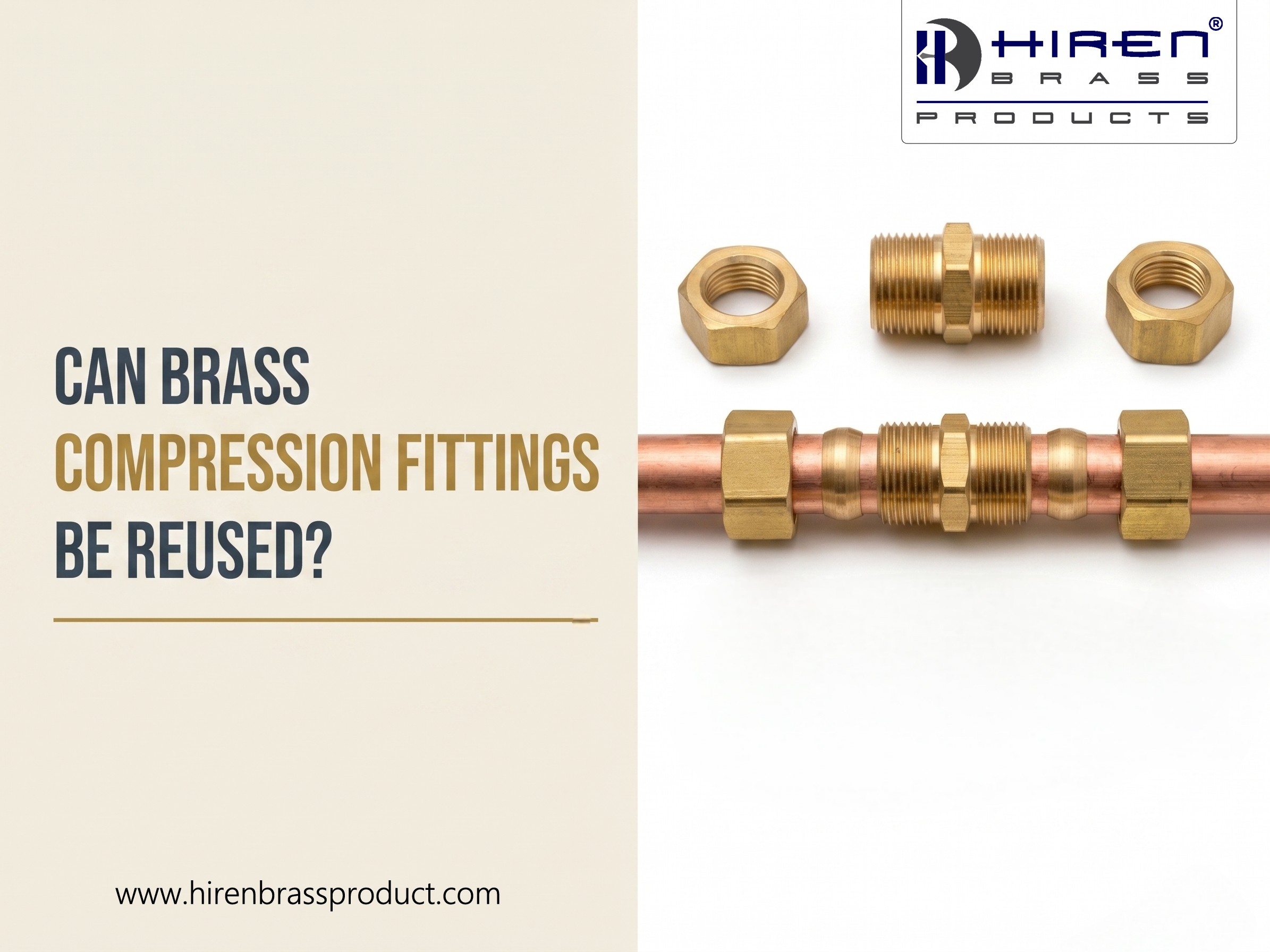
Brass compression fittings are widely used in plumbing, gas lines, water systems, pneumatic lines, and industrial tubing connections. Many people remove these fittings during maintenance and then question whether the same fitting can be reused safely.
Compression fittings seal by compressing the ferrule against the tube surface. After tightening, the ferrule deforms and creates a mechanical seal. In some cases, the fitting body and nut can be reused, but damaged ferrules, worn threads, or improper reassembly can cause leakage and sealing failure.
This guide explains how brass compression fittings work, when they can be reused safely, what should be inspected before reinstallation, and best practices to reduce leakage risk during reuse.
What Are Brass Compression Fittings?
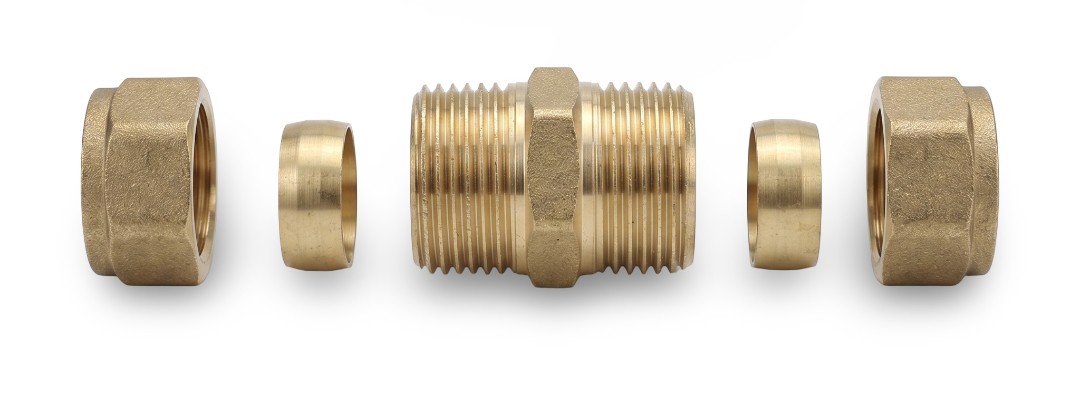
Brass compression fittings are pipe and tube connectors used to join copper, plastic, and other metal tubing without welding and soldering. These fittings create a tight seal by compressing a small ring, called a ferrule, around the tube when the brass nut is tightened.
A standard compression fitting usually contains three parts:
- Compression nut
- Ferrule (olive)
- Fitting body
These fittings are commonly used in water lines, gas lines, air systems, and plumbing connections because installation is simple and does not require welding equipment.
Can a Compression Fitting Be Reused Safely?
Compression fittings can sometimes be reused, but reuse is not always recommended for reliable sealing. In many cases, the fitting body and nut remain usable, but the ferrule is the main concern because it deforms during tightening. Using a damaged ferrule may not seal properly.
Key Considerations for Reuse
Best Practice:
Replace the ferrule (olive) if possible and reuse only the fitting body and nut.
When Reuse May Work:
If the ferrule is not heavily damaged, the fitting may seal again after proper inspection. Check for scratches, corrosion, cracks.
When Not to Reuse:
Do not reuse the fitting if the ferrule is badly compressed, over-tightened, cracked, and damaged from multiple tightening cycles. These conditions may cause leakage after reinstallation.
Important:
For gas lines, high-pressure systems, replacing the ferrule and complete fitting is usually the safer option.
What Happens to the Ferrule After Tightening?
When the compression nut is tightened, the ferrule compresses between the fitting body and tube surface. This pressure deforms the ferrule and creates the seal around the tube.
After tightening, the ferrule usually leaves a visible compression mark on the tube surface. In many cases, the ferrule shape changes permanently after installation. This is the main reason reuse becomes risky after multiple tightening cycles.
What Happens During Tightening
Seal Formation
The ferrule compresses tightly against the tube and fitting body to create a leak-resistant seal.
Mechanical Grip
The ferrule grips the tube surface and helps prevent tube movement during pressure.
Permanent Deformation
After proper tightening, the ferrule becomes permanently compressed around the tube. A heavily deformed ferrule may not reseal properly after removal.
Important Installation Points
Avoid Over-Tightening
Excessive tightening may crack the ferrule, damage the fitting body.
Inspect Before Reuse
If the ferrule has cracks, corrosion, uneven compression, it should be replaced before reinstallation.
Reassembly
During reassembly, excessive tightening should be avoided because the ferrule has already been permanently compressed during the first installation.
When Should Compression Fittings Not Be Reused?
Compression fittings may not seal properly if the ferrule is cracked and damaged. Replacing the ferrule is usually the safer option for reliable sealing.
When Reuse Is Not Recommended
Deformed Ferrule
The ferrule deforms during tightening to create the seal. A heavily compressed ferrule may not reseal properly after removal.
Stuck Ferrule
If the ferrule is difficult to remove onto the tube, reuse may damage the tube surface.
Damaged Threads
Do not reuse fittings with stripped, worn, and cross-threaded threads.
Surface Damage
Corrosion, deep scratches, and surface damage may reduce sealing reliability.
Plastic Compression Fittings
Reuse of plastic compression fittings is usually not recommended because plastic components may deform permanently after tightening.
Situations Where Replacement Is Safer
Gas Lines and High-Pressure Systems
For critical systems, replacing the ferrule or complete fitting is usually the safer option.
High-Vibration Applications
Repeated vibration may loosen reused fittings over time.
Hidden Installations
For fittings installed inside walls, new components are recommended to reduce leakage risk.
Uncertain Component Condition
If the fitting condition cannot be verified properly, replacement is safer than risking leakage after reinstallation.
Common Mistakes When Reusing Compression Fittings
Reusing compression fittings may cause leakage if damaged parts are ignored. The ferrule changes shape during tightening, so sealing performance may reduce after repeated reuse.
Reusing a Damaged Ferrule
A cracked, heavily deformed, deeply indented ferrule may not seal properly after reuse.
Over-Tightening the Nut
Too much tightening may deform the ferrule, damage the tube surface, crack the fitting body.
Ignoring Damaged Threads and Corrosion
Worn threads, corrosion, surface damage may reduce sealing reliability and increase leakage risk.
Failure to Clean Components
Dirt, debris, damaged sealing surfaces may prevent proper ferrule compression during tightening.
Misaligned Tube Installation
If the tube enters at an angle, uneven ferrule compression may cause leakage.
Not Inspecting for Cracks
Old brass fittings may develop small cracks after repeated tightening. These cracks may leak under pressure after reuse.
FAQs About Reusing Brass Compression Fittings
1. Can I reuse a compression fitting on a different tube?
Not recommended. The ferrule compresses according to the original tube surface during first installation. Using it on another tube may reduce sealing reliability.
2. Does over-tightening stop compression fitting leaks?
No. Excessive tightening may deform the ferrule, damage the tube surface, crack the fitting body. In many cases, over-tightening increases leakage risk.
3. Why do compression fittings fail after repeated reuse?
Repeated tightening changes ferrule shape and reduces sealing consistency. Threads, tube surface, ferrule contact areas may also wear over time.
4. Can vibration loosen reused compression fittings?
Yes. Reused fittings in vibrating systems may lose sealing pressure over time, especially when the ferrule already has wear marks, deformation.
5. Should thread seal tape be used on compression fittings?
Compression fittings seal through ferrule compression, not through thread sealing. Thread tape usually does not stop leakage caused by a damaged ferrule.
6. Why is ferrule inspection important before reuse?
Small cracks, deep indentation marks, corrosion, uneven compression may not be visible easily but can still cause leakage under pressure.
7.Are brass pipe fittings and brass compression fittings the same?
No. Brass compression fittings are one type of brass pipe fitting. Compression fittings use a ferrule and compression nut to create a seal around the tube, while other brass pipe fittings may use threaded, flare, soldered connections.
Conclusion
Brass compression fittings can sometimes be reused, but ferrule condition is critical for reliable sealing. Cracked, damaged, heavily deformed ferrules may increase leakage risk after reuse.
We manufacture custom brass compression fittings according to drawing and application requirements.