

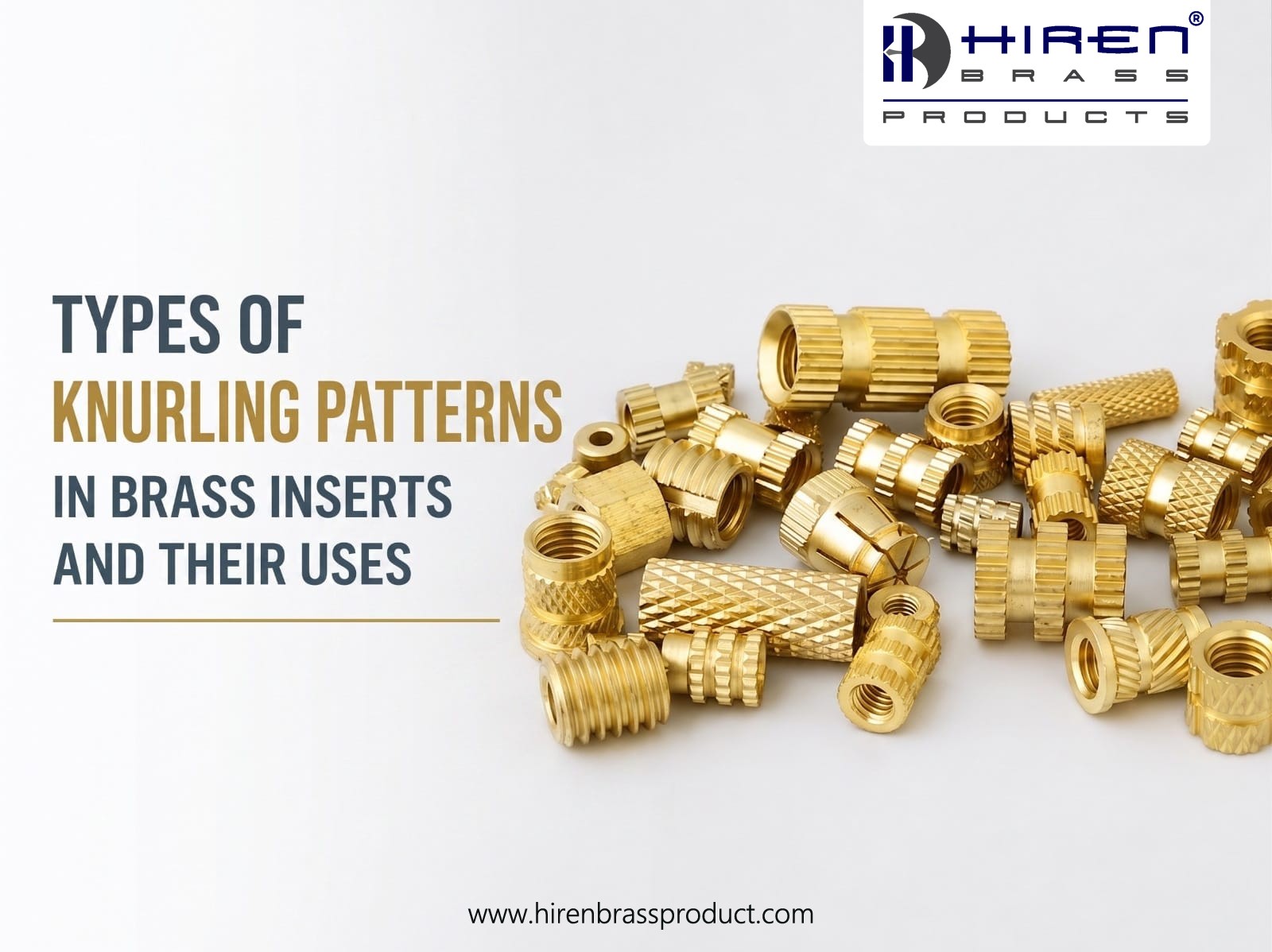
This blog explains common knurling patterns used in brass inserts and how different patterns have different benefits.
Brass inserts use different knurling patterns to improve grip and holding strength inside plastic parts. These patterns are machined on the outer side of the insert and help lock the insert into the material during installation.
Different knurling designs are used according to plastic material and installation method. Some patterns provide better axial grip and some improve torque resistance. The wrong knurling pattern can reduce holding strength and damage the plastic during installation.
As a brass insert manufacturer, understanding knurl geometry is important because insert performance depends heavily on grip, torque resistance, and installation method.
This guide explains common knurling patterns used in brass inserts, how each pattern works, and where each pattern is commonly used.
What Is Brass Insert Knurling and Why Does It Matter?
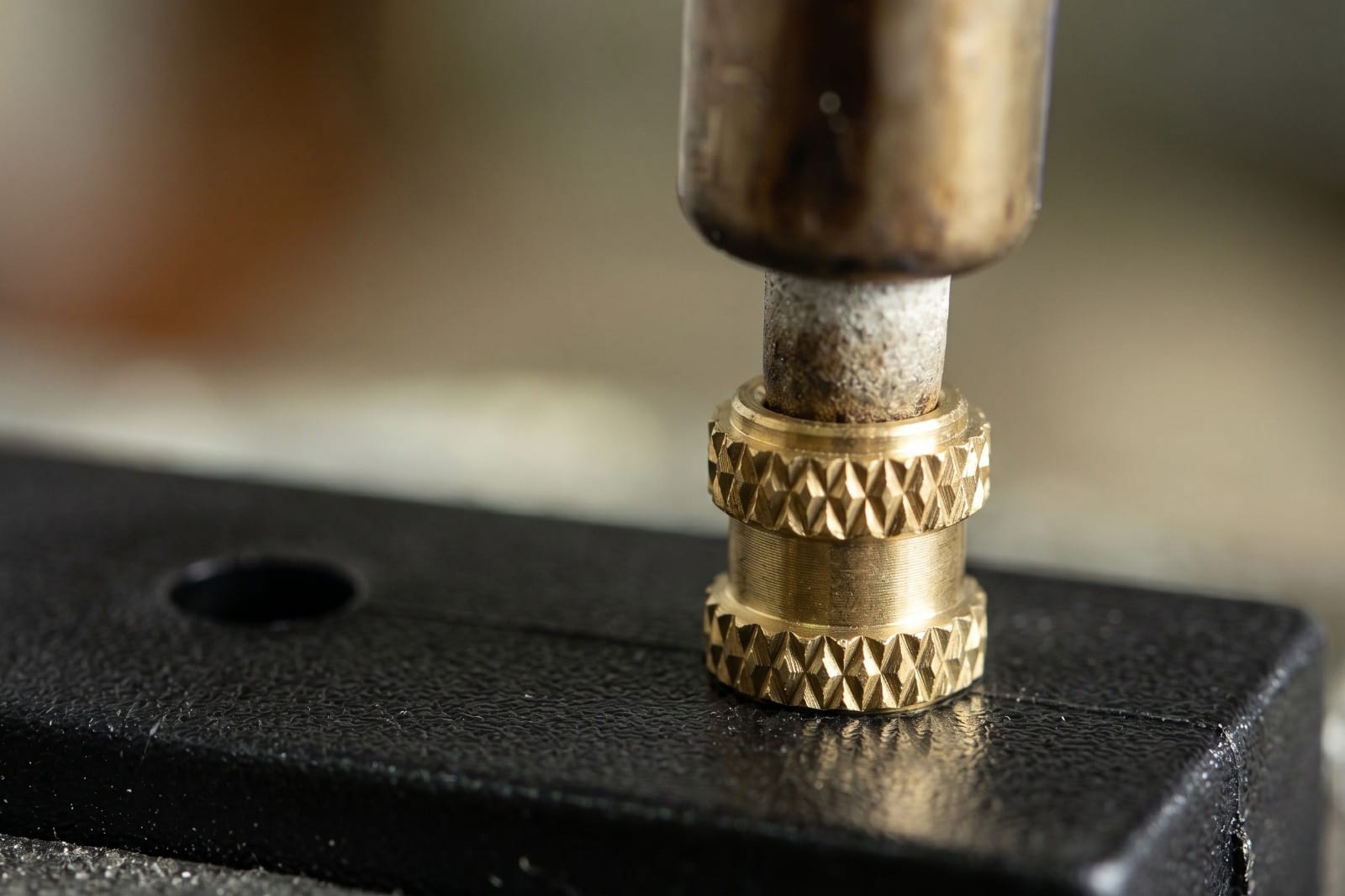
Brass insert knurling is a patterned and ridged surface machined on the outer side of the insert. Common knurling patterns include straight, diamond, helical, and cross knurling.
Knurling pattern is important because it helps create a strong mechanical lock between the insert and surrounding material. It also helps prevent insert rotation when the screw is tightened.
Purpose of Knurling in Brass Inserts
Improves Pull-Out and Torque Resistance
The knurling pattern acts like an anchor point and improves grip inside the material. In heat-set installation, softened plastic flows around the knurled surface and creates a strong mechanical lock after cooling.
Prevents Insert Rotation
Knurling helps stop the insert from spinning inside the hole when tightening torque is applied through the screw.
Supports Repeated Assembly
Without inserts, threads formed directly in plastic wear out after repeated use. Knurled brass inserts allow repeated assembly and disassembly without damaging the plastic part.
Improves Insert Retention
Knurling improves insert retention in injection-molded, 3D printed, and press-fit plastic components.
Types of Brass Insert Knurling Patterns
Different knurling patterns are used in knurled inserts according to plastic material, installation method, and holding requirement. Common patterns include diamond, straight, cross, helical, and left-right knurling.
Common Brass Insert Knurling Patterns
Diamond Knurling
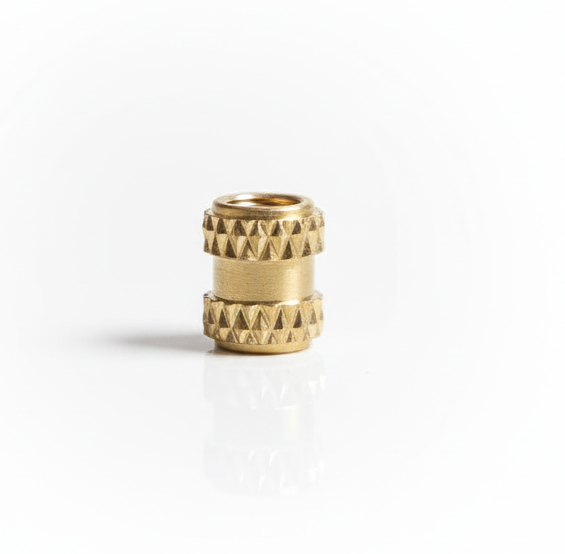
Most common knurling pattern. It uses a diagonal crisscross design that improves grip and torque resistance inside plastic parts. Commonly used in heat-set and molded inserts.
Straight Knurling
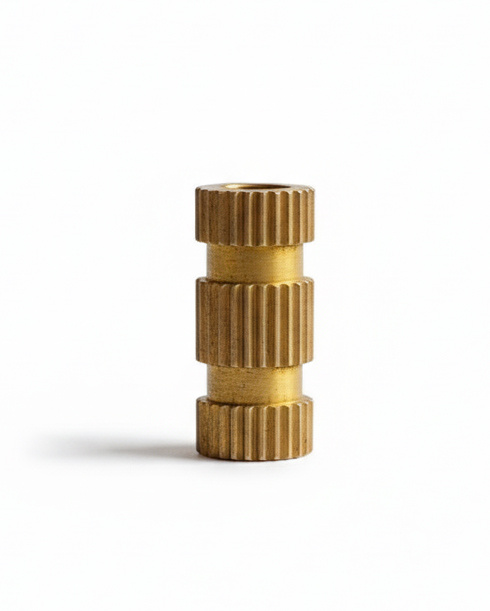
Uses straight parallel ridges along the insert body. This pattern provides good axial grip and is commonly used in press-fit applications.
Helical (Spiral) Knurling
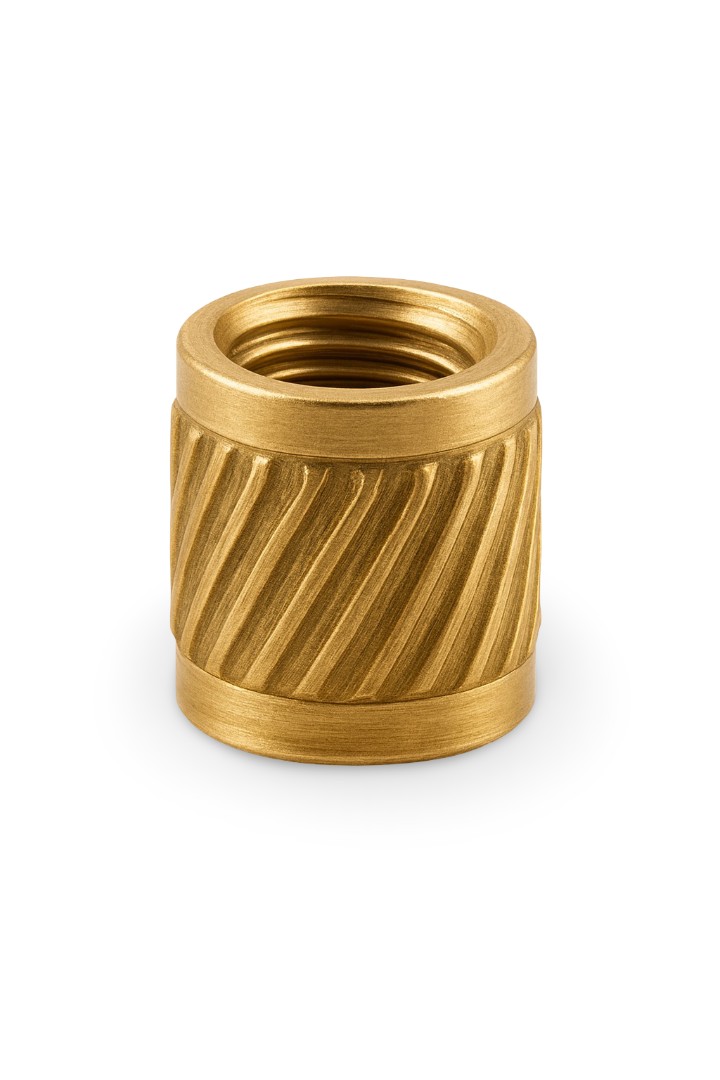
Uses angled spiral ridges around the insert body. This pattern improves pull-out resistance and helps improve insert anchoring during installation.
Cross Knurling
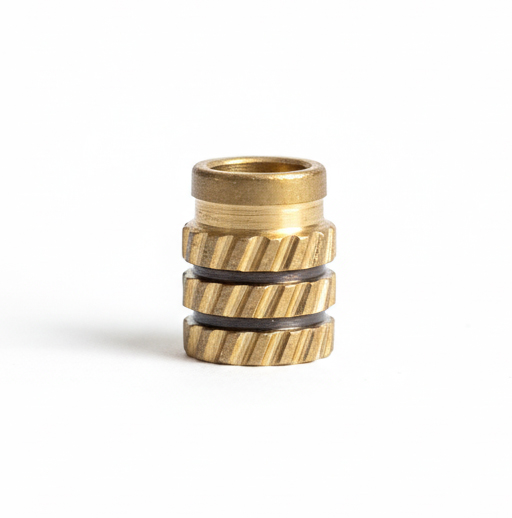
Uses intersecting angled lines across the insert surface. This pattern improves grip and helps reduce insert movement inside plastic parts.
Left-Right Knurling
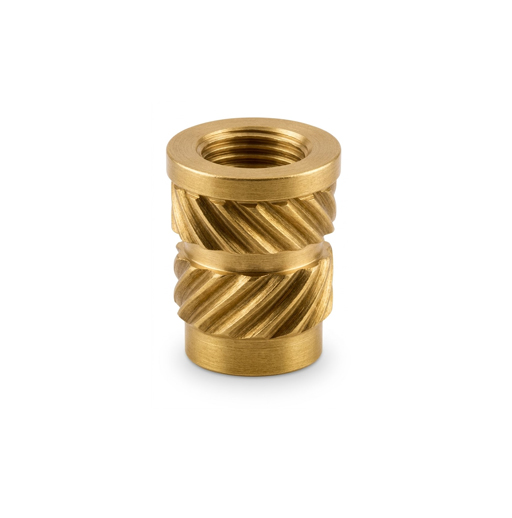
Uses opposite angled knurl directions on the same insert body. This design improves anchoring strength in applications where higher pull-out resistance is required.
Brass Insert Straight Knurled Pattern: Uses and Benefits
Straight knurling uses parallel ridges on the outer surface of the insert. This pattern is commonly used when controlled insertion and lower radial load are required.
Straight knurling provides good axial holding strength without creating excessive outward pressure on the surrounding plastic. This helps reduce the risk of cracking in softer plastic materials during installation.
This pattern is commonly used in press-fit brass inserts because moderate torque resistance is usually sufficient in this method. Straight knurling also allows smoother insertion compared to diamond knurl patterns.
Uses
3D Printed Parts
Used to create reusable metal threads in thermoplastic parts.
Injection Molding
Used in molded plastic parts where brass inserts for plastic help create durable and reusable threaded fastening points.
Electronics and Electrical Devices
Used for mounting components inside plastic housings and assemblies.
Automotive and Industrial Applications
Used in assemblies where stable insert positioning and controlled installation are important.
Benefits
Good Axial Holding Strength
Straight knurling improves insert grip inside plastic material.
Reduced Plastic Stress
Lower radial pressure helps reduce cracking during installation.
Smoother Installation
Parallel ridges allow easier insertion compared to aggressive knurl patterns.
Supports Repeated Assembly
Provides durable metal threads for repeated screw tightening and removal.
Common Uses of Brass Insert Knurling Patterns
Different knurling patterns are selected according to installation method, plastic material, and holding requirement. Each pattern behaves differently under torque load, pull-out force, and repeated assembly conditions.
Straight Knurling
Commonly used in press-fit brass inserts where controlled insertion and lower radial stress are important.
Diamond Knurling
Widely used in heat-set and injection molded inserts because it provides balanced pull-out strength and torque resistance.
Cross Knurling
Used in applications where stronger anti-rotation performance and improved surface contact are required.
Helical (Spiral) Knurling
Often used in molded inserts and thermoplastic components where stronger insert anchoring is required.
Left-Right Knurling
Used in high-retention applications where stronger pull-out resistance and improved anchoring strength are important.
FAQs About Brass Inserts Knurling Patterns
1. Does deeper knurling always provide better insert grip?
No. Very aggressive knurl depth can increase radial stress and crack softer plastic materials during installation. Knurl depth must match the plastic type and installation method.
2. Why do some brass inserts use multiple knurling patterns on the same body?
Some inserts combine different knurl directions to improve pull-out resistance and reduce insert rotation. Multi-pattern designs are often used in high-retention applications.
3. Which knurling pattern is commonly used for heat-set inserts?
Diamond knurling is commonly used because it provides balanced torque resistance and pull-out strength after the plastic flows around the insert during heating.
4. Can the wrong knurling pattern damage plastic parts?
Yes. Aggressive knurl patterns can create excessive radial pressure during installation. This may crack thin-wall.
5. Why are knurling patterns different for press-fit and heat-set inserts?
Press-fit inserts depend more on interference and controlled insertion force, while heat-set inserts depend on plastic flow around the knurled surface. Because of this, knurl geometry often changes according to installation method.
6. Does knurling pattern affect insert torque resistance?
Yes. Knurl geometry affects how well the insert resists rotational movement inside the plastic. Diamond and cross knurl patterns usually provide higher anti-rotation performance than straight knurling.
7. Can the same knurling pattern work for all plastic materials?
No. Plastic hardness, wall thickness, and installation temperature all affect insert performance. A pattern that works well in Nylon may not perform the same in thin-wall plastic parts
Conclusion
Different knurling patterns in brass inserts provide different levels of grip, torque resistance, and pull-out strength. The correct knurl pattern depends on plastic material, installation method, and application requirement.
We manufacture custom OEM brass inserts with different knurling patterns according to customer requirements and product drawing.