

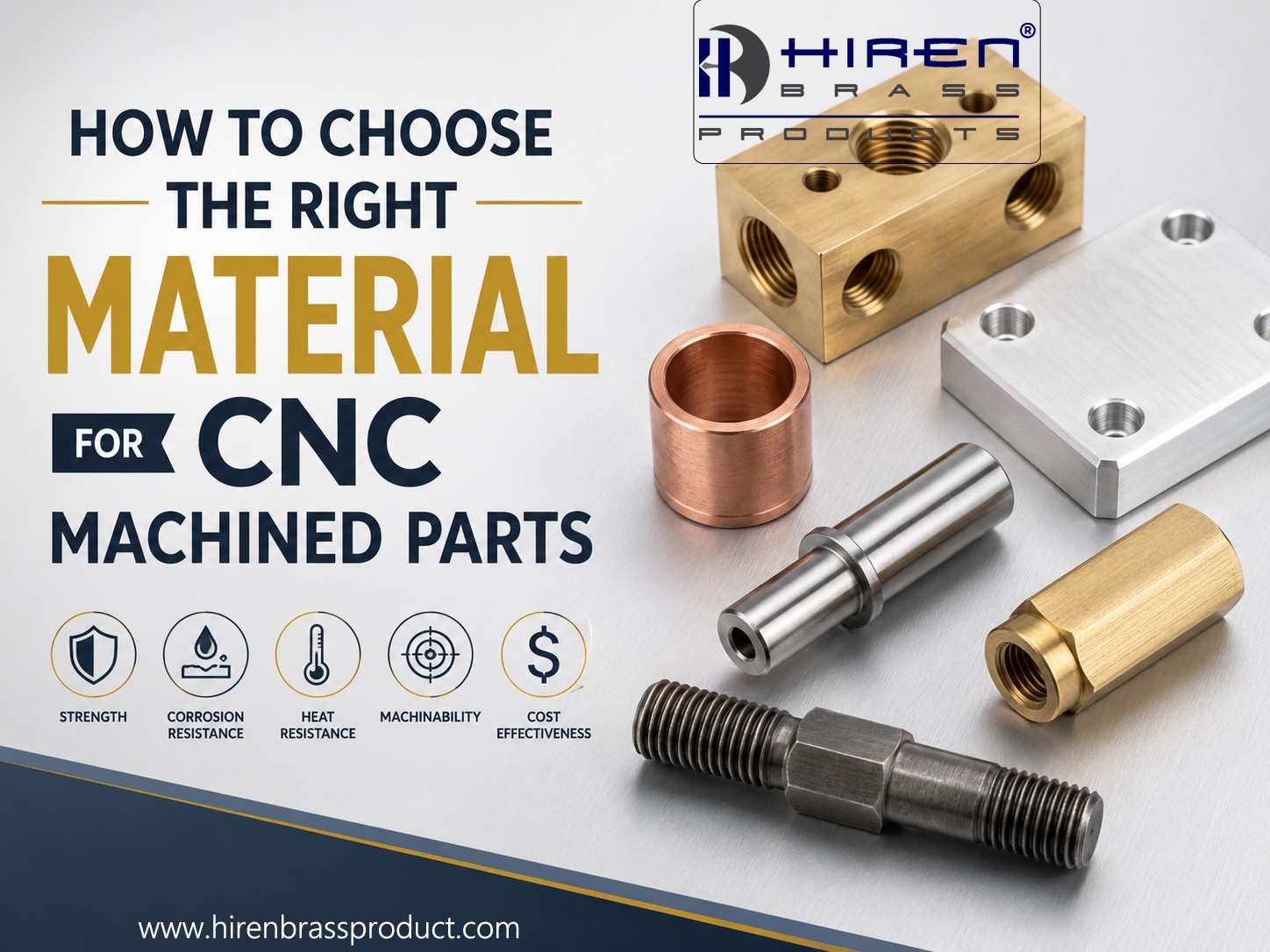
CNC machined parts can be manufactured from a wide variety of materials such as aluminum, brass, copper, steel, and stainless steel. Each material offers different properties, including strength, weight, corrosion resistance, conductivity, and machinability.
This guide explains the most common materials used in CNC machining and how to choose the right material for your application.Why Material Selection is Critical in CNC Parts Machining
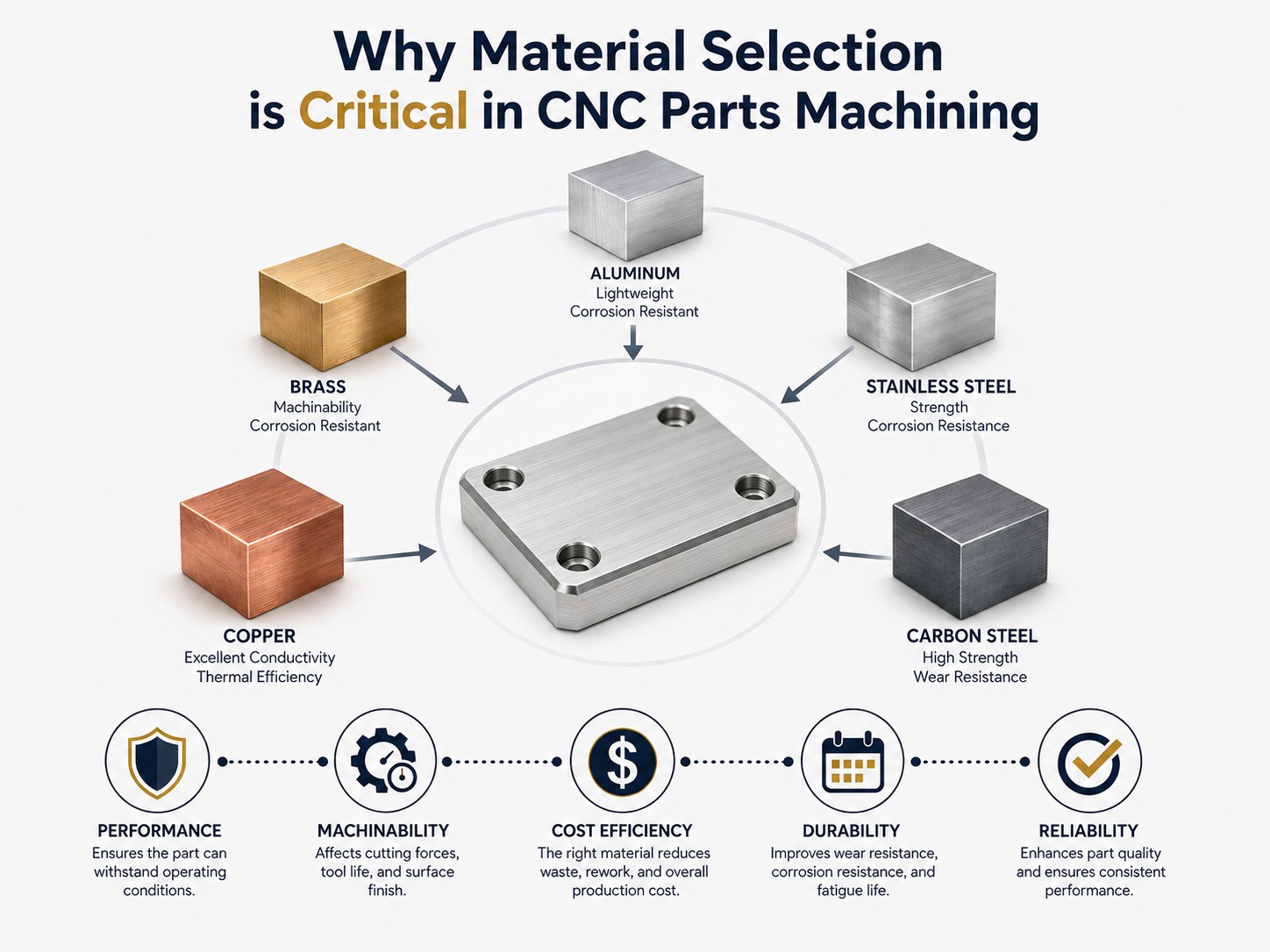
Material selection is important for CNC components because it directly affects application performance. Different applications require different material properties. For example, if your application requires high electrical conductivity, then steel is generally not a suitable choice. If your application requires high strength, then steel may be more suitable than many common plastics.
Material choice depends on the application requirements. Different materials provide different properties such as strength, hardness, corrosion resistance, conductivity, weight, cost, and machinability.
How the Wrong Material Choice Impacts CNC Components Performance
Wrong material choice for your CNC parts directly impacts application performance and total cost. If your application requires high-strength CNC parts and you choose a low-strength aluminum grade, then the final part may not perform as required. Depending on the application and load conditions, it may bend, crack, or experience premature failure.
If your application is mainly used outdoors, then corrosion resistance is important. Materials such as brass, stainless steel, and aluminum provide better corrosion resistance than many carbon steels. Otherwise, corrosion may reduce the service life of the part. If your main requirement is high electrical conductivity and you choose a material that does not provide good conductivity, then the result is poor electrical performance.
Material weight is also important because if your final product is a drone, then every gram counts. Choosing a heavy material such as copper may increase weight and reduce performance. Material cost will also affect the final application price. If an expensive material is used where a lower-cost material can meet the application requirements, then the final product or manufacturing cost may increase.
Machinability should also be considered. Some materials are easier to machine, while others require slower machining speeds and higher tooling costs.
So, the wrong material choice can affect performance, service life, manufacturing cost, and machining efficiency.
Common Materials Used in CNC Machined Parts
CNC machining supports a wide variety of materials such as brass, copper, aluminum, steel, stainless steel, bronze, and plastics. Each material has its own benefits and limitations. Material selection depends on application requirements, machinability, strength, corrosion resistance, production speed, and cost.
Aluminum
Aluminum CNC parts are widely used because it is lightweight, cost-effective, has good thermal and electrical conductivity, and provides a good strength-to-weight ratio. Aluminum also supports various surface treatments such as anodizing, powder coating, and bead blasting. It is commonly used for automotive parts, drone components, aerospace parts, housings, and structural components.
Brass
Brass is chosen for CNC components primarily because of its high machinability, good thread quality, corrosion resistance, electrical conductivity, and dimensional stability. Brass also allows efficient machining and is commonly used for CNC precision machining parts and brass CNC turned parts.
Copper
Pure copper is notoriously difficult to machine because of its gummy nature. Copper is primarily selected when high electrical conductivity is required. Copper CNC components also provide excellent thermal conductivity, high ductility, malleability, corrosion resistance, and non-sparking properties. Common applications include electrical contacts, busbars, and grounding components.
Stainless Steel
Stainless steel is selected for CNC parts because of its corrosion resistance, chemical resistance, tensile strength, temperature resistance, wear resistance, thread durability, and long service life. It is commonly used in automotive, marine, food processing, medical, and industrial equipment.
Steel
Steel CNC components are selected because of their strength, wear resistance, heat-treatability, fatigue resistance, thread durability, and cost-effectiveness. Steel is commonly used for structural, industrial, automotive, and machinery components.
Comparing Steel, Stainless Steel, Aluminum, Brass, and Copper for CNC Machined Parts
| Material | Strength | Machinability | Corrosion Resistance | Electrical Conductivity | Common Applications |
|---|---|---|---|---|---|
| Aluminum | Good | Excellent | Good | Good | Aerospace parts, drone components, housings, structural parts |
| Brass | Good | Excellent | Good | Good | Precision parts, fittings, adapters, threaded components |
| Copper | Moderate | Poor | Good | Excellent | Busbars, electrical contacts, grounding components |
| Steel | High | Good | Poor | Poor | Shafts, gears, industrial machinery parts |
| Stainless Steel | High | Fair | Excellent | Poor | Medical parts, food equipment, marine components |
Factors to Consider When Selecting a Material for CNC Machined Parts
Before final material selection for your CNC machined parts, you should identify the application requirements and operating conditions. Material selection should be based on where the part will be used, environmental conditions, performance requirements, and manufacturing cost.
Strength Requirements
You have to consider the loads, forces, and wear conditions that the part will experience during service. If your part is subject to high loads and impact, then it may require a material with higher strength and wear resistance.
Environmental Conditions
Environmental conditions can affect material selection. Parts used outdoors and in corrosive environments may require materials with better corrosion resistance.
Weight Requirements
Weight is also an important factor in applications such as aerospace, robotics, and drones. These applications often require lightweight materials to reduce overall product weight.
Manufacturing Cost
Material cost and machining cost should both be considered. A cheaper material may reduce raw material expenses, while a material with good machinability and low tooling cost can help reduce machining time and production costs.
Machinability Requirements
Machinability affects production efficiency. Complex geometries, tight tolerances, and high-volume production may require materials that can be machined efficiently and consistently.
Conductivity Requirements
Some applications require high electrical conductivity or thermal conductivity. In these cases, conductivity requirements should be considered during material selection.
Application Requirements
The final material selection should match the intended application. Structural components, electrical components, wear parts, and decorative components often have different material requirements.
FAQ
Do cosmetic requirements matter when selecting a CNC material?
Yes. Some materials are better suited for surface finishes such as anodizing, polishing, plating, and powder coating. Appearance requirements can influence material selection.
Can the same CNC part be made from different materials?
Yes. The same part can often be manufactured from different materials. The final material choice depends on factors such as strength, corrosion resistance, weight, conductivity, and cost.
What if a part requires both strength and corrosion resistance?
Material selection should be based on the application requirements. In many cases, stainless steel is selected because it offers both good strength and corrosion resistance.
Conclusion
There is no single material that is suitable for every CNC machined part.
Understanding the advantages and limitations of different materials helps you select the right option for your application and achieve the required performance, quality, and manufacturing efficiency.
Hiren Brass Products manufactures OEM custom CNC machined parts according to customer drawings and specifications.