


Brass threaded inserts provide strong metal threads in plastic parts and other moulded components. They help assemblies hold screws securely, especially when manufacturers need to install and remove fasteners repeatedly without damaging the threads in the base material. Different insert designs use features such as external knurling, hexagonal bodies, flanges, slots, and fins to improve grip and resistance to rotation and pull-out.
This article covers seven types of brass inserts, including their designs and uses in automotive electronics, electrical assemblies, telecommunications enclosures, medical equipment, rail and marine components, and consumer appliances. It also explains how these insert designs suit different industrial applications.
7 Common Types of Brass Threaded Inserts
Knurled, hexagonal, flanged, slotted, and finned describe external body features. Blind-end and through-threaded describe the internal thread configuration. One insert can combine several features, so these categories are not mutually exclusive.
1. Knurled Brass Inserts
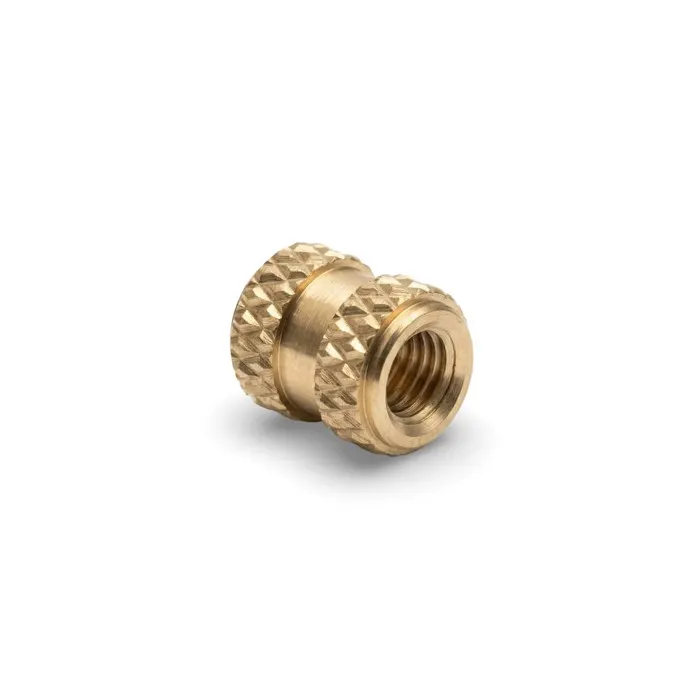
Brass knurling inserts have ridges on their outer surface. The surrounding plastic engages with these ridges after installation, helping the insert resist rotation and pull-out. Common patterns include straight, diamond, and helical knurling. Straight knurls mainly improve resistance to rotation, and helical patterns can increase axial holding strength. Common installation methods include heat insertion, ultrasonic insertion, cold pressing, and insert moulding.
2. Hexagonal Brass Inserts
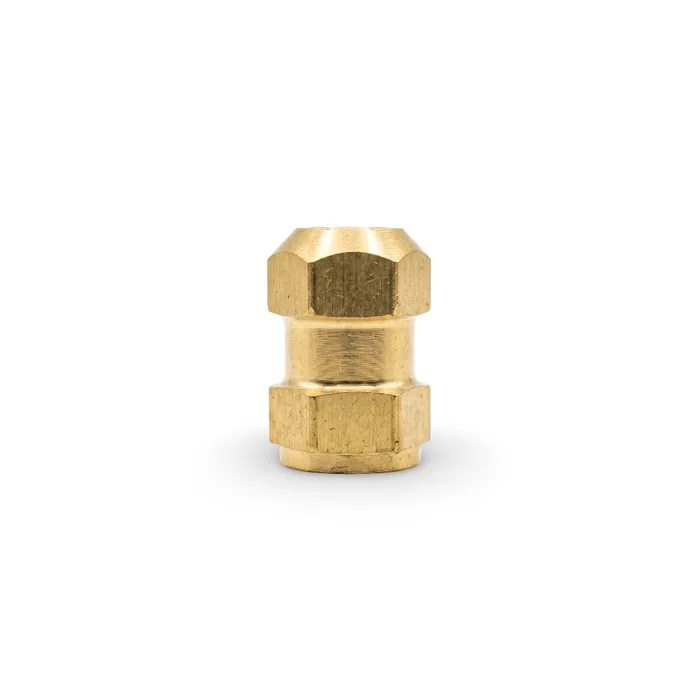
Hexagonal brass inserts have six flat sides on their outer body. In moulded-in applications, the plastic surrounds these flats and creates a mechanical lock that helps prevent rotation under load. The hexagonal profile provides torsional resistance. Brass inserts manufacturers supply these with blind-end and through-threaded holes.
3. Flanged and Shouldered Brass Inserts
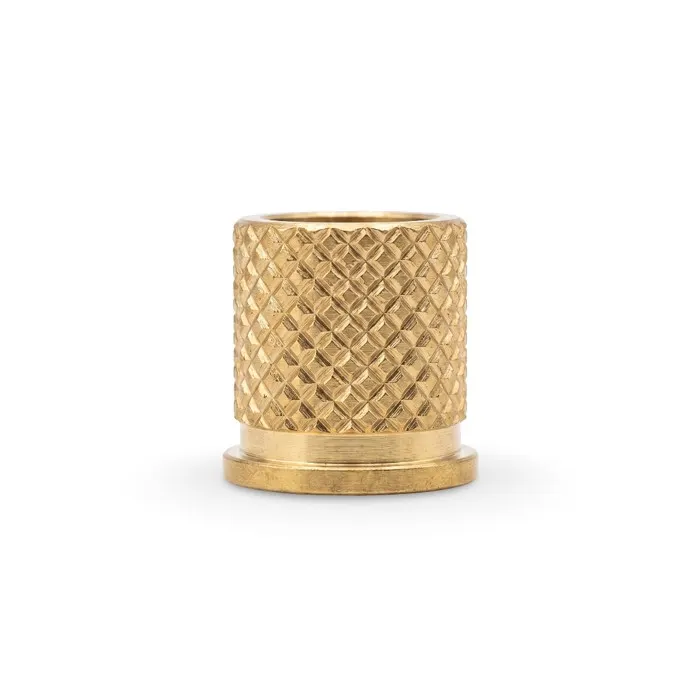
Brass flange inserts have a wider rim at one end. This flange provides a larger bearing surface and helps resist pull-through under axial loads. A shouldered design has a raised step that provides a seating surface and helps control insertion depth. Manufacturers use these features in assemblies that require secure seating and better load distribution.
4. Blind-End (Closed-Bottom) Brass Inserts
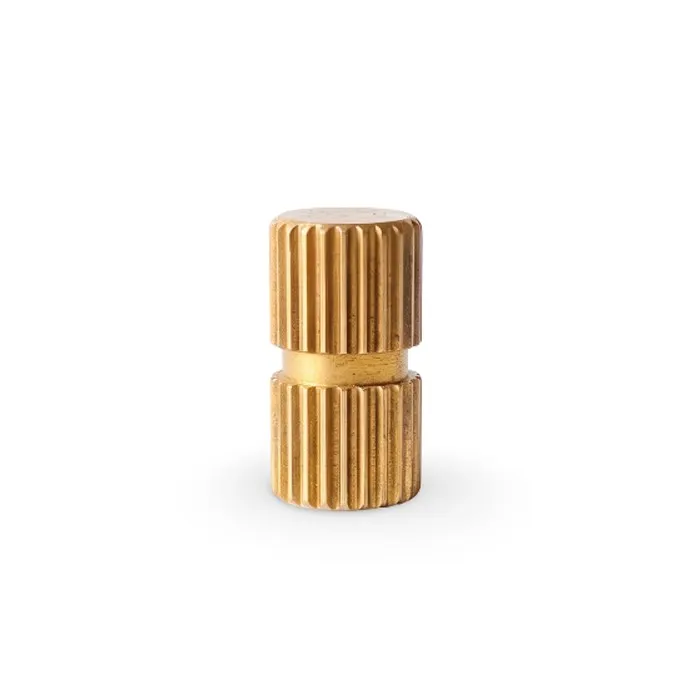
Brass blind inserts have internal threads that stop before the base, leaving a solid bottom. During insert moulding, the closed base prevents plastic from entering through the lower end and filling the threaded bore. It also prevents screws from passing through the opposite side of the component.
5. Through-Threaded Brass Inserts
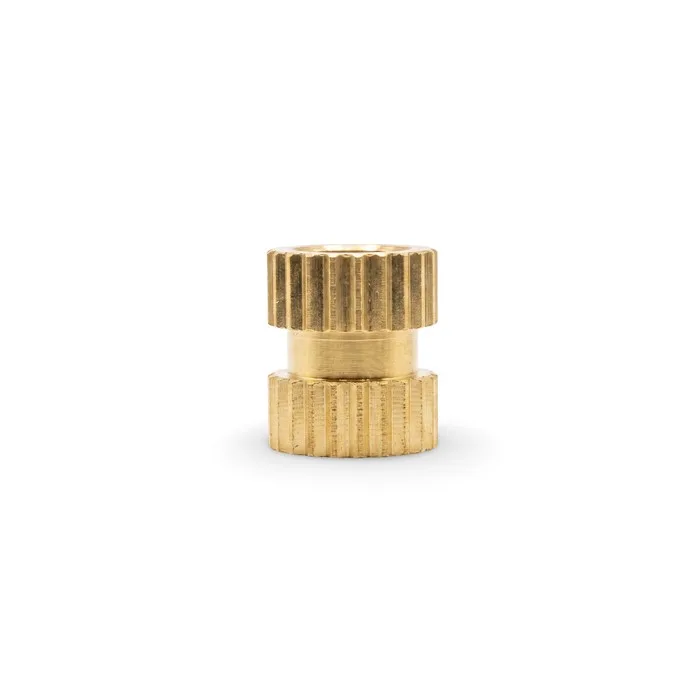
Through-threaded brass inserts have continuous internal threads along their full length. Their open bore allows screws to pass through the entire insert, making them suitable for assemblies that require a through-fastening connection.
6. Slotted Brass Inserts
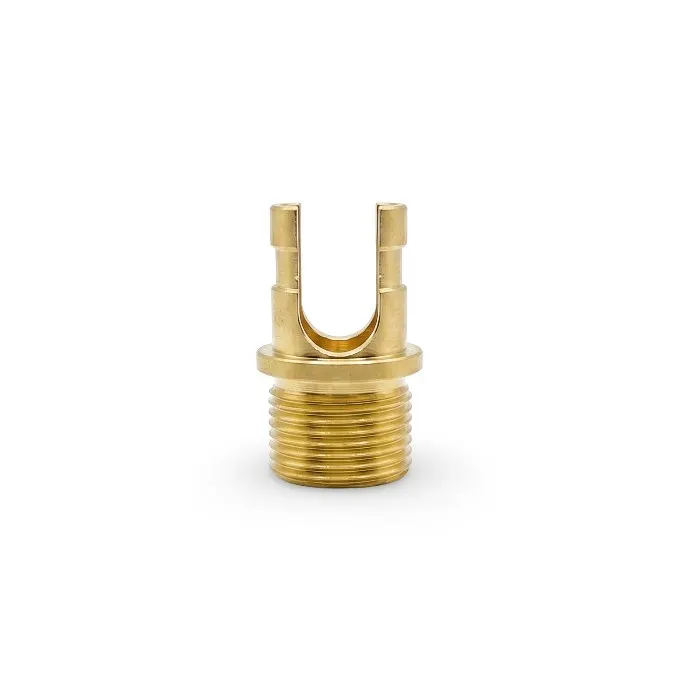
Brass slotted inserts have a cut along the body and an externally knurled surface. This design supports cold press-in installation after moulding. Brass press inserts use this construction in thermoplastic and thermoset components. The external knurling provides resistance to rotation and pull-out during fastening.
7. Finned Brass Inserts
Finned brass inserts have raised sections along the outer body. Brass threaded insert manufacturers offer single-fin, double-fin, and triple-fin designs. Finned inserts distribute installation stress across a larger area, helping reduce cracking and thread erosion in thermoset plastics. In expansion-fin insert design, the mating screw expands the fins after installation, increasing pull-out and torque-out resistance.
Industrial Applications of Brass Threaded Inserts
Automotive Electronics and Electrical Assemblies
Automotive manufacturers use brass threaded inserts in plastic control modules, sensor housings, dashboards, camera housings, taillights, and EV assemblies. These inserts provide durable threads for mounting circuit boards, connectors, brackets, and other components.
Electronic and Telecommunications Enclosures
Electronic equipment uses brass molding inserts to mount PCBs, switches, connectors, displays, and internal components. Manufacturers also install them in power supplies, controller housings, electrical enclosures, and telecommunications cabinets. Knurled mould-in inserts suit injection-moulded housings, while heat and ultrasonic inserts support post-mould assembly.
Medical Equipment and Device Housings
Medical equipment manufacturers use threaded inserts in plastic housings for ventilators, body scanners, diagnostic equipment, and laboratory instruments.
Consumer Appliance Assemblies
Household appliances and consumer equipment use brass inserts in plastic covers, control housings, mounting brackets, and serviceable assemblies. Moulded-in brass inserts suit components produced through injection moulding.
Conclusion
For industrial applications, the right brass threaded insert is the one that delivers reliable fastening in the actual component. A design that works well in one assembly may fail in another due to differences in material, installation conditions, and operating loads. Make the final selection based on application requirements and verified performance, not just the insert design.