

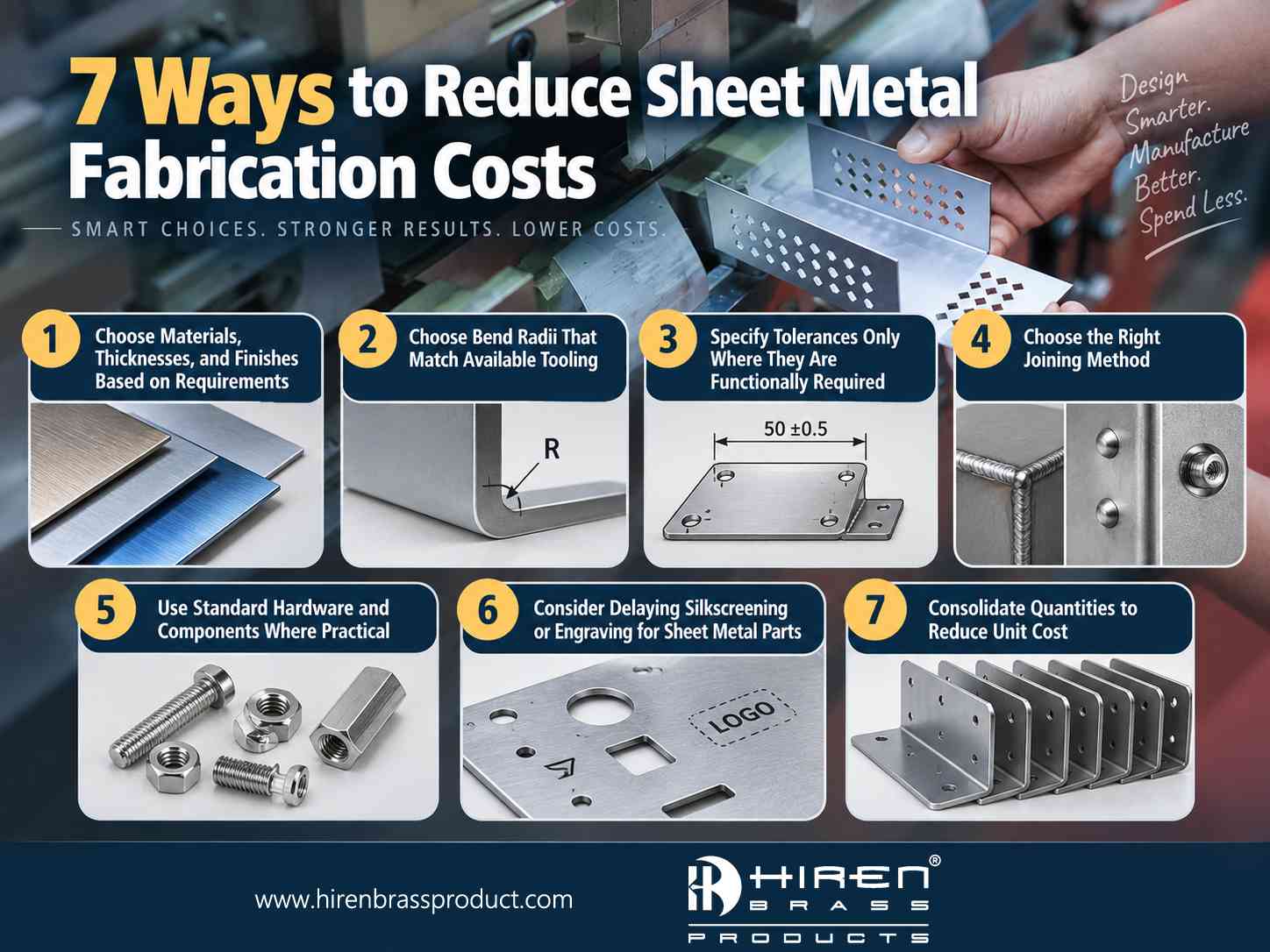
Sheet metal fabrication is considered a lower-cost method for manufacturing certain types of parts. Maybe its not as simple as you think. You cut the sheet to size and form it to reflect the desired shapes. If you are unclear about your designs, the costs become fair to the higher side. You might also end up increasing manufacturing time.
Sheet metal fabrication is a multi-step process designed to complete a part; many steps are involved. Manufacturers perform many operations to make one sheet metal part. Here are 7 helpful tips to ensure that your sheet metal parts meet your needs.
1. Choose Materials, Thicknesses, and Finishes Based on Requirements

Let’s start with materials: some aluminum, carbon steel are cheaper than copper, and brass. Also, availability is good. Some grades like aluminum 6061-T6, Steel CRS1008 and stainless steel SS304 are easily available. You have to choose wisely. Don’t compare only cost; choose according to application requirements. But it mostly depends on the application; if your application demands electrical conductivity, then copper is good, and aluminum is also an option. If your parts will be in a hostile environment, choosing pre-plated metals makes a lot of sense. You can use pre-plated materials such as galvanized and galvannealed metals if you need a welded seam. Cheap material can save cost if it fits into your application.
Metal thickness also matters like if you are buying steel sheet and your application is not heavily loaded, then less thickness will work. Still, sheet thickness depends on the application. Heavy applications need more thickness, but for less load, you choose a thinner sheet.
Also, some materials are, by their very nature, less likely to corrode. If you do require a special finish, it might not set you back too much. There are common finishes that tend to be faster and less expensive.
Anodizing, chromate plating, zinc, stainless steel passivation, and powder coat are all readily available and will have a minimal impact on cost and lead time compared to a specialty finish.
2. Choose Bend Radii That Match Available Tooling
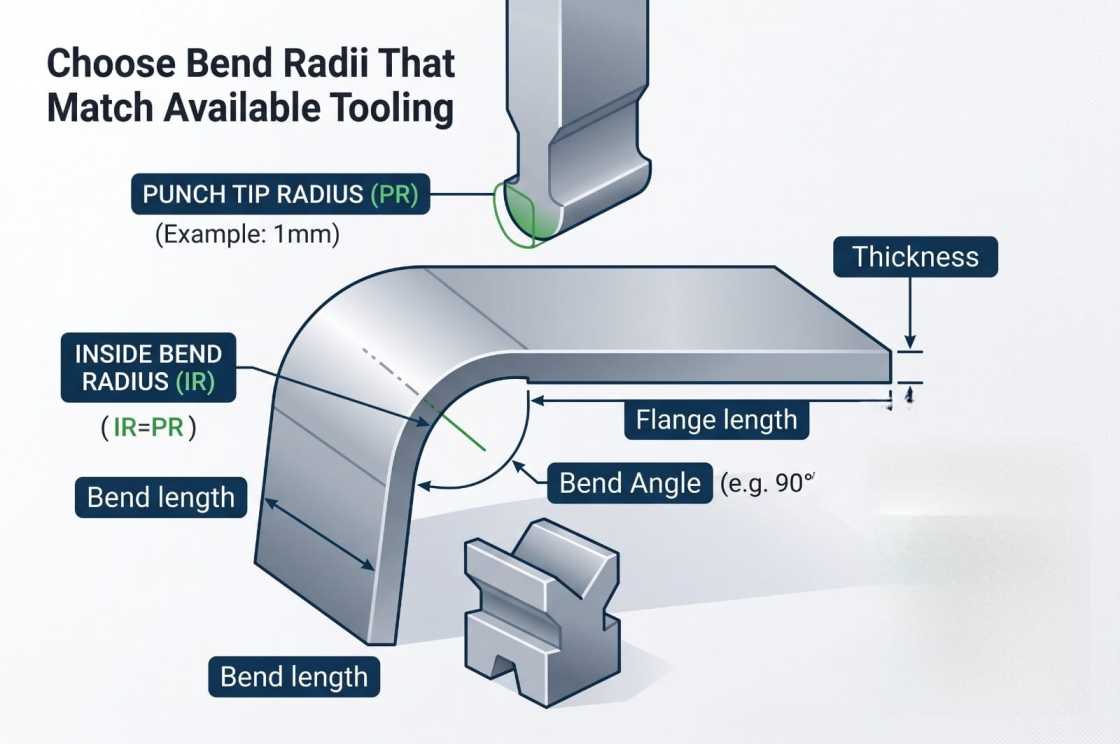
One of the easiest ways to reduce cost and time is to incorporate geometries in your part designs that consider a manufacturer’s standard tooling. For example, internal bend radii should match available tooling and material thickness. These specifications tend to be in the wheelhouse for some shops. They will be able to form your radii with standard tools made for these specs, rather than having to use a specialized toolset to get that precise geometry.
3. Specify Tolerances Only Where They Are Functionally Required
You should consider this point at the design stage and when making a drawing for sheet metal part. If your application requires a very tight tolerance for a part, then only make it. If your application is only a standard steel bracket, then adding unnecessary tight tolerance will add extra cost. When a Sheet metal fabricators makes a part, tight tolerance can increase process control, inspection, and manufacturing requirements. Also add extra time because making inspections and checking tight tolerances adds time.
4. Choose the Right Joining Method
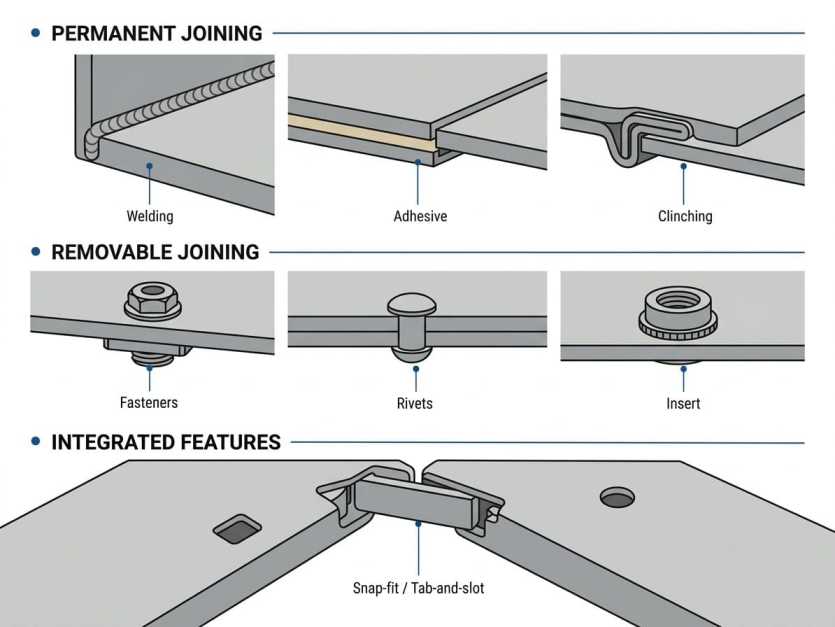
The joining method can affect the total cost of a sheet metal part. Before choosing a method, consider the joint requirements, materials, and whether the joint needs to remain permanent.
Welding can make a permanent joint, but it can add preparation, skilled labor, cleanup, and heat-related distortion, especially with thin sheet. Riveting and mechanical fastening can avoid welding heat and can work well when joining different materials. Rivet installation still needs suitable holes and access for the installation tool.
Adhesive bonding can also work when the materials, surface condition, service stresses, and production process are suitable. Surface preparation affects bond performance, so the bonding process needs to match the materials and service conditions. Choose the joining method based on the complete fabrication and assembly process, not simply the lowest joining cost.
5. Use Standard Hardware and Components Where Practical
Let’s assume you want an assembly that includes built-in elements intended to hold specific components. For example, it might be steel brackets to hold specific components. Manufacturers fabricate those brackets in the sheet metal itself, but it will take time, and steel brackets can add cost. Instead, source your standard steel bracket and adjust your design to accept the new component. Placing the bracket is always in your team’s court, but the overall cost and time savings depend on the application when you create features that accommodate standard, off-the-shelf components.
6. Consider Delaying Silkscreening or Engraving for Sheet Metal Parts
If you’re in the early prototyping stages of product development, seeing the look of certain finishes on your parts may not be important to you. Instead, consider delaying finishes like silkscreening and engraving until later.
When you are ready to explore various finishes, remember that silkscreening is expensive, but a whole lot more affordable than machine engraving. Sure, engraving is long-lasting, but the cost might make it impractical. A clear powder coat may seal and cover that information. It will add time and cost to your parts, but may save you cost in the long-term.
7. Consolidate Quantities to Reduce Unit Cost
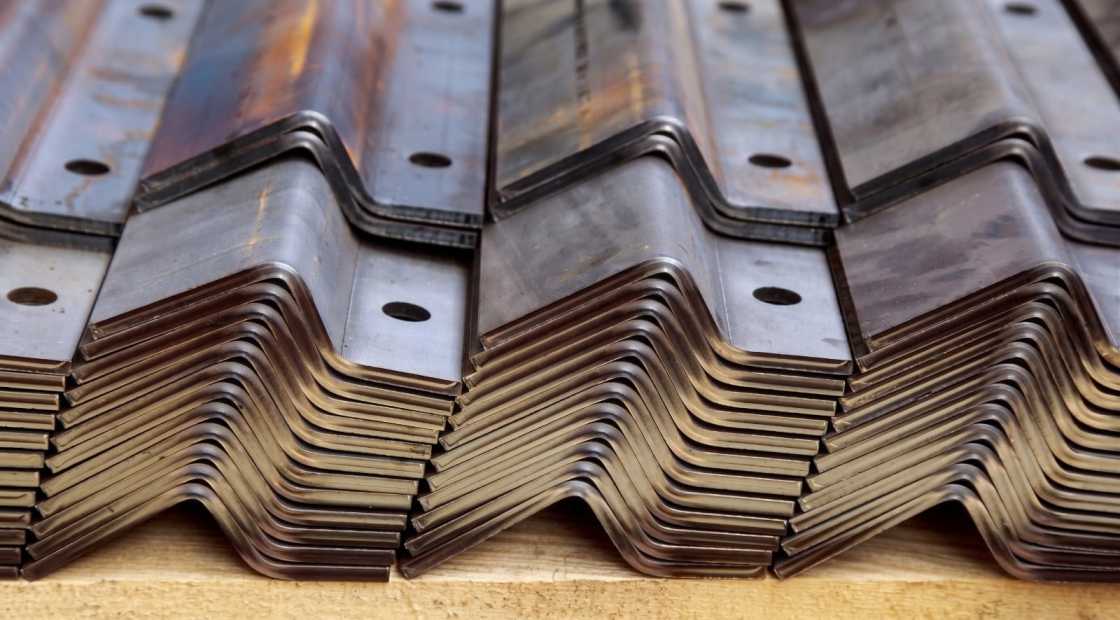
If you need the same sheet metal part in larger quantities, consider consolidating the order. Sheet metal fabrication can become more cost-efficient as order quantities increase because setup costs spread across more parts, which can reduce the unit price.
If you know you will need the parts again, ordering a larger quantity can make sense. But do not order more parts only to get a lower unit price if you do not need the extra inventory. Higher quantities can lower unit cost, but they can also increase the total amount you spend and the inventory you need to store.
Conclusion
Good sheet metal design can help you control fabrication cost without compromising what your part needs. When you plan the material, bends, tolerances, joining method, quantity, hardware, and finishing early, you can avoid unnecessary work and get a part that fits your budget and requirements.
We manufacture custom sheet metal parts to your drawings and requirements. Share your drawing and specifications with us, and we’ll review your requirements and provide a quotation for your project.