

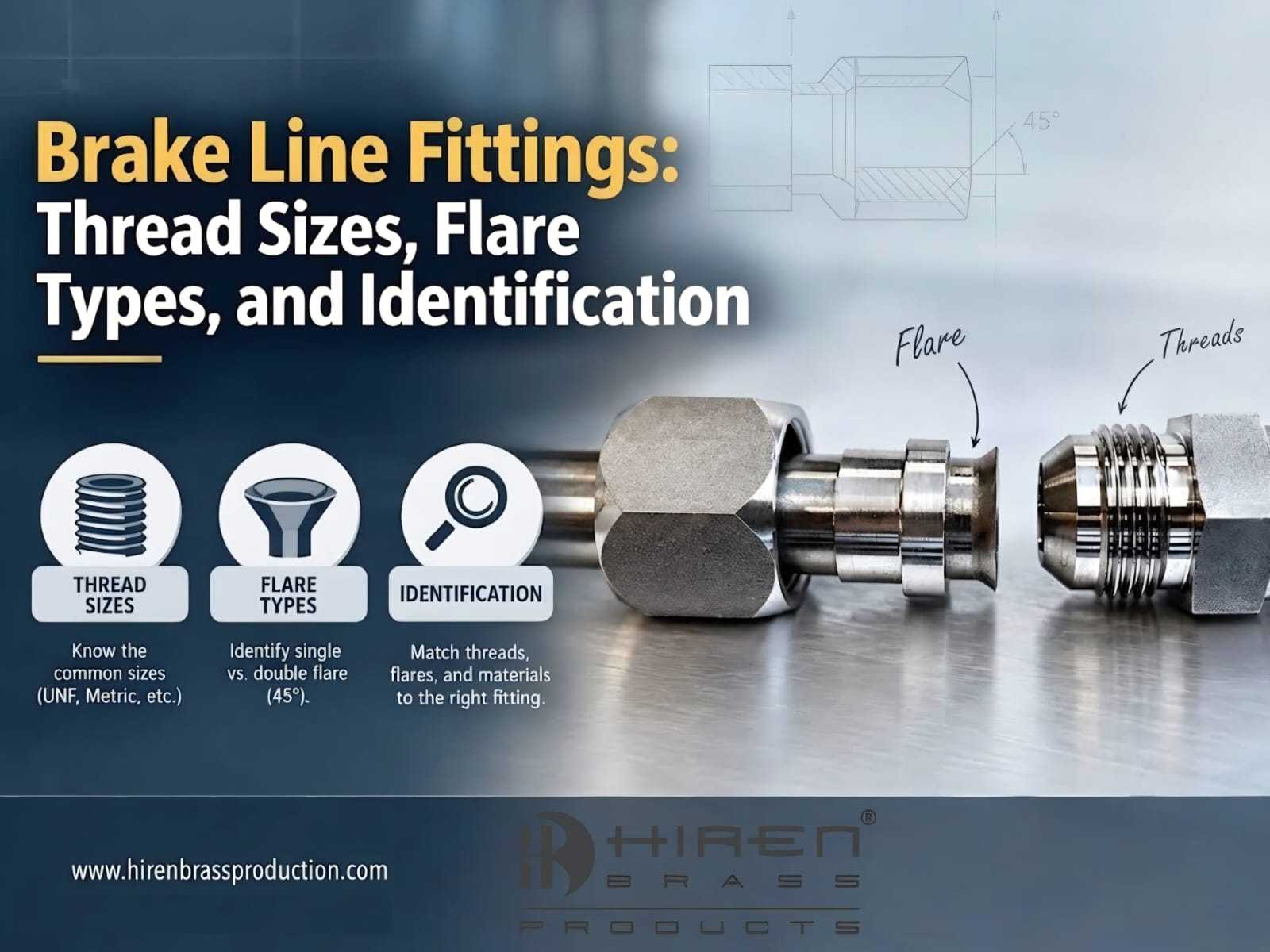
Understanding brake line thread identification, size, fittings types are crucial for ensuring the safety and performance of your braking system. In this guide, we will provide you with comprehensive information on brake line sizes, fitting identification, and measurement techniques.
Brake Line Size, Thread, and Flare Basics
Before choosing a brake line fittings, first check the tube outside diameter. A size such as 3/16-inch, 1/4 -inch, and 3/8- inch describes the brake tube's outside diameter, not the fitting thread. Tube size alone does not identify the complete fitting.
Next, check the fitting thread diameter. Thread size is a different measurement than tube size, so do not assume that one tube size always uses one thread size. Different thread combinations exist for the same 3/16-inch tube size.
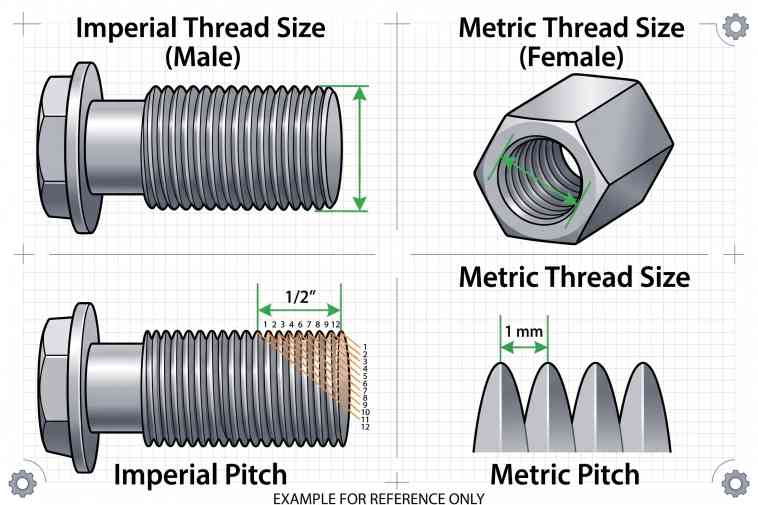
You also need to check the thread pitch. Inch threads use threads per inch, while metric threads use the distance between thread crests in millimeters. Thread diameter alone does not fully identify the thread.
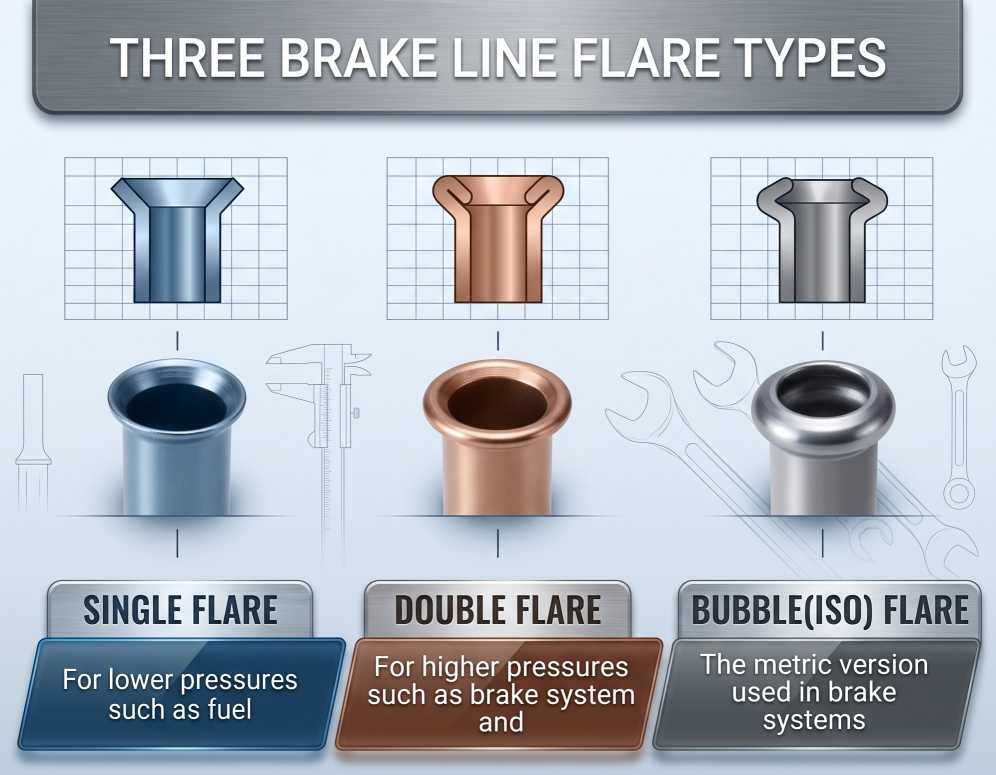
Finally, identify the flare type. Brake fittings can use different flare configurations, and the flare needs to match the mating fitting. SAE J512 and SAE J533 cover relevant automotive fitting and flare configurations.
So before ordering, confirm the tube outside diameter, thread diameter, thread pitch, and flare type together.
How to Measure Brake Line Size and Thread
Accurately measuring the brake line size is very important for selecting the right fittings and ensuring a secure connection. Here’s a step-by-step guide:
Tools
you need a caliper to measure the outside diameter of the brake tube, as well as a thread pitch gauge to measure the thread pitch, and a standard reference chart for comparing your measurements.
Measure Outer Diameter (OD)
Use the caliper to measure the OD of the brake tube. Use the caliper separately to measure the thread diameter. Make sure to measure at multiple points to get an accurate reading, as the line can sometimes be slightly deformed.
Identify Thread Size
Use the thread gauge to measure the thread pitch and use the caliper to measure the thread size. The thread pitch is the number of threads per inch for imperial sizes and the distance between thread crests in millimeters for metric sizes.
Identify the Flare and Seat
After checking the tube size and thread, identify the flare type and the seat where the flare seals. Common brake fitting configurations include inverted flare and bubble flare, and these use different sealing shapes. The thread can match while the flare type does not, so check both before selecting the fitting.
Compare with Chart
Refer to a brake line chart to compare the measurements. This will help you identify the correct size and type of brake line and fitting you need.
Alternatively, you can take an unknown male or female part and try to screw it together with a part you already know the size of – this does not confirm the size of both.
However, you do not need a thread ID kit, identified nuts and bolts for correct thread identification. You can measure the thread to identify it.
Use calipers to measure the thread diameter
The male threads can measure differently from the nominal size, and the female threads can measure differently from their nominal size.
Measure the pitch
For imperial sizes, use a thread pitch gauge to identify TPI. If your thread is long enough, count the number of crests within one inch to get TPI. For metric sizes, use a thread pitch gauge to identify the distance between the thread crests.
Brake Line Size Charts
For quick reference, use these brake line size charts to identify the correct size and thread.. They allow you to quickly and accurately identify the correct size, reducing the risk of using incompatible components.
These brake line charts give common tube sizes, outside diameters, and thread examples for quick reference. Use them as a starting point, not as a universal fitment chart. The same tube size can use different thread and flare combinations depending on the fitting and application.
Imperial Brake Line Sizes
| Line Size | Tube OD | Common Thread Example | Flare |
|---|---|---|---|
| 3/16 in | 0.1875 in (4.76 mm) | 3/8-24 | Inverted flare |
| 1/4 in | 0.250 in (6.35 mm) | 7/16-24 | Inverted flare |
| 5/16 in | 0.3125 in (7.94 mm) | 1/2-20 | Inverted flare |
| 3/8 in | 0.375 in (9.53 mm) | 5/8-18 | Inverted flare |
Metric Brake Line Sizes
| Line Size | Tube OD | Common Thread Example | Flare |
|---|---|---|---|
| 4.75 mm | 4.75 mm | M10 × 1.0 | Bubble flare |
| 6 mm | 6 mm | M12 × 1.0 | Bubble flare |
| 8 mm | 8 mm | Varies by fitting | Varies by fitting |
| 10 mm | 10 mm | Varies by fitting | Varies by fitting |
Note: These are common examples, not universal fitment rules. Confirm the tube size, thread, pitch, flare type, and fitting configuration before ordering.
Types of Brake Line Fittings
There are several types of brake line fittings, such as brake line union, brake banjo bolt, brake tee fitting, brake line elbow, and brake line adapter, each designed for specific applications. Understanding the differences between these fittings is crucial for selecting the right type for your vehicle:
Double Flare
Double flare fittings are commonly used in automotive applications. The end of the brake line is formed into a double flare, creating a sealing surface for the fitting.
Bubble Flare
Bubble flare fittings commonly are used in some European vehicles. They have a single flare at the end of the line.
AN (Army-Navy) Fittings
AN fittings are commonly used in aerospace and motorsport applications. They have a 37-degree flare and are commonly used in racing applications.
Thread Identification Tips
- The most common threads are: 3/8 x 24NF, 7/16 x 24UNS, and M10 x 1
- The most commonly confused sizes include 3/8” with 10 mm, and 7/16” with 11 mm. Do not use thread engagement alone to identify a match, so always check the thread diameter, pitch, and flare type.
- It is possible to have a metric thread on one end of a brake line, and an imperial thread on the other end.
- You should not rely only on the year and origin of your vehicle to distinguish whether you have a metric or imperial threaded brake line:
- European (not UK) – Metric
- Asian – Metric
- UK – Metric or Imperial, depending on the vehicle
- US – Imperial or Metric, depending on the vehicle
Conclusion
Proper brake line identification and measurement are crucial for maintaining your vehicle's braking system. By following the steps outlined in this guide, you can identify the correct brake line size and fitting. Remember to use the correct components and follow the manufacturer's recommendations for installation and maintenance.
We make custom brake line fittings according to your drawings, including brass brake line fittings and custom metal brake line fittings. Share your drawing and specifications with us, and we’ll review your requirements and provide a quotation for your project.