

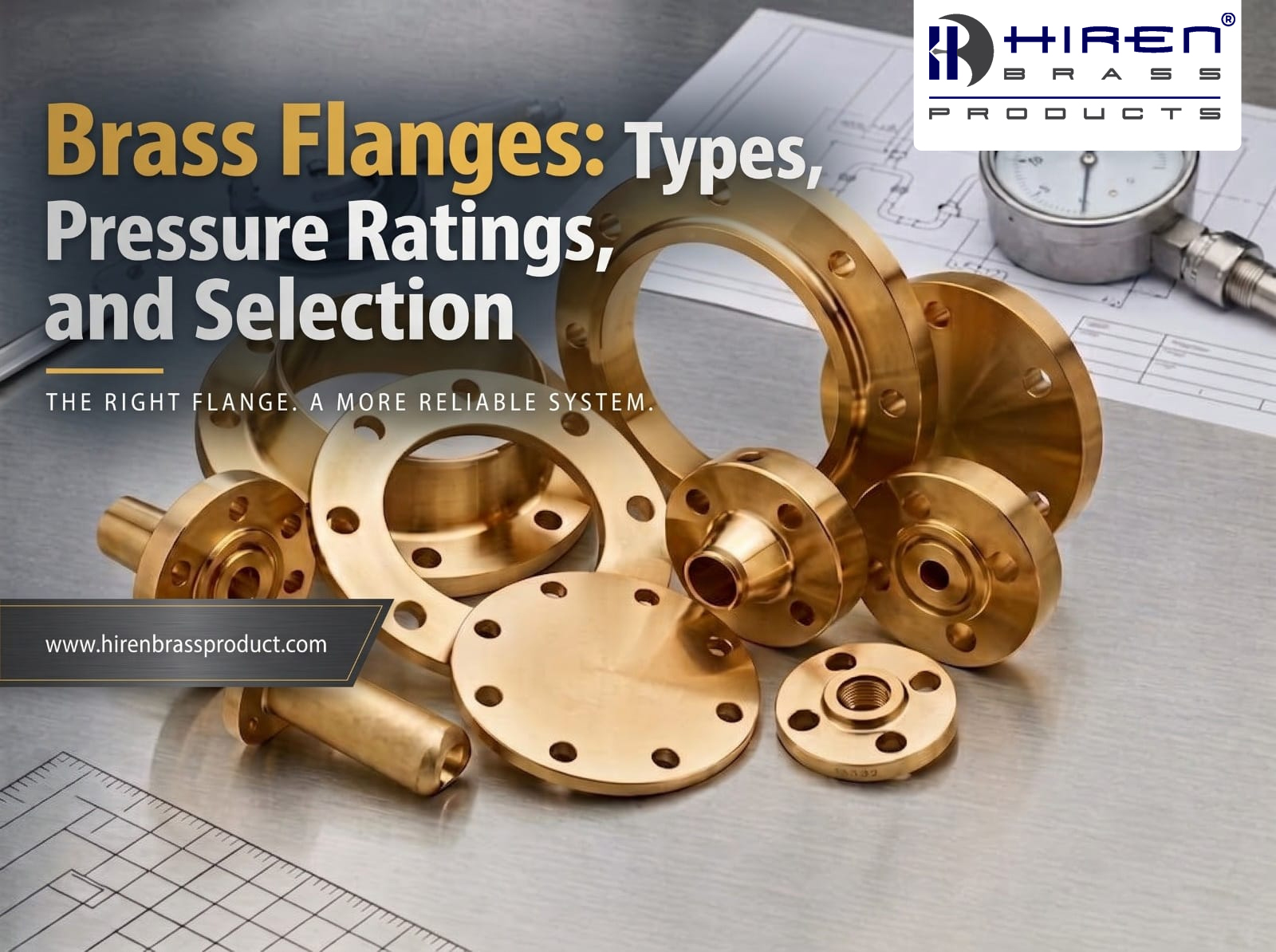
Brass flanges provide a bolted connection between pipes, valves, equipment, and other piping components. The flange works with the mating flange, gasket, and bolting to form the complete joint, so the flange alone does not determine connection performance.
Choosing the right brass flange requires more than checking the pipe size. You also need to consider the flange type, connection method, pressure and temperature, material alloy, dimensions, gasket, bolting, and applicable standard.
In this blog, we explain common brass flange configurations, pressure ratings and operating conditions, thread, gasket and bolting requirements, and the main points to check when selecting a brass flange.
Common Types of Brass Flanges
Brass flanges come in different configurations based on how they connect to the pipe and what job they perform. Threaded, slip-on, socket-weld, and weld-neck flanges connect to the pipe in different ways, and a blind flange closes a pipe opening. The suitable type depends on the connection method, pipe arrangement, and applicable flange standard.
Threaded Flanges
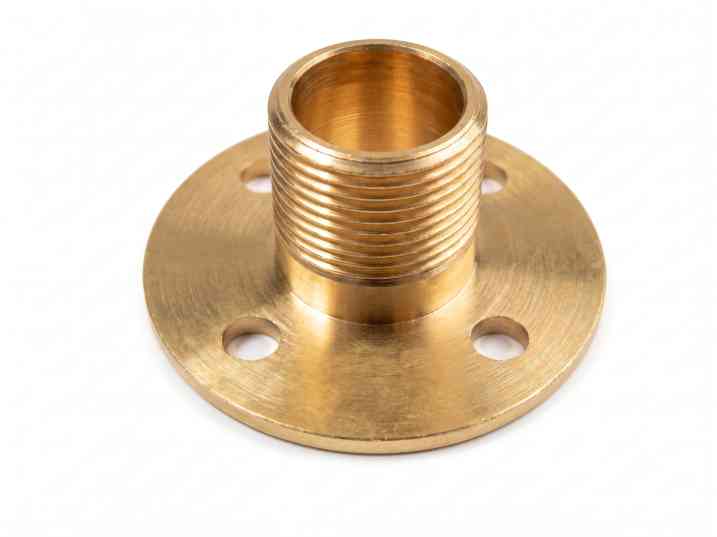
Threaded flanges use internal pipe threads to connect with a threaded fitting. They do not need a pipe weld at the flange connection. The thread standard must match the mating component, so confirm the thread type before selecting the flange.
Slip-On Flanges
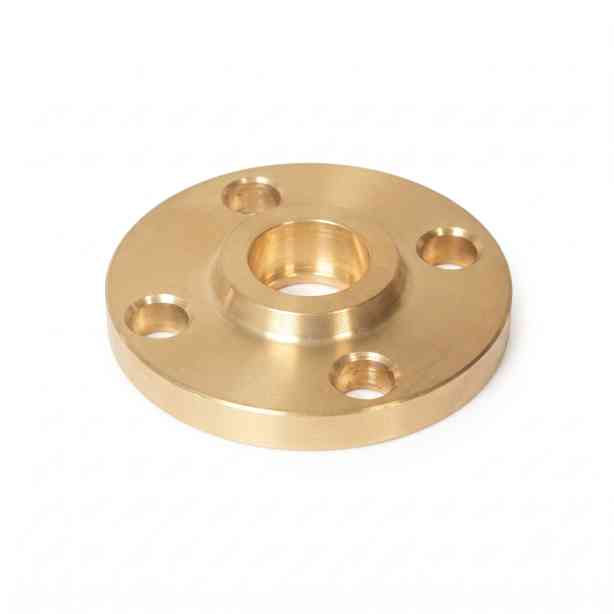
Slip-on flanges fit over the pipe and use welds to secure the flange to the pipe. The pipe passes through the flange, and the flange-to-pipe connection commonly uses fillet welds.
Blind Flanges
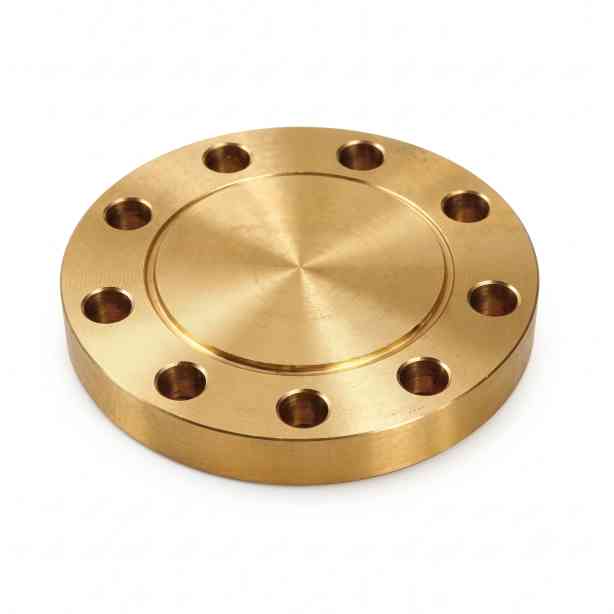
Blind flanges close the end of a pipe, valve, or equipment opening. They do not have a normal through-bore for fluid passage and connect to the mating flange with bolting. The applicable pressure-temperature rating still depends on the material, standard, and class.
Socket-Weld Flanges
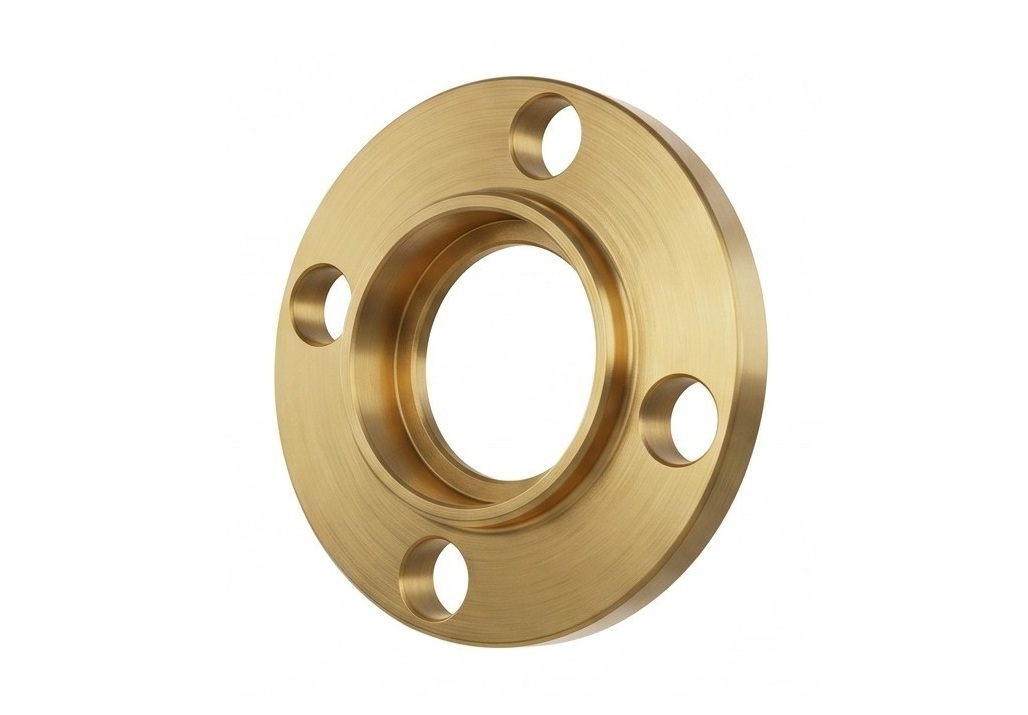
Socket-weld flanges have a socket that receives the pipe before welding. The pipe sits inside the flange socket, and the connection uses a fillet weld. This configuration differs from a slip-on flange because the pipe enters a socket instead of passing through the flange.
Weld-Neck Flanges
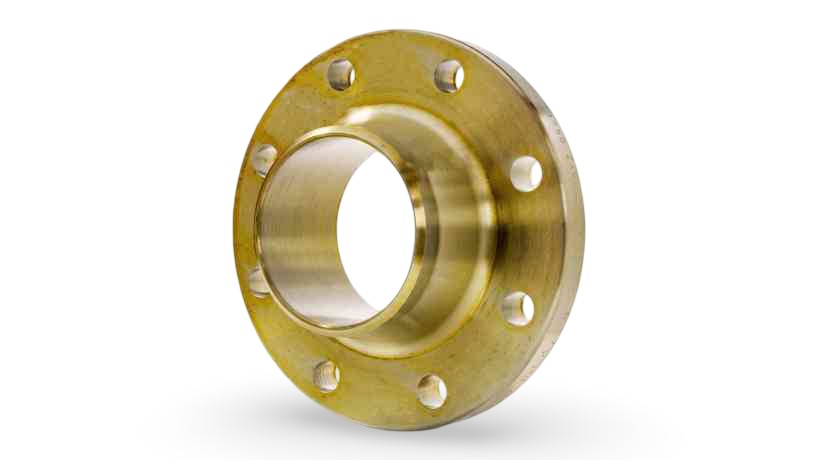
Weld-neck flanges have a long tapered hub and connect to the pipe with a butt weld. The flange bore matches the pipe bore, and the tapered hub provides a gradual transition from the flange to the pipe.
Brass Flange Pressure Ratings and Operating Conditions
You can't identify the pressure rating on flange size alone. You need to check the pressure-temperature rating together with the flange material, applicable standard, and actual operating conditions before selecting a brass flange.
Pressure Class and Pressure-Temperature Rating
First, check the pressure class and the corresponding pressure-temperature rating for the flange. A class such as 150 or 300 does not mean the flange can handle the same pressure at every temperature. ASME B16.24 defines pressure-temperature ratings for specified cast copper-alloy flange products, with the rating tied to the applicable material and class.
Material and Applicable Standard
The flange material also affects its rating. Copper-alloy flange products can use different alloy grades, and each standard covers specific materials and product configurations. Check the actual flange alloy and the standard that covers the product before using a pressure rating.
MSS SP-106:2025 covers certain cast copper-alloy flange products that fall outside the scope of ASME B16.24.
Operating Temperature and Manufacturer Rating
Check the actual operating pressure and temperature against the flange rating for the specific product. Also check the manufacturer's documentation for the flange material, configuration, pressure class, temperature conditions, and other product limits. A product rating applies to that specific flange and should not become a general rating for every brass flange.
Thread, Gasket, and Bolting Requirements
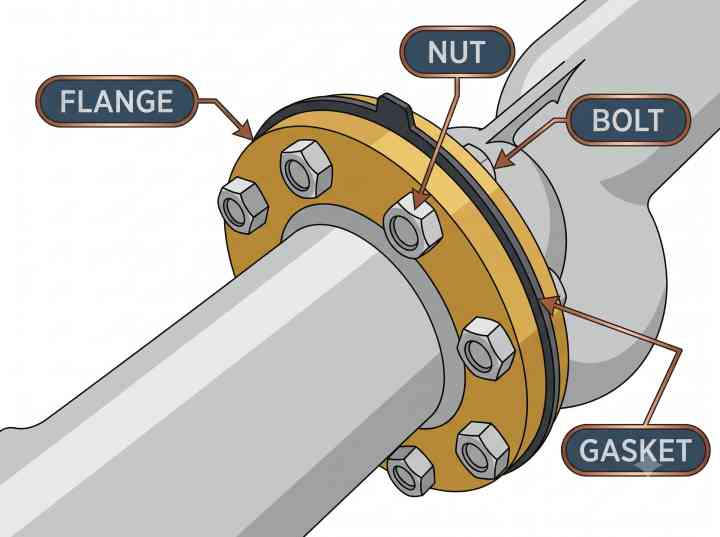
A brass flange joint needs the correct gasket, fasteners, alignment, and tightening method. These parts work together to make the flange joint seal properly.
Thread Compatibility
For threaded brass flanges, match the flange thread with the mating pipe. Check the thread standard, size, internal or external thread, and mating connection before assembly. Do not select a thread based on nominal size alone because different thread standards can use similar sizes.
Gasket and Flange Facing
Choose the gasket according to the flange facing, service fluid, pressure, temperature, and gasket material. The gasket also needs the correct size and position on the flange face. Flange type affects gasket selection and the compressive load available to seal the joint, so do not treat one gasket material as suitable for every brass flange connection.
Bolting, Alignment, and Tightening
Check the bolt size, length, material, nut compatibility, thread engagement, and required bolt load for the flange joint. Align the mating flanges so they remain parallel and concentric before tightening, and do not use the bolts to force misaligned piping into position. Tighten the fasteners in a controlled crosswise sequence to develop a suitable and reasonably uniform bolt load across the joint. Follow the specified torque or target bolt load for the actual flange, gasket, fasteners, and service.
How to Select the Right Brass Flange
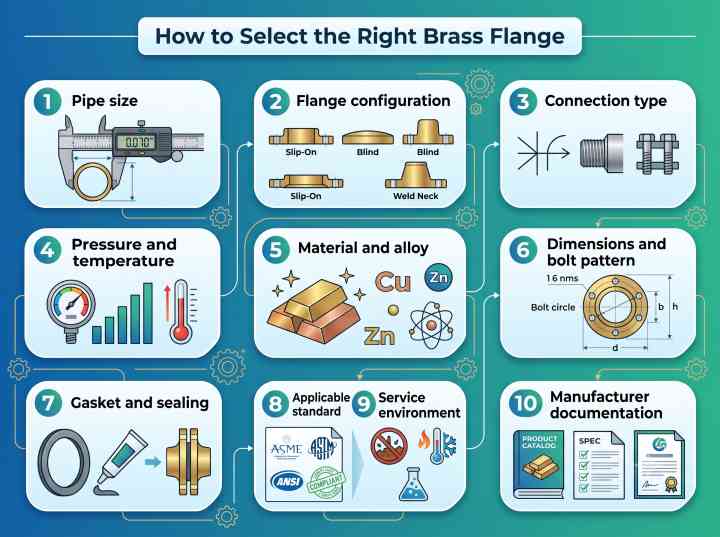
To select the correct brass flange, you have to check multiple factors. Check the flange configuration, connection type, pressure and temperature, material, dimensions, gasket arrangement, applicable standard, and service environment before placing the order.
- Pipe size: Confirm the nominal pipe size and the actual mating dimensions required for the flange connection.
- Flange configuration: Choose the correct type for the connection, such as threaded, slip-on, blind, socket-weld, weld-neck, and lap-joint.
- Connection type: Check the required thread or pipe connection and make sure it matches the mating component.
- Pressure and temperature: Confirm the operating pressure and temperature against the applicable pressure-temperature rating. Do not treat a pressure class as a fixed pressure value.
- Material and alloy: Confirm the actual brass alloy and material specification, including any lead-free requirement.
- Dimensions and bolt pattern: Check the flange dimensions, bolt-hole arrangement, bolt-hole size, and flange thickness against the mating flange.
- Gasket and sealing: Confirm the gasket type, dimensions, flange facing, and service compatibility.
- Applicable standard: Identify the standard that covers the actual flange material, configuration, dimensions, and rating.
- Service environment: Check the fluid, temperature cycling, corrosion conditions, vibration, and other operating conditions that may affect the flange.
- Manufacturer documentation: Confirm the actual product drawing, material, dimensions, connection type, pressure rating, and installation requirements before ordering.
Conclusion
Choosing a brass flange starts with the actual piping requirements, not size alone. Check the flange type, connection, material, pressure and temperature, dimensions, sealing arrangement, and applicable standard before placing an order. The flange must match the complete joint and the service conditions.
We manufacture custom brass threaded flanges and brass threaded fittings according to customer drawings. Contact us for brass flange requirements.