

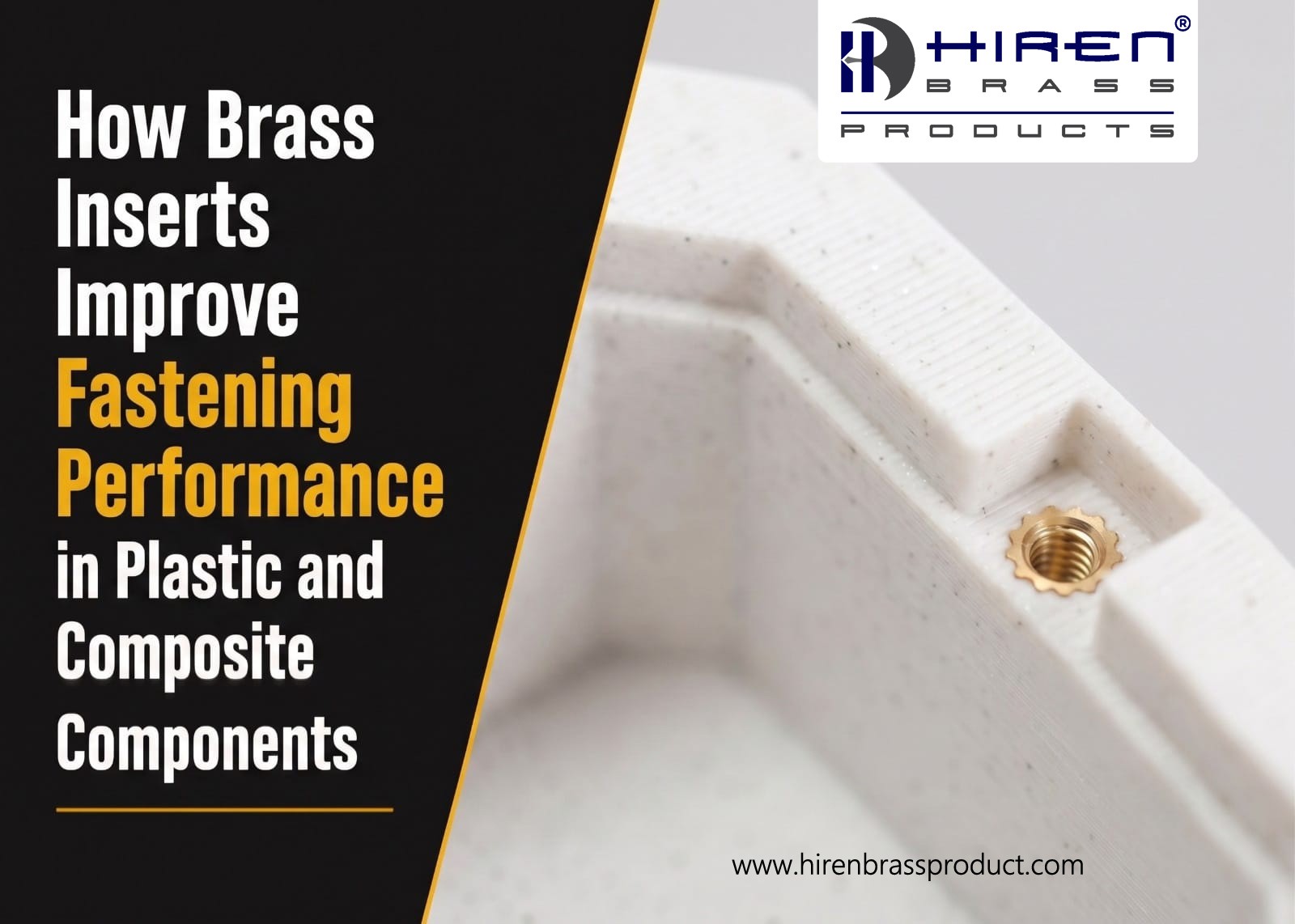
Most plastic and composite parts have limitations when a screw needs to be installed repeatedly. Brass inserts solve this fastening issue in plastic parts by providing a reusable metal thread. In this blog, we explain how brass inserts improve fastening performance in plastic components, where brass inserts are used, how to choose the right inserts, and what to look for when comparing brass inserts manufacturers.
Why Fastening Performance Matters in Plastic Parts
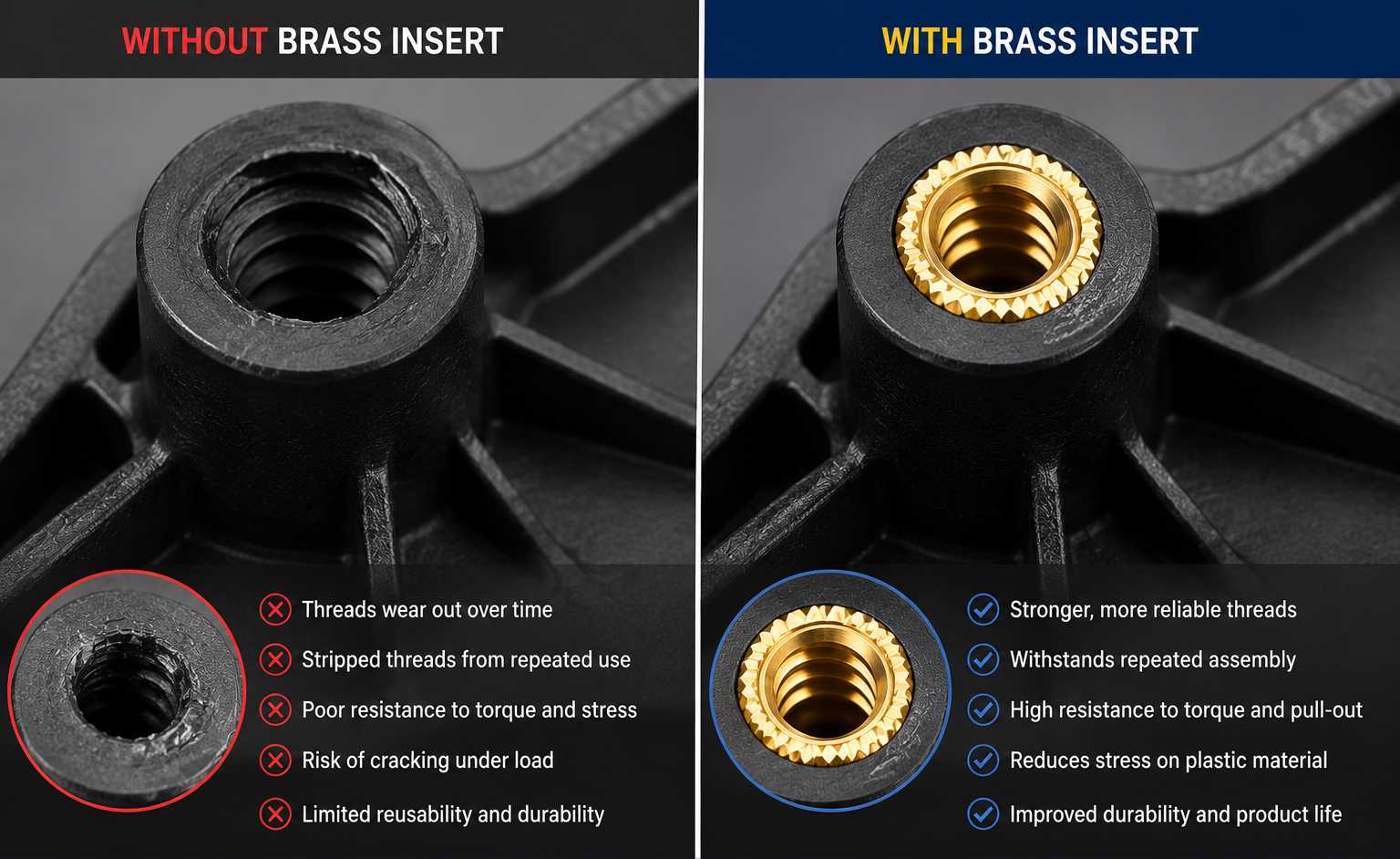
A screw can be installed directly into plastic, and that may be acceptable for some applications. But when plastic parts and joints need repeated assembly and stronger thread performance, direct plastic threads may not provide the required result.
Fastening performance depends on pull-out resistance, torque-out resistance, thread engagement, and the overall joint design. The plastic material, hole condition, part design, installation process, and screw connection all affect the final performance.
Then a metal threaded insert can help solve this issue because a Brass threaded inserts for plastic provides a reusable threaded connection inside the plastic part.
What Are Brass Inserts?
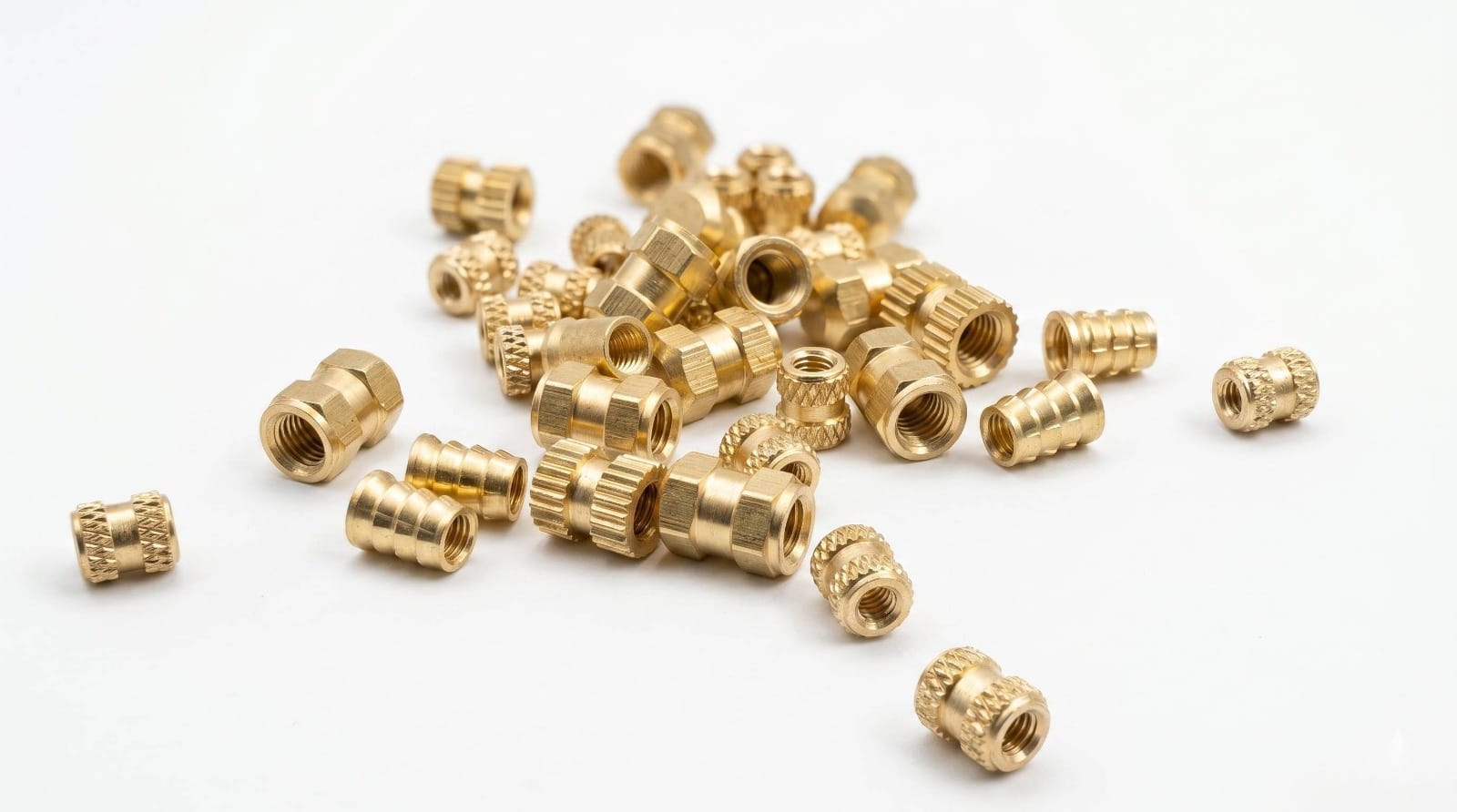
Brass inserts are precision-machined metal components with an internal thread that are installed into plastic, composite, and other materials to provide a reusable threaded connection. External features such as knurls, barbs, and undercuts help retain the insert in the surrounding material and pull-out.
The main purpose of a brass insert is to provide a durable metal thread inside the plastic part, allowing screws to be installed and removed repeatedly while maintaining the threaded connection. Brass inserts can also help the joint handle the required installation torque and improve load-carrying performance compared with relying only on a thread formed directly in plastic.
Request a Quote for Custom Brass InsertsHow Brass Inserts Improve Fastening Performance
Brass inserts improve fastening performance by replacing a plastic screw thread with a machined metal thread and adding external knurl features that help hold the insert in the plastic. The insert design, plastic material, installation method, and component geometry all affect the final fastening performance.
Stronger Thread Engagement
Brass inserts provide the screw with a machined metal thread, and the thread is reusable. The insert avoids relying on the plastic itself to form the screw thread. This is useful for repeated assembly and applications that need better thread performance.
Better Load Distribution
Brass insert knurls, recesses, and other external retention features develop strength as the host plastic forms around those features. The external geometry of the brass knurling insert transfers forces from the metal insert into the surrounding plastic over the interface. Also, a greater insert length can increase retention performance when it provides more engagement with the surrounding plastic.
Improved Resistance to Wear and Repeated Assembly
Plastic threads can wear with repeated screw installation and removal, while a brass insert provides a metal internal thread. The metal thread allows repeated screw installation and removal and reduces dependence on the plastic thread for every assembly cycle. This helps maintain a reusable threaded connection over repeated service.
Where Brass Inserts Are Used
Brass inserts are used in plastic, composite, and molded components. Common applications include automotive components, electronic and electrical housings, industrial equipment, medical equipment, appliances, and other molded plastic parts.
Automotive Plastic Components
Brass inserts are used in automotive plastic housings, electronic modules, interior components, door trim, headlamp assemblies, and other molded automotive parts.
Electronics & Electrical Housings
Brass inserts are used in plastic electronic housings, electrical enclosures, control modules, PCB-related assemblies, connectors, switches, and display assemblies. Brass can also be selected where the insert needs to provide an electrical contact point, depending on the insert design and application.
Industrial Equipment & Machine Components
Brass inserts are used in plastic and composite machine housings, equipment covers, control components, and other industrial parts.
Medical Equipment Components
Brass inserts can be used in plastic housings, covers, and molded components for medical equipment.
Appliances & Consumer Electronics
Brass inserts are used in home appliances, consumer electronic, plastic covers, and molded components.
Aerospace & Defense Components
Threaded inserts are used in plastic and composite components for aerospace and defense applications.
Plastic Injection-Molded Components
Brass inserts are used in injection-molded plastic parts when the finished component needs a metal threaded connection.
Choosing the Right Brass Inserts for Your Application
When choosing an insert for your application, a few things you have to consider are plastic material, required fastening performance, part design, installation process, and production requirements. Keep in mind that the insert, plastic part, hole, boss, and screw connection all work together as one assembly.
Start With the Plastic or Composite Material
Plastic material is very important when selecting the insert design. Thermoplastic and thermoset materials have different properties, and their behavior during insert installation and under load is different. Plastic hardness, stiffness, reinforced fillers, and material sensitivity can all affect insert selection.
Check the Boss and Hole Design
The plastic part needs enough material around the insert to support the required fastening load. You have to check hole diameter, hole depth, boss diameter, wall thickness, hole shape, and the step around the insert. You also have to consider molded and drilled holes.
Match the Insert to the Required Load
Your selected insert needs to carry the required load, so this is a very important consideration. Check the load that the plastic joint needs to handle during assembly and service. Pull-out, torque-out, repeated loading, vibration, and screw preload can all affect insert selection. The insert and surrounding plastic geometry should be selected to meet the required load conditions.
Check the Insert and Part Geometry Together
Other important dimensions such as insert outside diameter, length, head, knurling, and through or blind hole configuration must match the plastic-part design. Also, the position of the insert and the clearance around the mating component need to be considered.
Consider the Installation and Production Process
The insert type must match how it will be installed and how the parts will be produced. You have to consider whether the insert will be installed during molding or after molding, the plastic material, production volume, and whether manual, semi-automatic, or automated installation will be used.
Verify the Insert Selection Before Production
Before mass production, confirm the insert drawing, plastic material, hole and boss dimensions, screw/thread requirements, and required fastening performance. Testing is recommended so prototype parts can be used to check the complete assembly and verify pull-out, torque-out, installation, and other required performance before production approval.
FAQs
1. Can the wrong hole size reduce brass insert fastening performance?
Yes. Hole size has a direct effect on insert retention. An oversized hole can reduce pull-out and torque-out performance because there may not be enough plastic engagement around the insert's external retention features. An undersized hole can create excessive stress in the plastic and may cause cracking during installation. The correct hole size depends on the insert type, plastic material, installation method, and insert design.
2. Does the plastic boss design affect brass insert fastening performance?
Yes. Boss diameter, wall thickness, surrounding plastic, and features such as ribs and knit lines can affect insert performance. The boss must provide enough material to withstand installation stresses and the required screw tightening load.
3. Can plastic fillers change the required hole size for a brass insert?
Yes. Glass and mineral fillers can change the way the plastic flows around the insert and can affect hole sizing and installation performance. Recommends reviewing the specified hole size when fillers are used. For glass-filled materials, it gives specific hole-size adjustments based on filler content, with larger adjustments at higher filler percentages.
The exact hole size should therefore come from the insert specification and the actual plastic formulation rather than applying one hole size to all filled plastics.
4. What happens if a brass insert is installed below the correct depth?
If an insert is not installed to the required depth, the insert may not achieve the intended engagement with the surrounding plastic, and the final assembly can have reduced performance. For post-mold inserts, the hole should generally be deeper than the insert length so the insert can seat correctly without the screw bottoming in the hole.
The required installation depth depends on the specific insert design and should follow the product drawing.
5. How do you verify the fastening performance of a brass insert in plastic?
Fastening performance should be verified on the complete insert-and-plastic assembly, not by looking at the brass insert alone. Pull-out testing measures the axial force required to remove the insert, while torque-out testing measures the torque required to rotate the insert in the plastic.
Conclusion
Choosing the right brass insert depends on the plastic material, insert design, thread, installation method, and required fastening performance. For custom plastic and composite parts, the insert should match the actual part and assembly requirements rather than using a standard insert where it does not fit.
For OEM production, we manufacture custom brass inserts according to customer drawings and samples, including custom threads, knurling, dimensions, and other required features.