

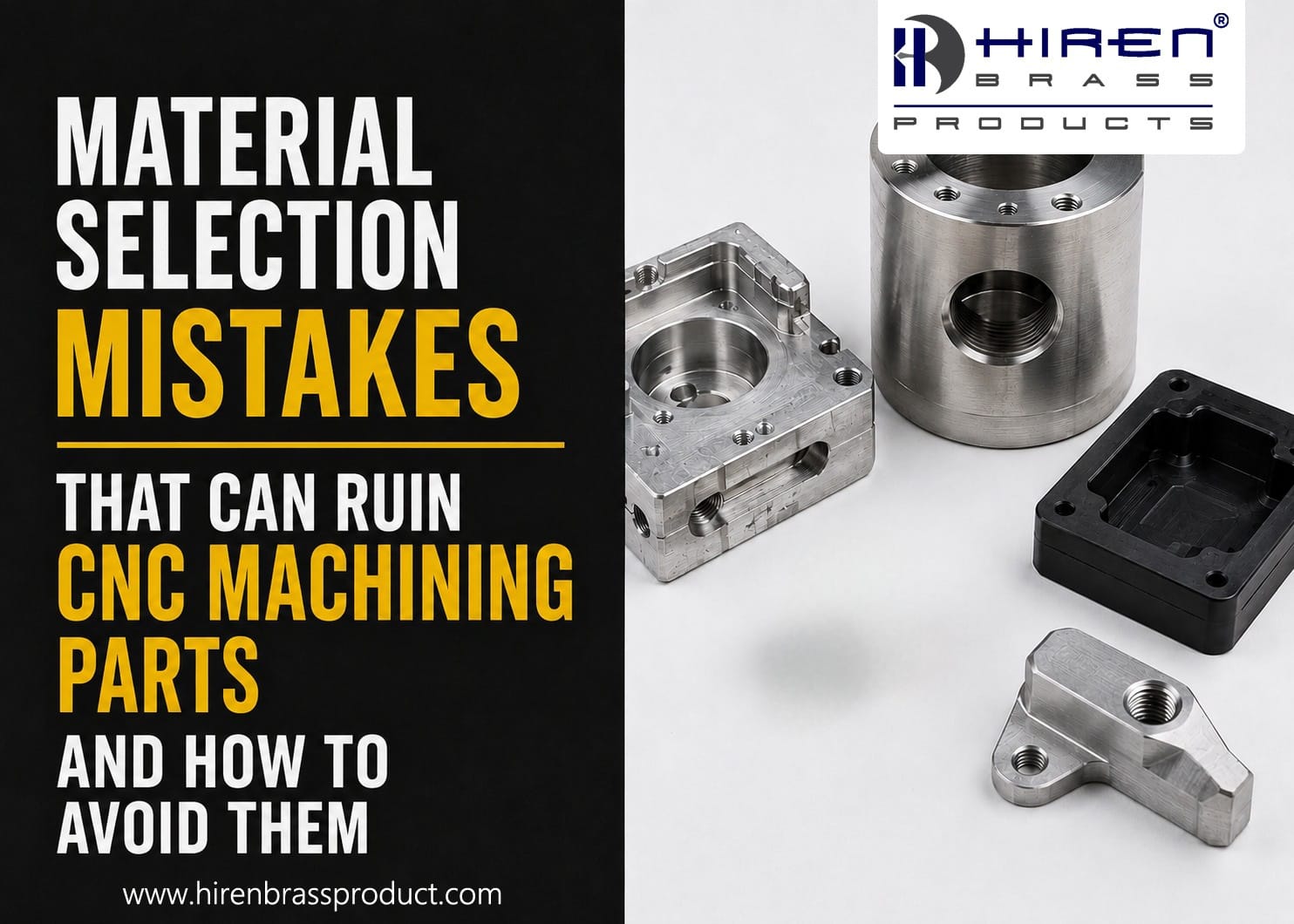
CNC machined parts can be manufactured from a wide variety of materials. Choosing the right material is important because it affects part performance, machinability, surface finish, dimensional accuracy, tool wear, manufacturing cost, and service life. In this blog, we explain the most common material selection mistakes in CNC machining, how they affect machined parts, and how to avoid them.
Why Material Selection Matters in CNC Machining
Each material has its own advantages and limitations. CNC machining parts can be manufactured from a wide variety of materials such as brass, copper, aluminum, steel, stainless steel, bronze, and plastics.
Selecting the right material is one of the most important decisions in CNC machining. The material directly affects part performance, machinability, manufacturing cost, production efficiency, surface finish, and dimensional accuracy. Each material has different mechanical, physical, thermal, and chemical properties.
Material selection depends on part geometry, application requirements, required material properties, operating environment, mechanical loading, corrosion, tolerance requirements, production quantity, and cost.
Common Material Selection Mistakes
You have to choose the material according to the application. You can't focus on a single factor and ignore other engineering requirements. Here are a few mistakes you should avoid when selecting a material.
Ignoring the Part's End-Use Application
One of the most important factors in material selection is the end-use application. For example, if a part requires low weight and adequate strength, aluminum may be a suitable material. Material selection should always be based on the part's functional requirements and operating conditions.
Choosing Based on Cost Alone
Choosing a material based on cost alone is a common mistake. Material cost is an important factor for CNC components, but you should also consider performance, machinability, corrosion resistance, and other application requirements. For example, aluminum is generally less expensive than copper, but it has lower electrical conductivity, making copper a better choice for electrical components.
Overlooking Machinability and Tolerance Requirements
Machinability directly affects cutting behavior, tool wear, surface finish, and production efficiency. Tolerance capability depends on the material, machine capability, cutting process, tooling, and process control. Brass provides excellent machinability, while copper is more difficult to machine because it is gummy, which increases tool wear and production cost.
Not Considering Environmental Conditions
You have to consider the operating environment when selecting a material, especially for outdoor, automotive, and marine applications. Some materials, such as brass, provide excellent corrosion resistance. For CNC parts used in marine applications, the material should provide good corrosion resistance and withstand saltwater exposure.
How to Avoid Material Selection Mistakes
- Define the part's functional requirements before selecting a material.
- Consider the operating environment.
- Evaluate machinability and tolerance requirements.
- Balance material cost with manufacturing cost.
- Compare suitable material options before making the final selection.
- Consult your CNC machining supplier during the design stage.
Conclusion
Selecting the right material is essential for manufacturing reliable and cost-effective CNC machined parts. Every application has different performance and manufacturing requirements, so there is no single material that is best for every project.
If you need custom CNC machined parts manufactured according to your drawings, send us your RFQ. We manufacture custom CNC parts in a wide range of metals based on customer requirements.