

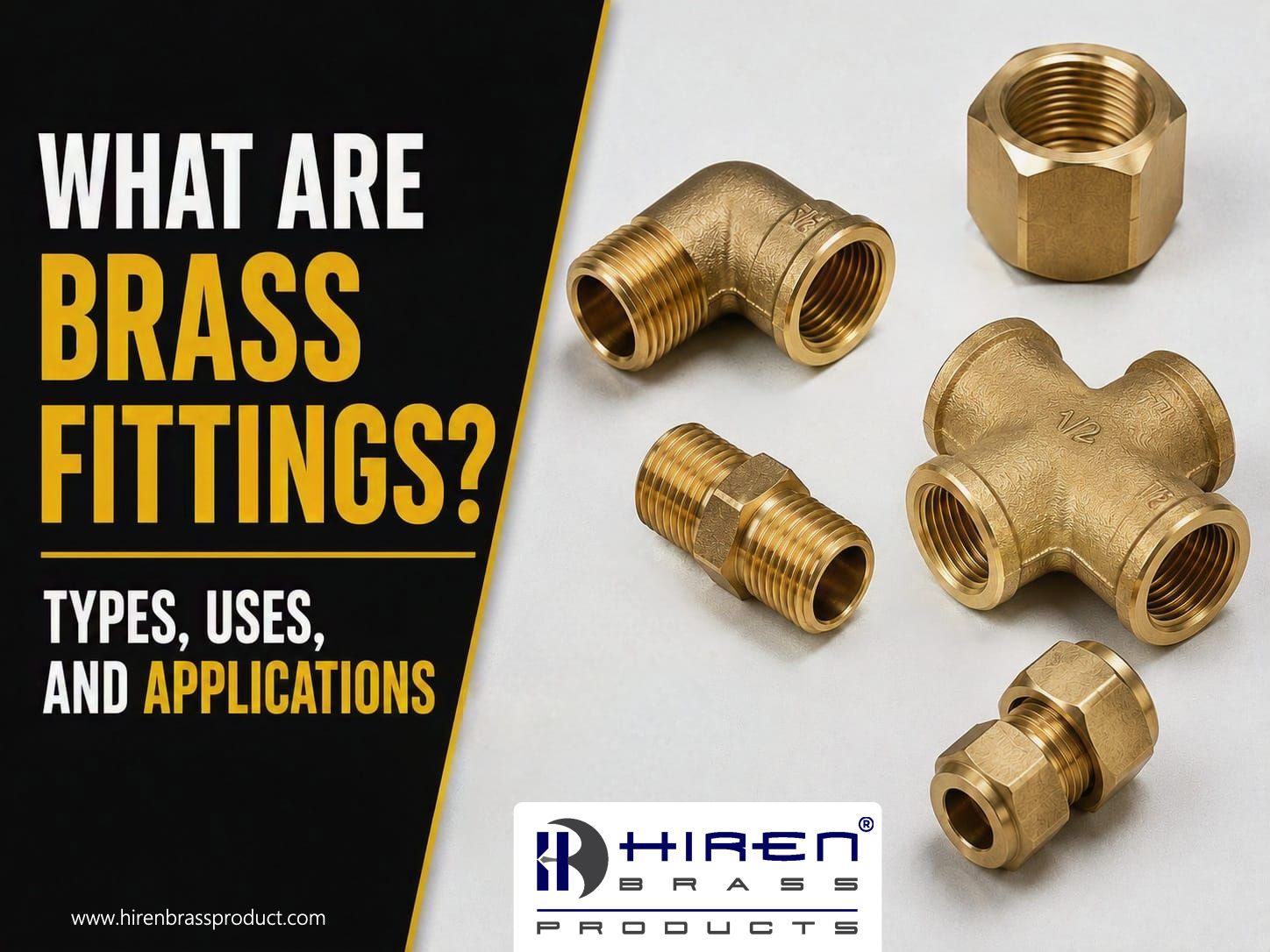
Brass fittings are widely used across many piping and fluid systems such as plumbing, HVAC, pneumatic systems, hydraulic systems, gas distribution, and industrial fluid handling. Brass fittings are chosen because of their corrosion resistance, good machinability, strength, and durability. They are suitable for water, air, and many gas applications.
Different piping systems require different types of fittings to perform specific functions such as connecting pipes, changing flow direction, reducing pipe size, terminating lines, and adapting different connection types. This blog covers brass fitting types, uses, and applications.
What Are Brass Fittings?
Brass fittings are components used to connect, redirect, branch, reduce, terminate, adapt pipes and tubing in plumbing, HVAC, pneumatic, hydraulic, gas distribution, and industrial fluid systems. Brass fittings provide corrosion resistance, strength, durability, and reliable leak tight connections.
Why Brass Is Used for Fittings
Fittings can be made from many materials such as stainless steel, brass, and carbon steel, but brass is one of the most commonly used because it offers a balanced combination of mechanical properties, corrosion resistance, machinability, reliable leak-tight performance, and cost.
Corrosion Resistance
One of the main advantages of brass is its corrosion resistance. Brass resists corrosion in water, air, and many non-aggressive fluids, providing a long service life in plumbing and industrial piping.
Excellent Machinability
Brass is one of the easiest engineering metals to machine. High machinability allows precise threads and complex fitting geometries. Better machinability reduces machining time, tool wear, and manufacturing cost.
Strength and Durability
Brass provides good mechanical strength for many plumbing, pneumatic, and hydraulic applications. It withstands repeated assembly, normal service loads, and provides good wear resistance for durable threaded connections.
Reliable Leak Tight Connections
Accurate machining of brass produces precise threads and sealing surfaces that help create reliable leak tight joints. This is one of the reasons brass is widely used for valves, adapters, and compression fittings.
Main Types of Brass Fittings
Brass fittings are available in many designs, and each is designed for a specific piping function. Selecting the correct fitting helps ensure reliable connections, proper direction change, branching, size transition, termination, and easy installation.
Brass Elbow Fittings
Brass elbow fittings are used to change the direction of pipes and tubing. They are commonly available in 45° and 90° angles.
Brass Tee Fittings
Brass tees are used to connect three pipe sections and create or divide a branch. Common types include equal tees and reducing tees.
Brass Couplings
Brass couplings join two pipes in a straight line to create a straight connection.
Brass Unions
Brass unions connect two pipe sections and can be disconnected without rotating the pipe. They are also used where maintenance and replacement are required.
Brass Reducers
Brass reducers connect pipes of different sizes by reducing the pipe diameter.
Brass Adapters
Brass connector connect different thread types, connection styles, and piping systems.
Brass Nipples
Brass nipples are short male-threaded connectors used to join two female-threaded fittings.
Brass Caps and Plugs
Brass caps are used to seal the end of a pipe and fit over a male pipe end. Brass plugs seal a female threaded opening.
Brass Compression Fittings
Brass compression fittings connect tubing using a fitting body, compression nut, and ferrule to create a reliable leak-tight seal without welding. They are commonly used with copper, plastic, and stainless steel tubing.
Common Applications of Brass Fittings
Brass fittings are used in many residential, commercial, and industrial piping systems. Below are the most common applications of brass fittings.
Plumbing Systems
- Domestic water supply
- Commercial plumbing
- Hot and cold water systems
HVAC Systems
- Heating systems
- Cooling systems
- Refrigeration piping
Pneumatic Systems
- Compressed air lines
- Pneumatic equipment
- Air distribution systems
Hydraulic Systems
- Hydraulic machinery
- Fluid power systems
- Industrial equipment
Gas Distribution Systems
- Natural gas
- LPG
- CNG
Industrial Fluid Handling
- Manufacturing plants
- Process piping
- Industrial fluid transfer
Standards and Compliance
Brass fittings should comply with applicable industry standards and regulatory requirements. Standards ensure compatibility, dimensional accuracy, material quality, performance, and safety. The required standard depends on the application and market.
Thread Standards
Different thread standards are used in different regions and systems, and the fitting must match the mating thread. BSP and BSPT threads are commonly used in the UK, Europe, Australia, and many Asian countries, while NPT threads are commonly used in the USA, Canada, and Mexico. Metric threads are widely used in many industries where metric fasteners and connections are specified.
Material Standards
Brass fittings should be manufactured using recognized brass grades according to the application and customer requirements. C36000 is one of the most common free-machining brass grades used for manufacturing brass fittings.
Drinking Water Compliance
Brass fittings used in potable water systems should comply with applicable drinking water standards. NSF/ANSI/CAN 61 is commonly required in North America, while WRAS approval is commonly required in the UK, depending on the intended market and application.
How to Choose the Right Brass Fitting
Selecting the correct brass fitting depends on the piping system, operating conditions, and connection requirements. Choosing the wrong fitting can result in leaks and poor performance.
Select the Correct Fitting Type
Choose the fitting according to its function.
- Elbow - change direction
- Tee - create a branch
- Coupling - connect two pipes
- Union - easy disassembly
- Reducer - connect different pipe sizes
- Adapter - connect different thread or connection types
Match the Thread Standard
The fitting thread must match the thread standard of the mating component. Choose the appropriate thread standard, such as BSP, BSPT, or NPT, according to the piping system requirements.
Verify Pipe and Tube Size
The brass fitting size must match the pipe or tube size and the connection size of the mating component.
Check Pressure and Temperature Requirements
The fitting's pressure and temperature ratings must be suitable for the operating conditions. Otherwise, it may result in leakage and fitting failure.
Verify Application and Compliance Requirements
Verify that the brass fitting complies with the required standards and certifications for the intended application, such as potable water, gas distribution, or industrial fluid systems.
Conclusion
Choosing the right brass fitting is essential for creating safe, reliable, and long-lasting piping systems. By selecting the appropriate fitting type, thread standard, size, material, and compliance requirements, you can achieve secure connections and dependable performance.
If you need custom brass fittings manufactured to your drawings or specifications, send us your RFQ. We provide custom brass fittings in various sizes, thread types, and finishes to meet your specific requirements.