

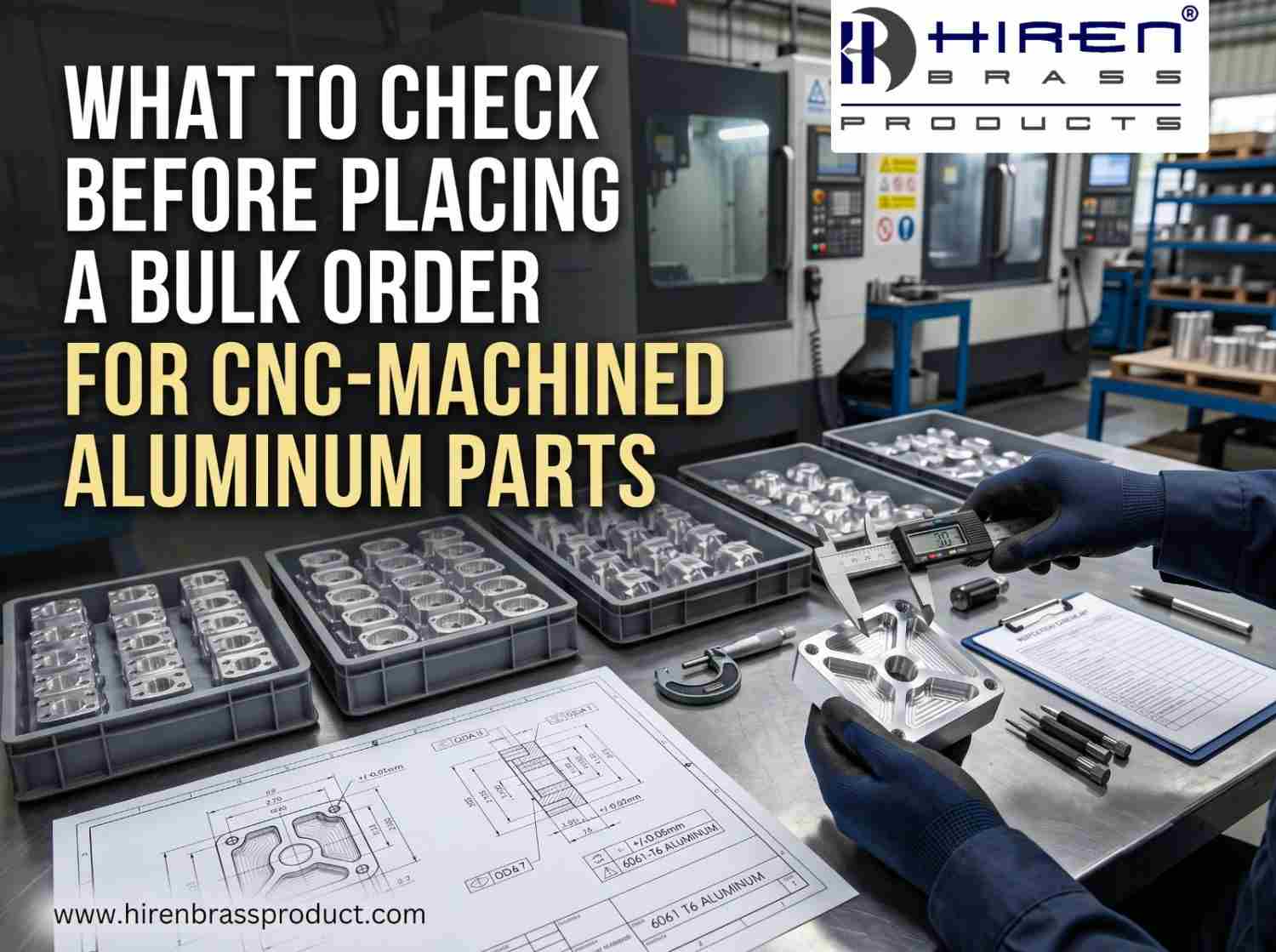
Before placing an order, it’s essential to ensure that the CNC machining parts manufacturer fully understands your specific requirements. Mistakes in drawings, material specifications, surface finishes, and inspection criteria can impact the entire production batch, potentially leading to rejected parts, rework, and delivery delays.
This blog covers five checks to make before placing your order. We will explore key aspects such as drawings and tolerances, aluminum alloy and temper, material documents, quality control, supplier production capacity, and the full cost and delivery terms. By conducting these checks, you can establish clear requirements, make fair comparisons between quotations, and minimize the risk of issues during bulk production.
1. Confirm Drawings, Tolerances, and Finish Requirements
Verify the Latest CAD Files, Drawing Revisions, and Critical Dimensions
Before requesting a quotation, send the supplier the final approved CAD files and identify the drawing revision that governs the order. Ensure that the files correspond with the version you want the supplier to produce. Having too many revisions can create confusion, so it's important to clarify which documents are final. If there are conflicting details between the drawing and the CAD model, reach an agreement with the supplier about which document will serve as the authority before production begins.
Review the necessary dimensions, general tolerance notes, and applicable geometric tolerances. Confirm that the supplier has all the relevant information to understand what dimensions and tolerances the finished parts must meet.
Surface Finish and Required Secondary Operations
Clearly indicate the surface finish requirements in the approved product definition. Surface texture includes roughness, waviness, and lay, which differ from finishing processes such as anodizing, coating, and plating.
List any secondary operations that the order requires, and ensure the supplier includes them in the quotation. If the finishing process could impact a controlled dimension, specify the required final dimension and acceptance criteria. Do not assume that each CNC aluminum part needs additional finishing; instead, choose according to your application requirements.
2. Verify Aluminum Alloy, Temper, and Material Documentation
Required Alloy, Temper, and Stock Form
Check the exact aluminum alloy and temper before placing the order. The alloy identifies the material, and the temper identifies its condition. Aluminum 6061 and 7075 have different compositions. Different tempers of the same alloy can have different mechanical properties, so make sure the specified material matches your part requirements. Also check the stock form the manufacturer will use. Material specifications cover different forms of aluminum. For example, ASTM B209/B209M covers sheet and plate, ASTM B211/B211M covers rolled or cold-finished bar, rod, and wire, and ASTM B221 covers extruded products. The applicable specification must match the required stock form.
Material Certificates and Traceability Requirements
Inform the supplier which material certificates and reports you need with this order. Do not assume every aluminum order includes the same certificates. The required documents depend on the applicable material specification, purchase terms, and quality requirements.
Also agree on how the supplier will identify the material covered by those documents. According to your requirements, this may involve lot numbers and heat numbers. Clear traceability helps connect the supplied material with its supporting records.
3. Quality Control and Inspection Requirements
Define First-Article Approval and In-Process and Final Inspection
Before production begins, it is important to reach an agreement with the supplier regarding whether the first production part needs to be inspected and approved by you. A first-piece check is not equivalent to a formal First Article Inspection (FAI). The formal FAI requirements are defined by SAE AS9102C, which primarily applies to the aerospace, space, and defense industries. Do not assume that every CNC order requires an FAI.
Also, you should agree on which specific features the supplier will check during production and at the final inspection. In-process checks are beneficial for monitoring the required features while machining is ongoing. Final inspection checks the completed parts against the agreed-upon drawings and order requirements before they are released. The inspection plan should clearly outline which checks are applicable to your order.
Inspection Reports and Nonconformance Handling
Make sure to finalize the inspection report before placing the order. Clearly specify which features the report should cover and whether you require actual measurement values, pass/fail results, or both. Since inspection services can vary, do not assume that every report includes measurements for all dimensions.
Additionally, agree on how the supplier will manage parts that do not meet the requirements. The supplier should identify and control the affected parts, record the issue, and notify you when necessary. Decide on the next steps, such as rework, disposal, or a proposed deviation, which must be approved before acceptance.
4. Evaluate Supplier Capability and Bulk Production Capacity
Verify Experience With Comparable Parts, Materials, and Tolerances
When assessing a supplier, it’s important to review their experience with parts that have similar geometry, machining processes, aluminum specifications, and tolerances. General CNC machining experience alone does not guarantee that the supplier can meet your part's specific requirements.
Request relevant examples of their previous work, ask for customer references, and consider requesting a sample. These tools will help you evaluate the validity of the supplier’s claims
Confirm Production Capacity, Scheduling, and Batch Consistency
Ensure that the supplier has the appropriate machines, personnel, tooling, and production time available to fulfill your order. Inquire about how their current workload impacts the production plan. It's important to note that while a supplier may have the right equipment, they may have limited capacity for large orders.
Having sufficient capacity does not guarantee that the supplier can ensure consistency across the batch. Ask how the supplier controls the machining setup, manages tool wear, and monitors process variation during production. Factors like setup, tool wear, and temperature can influence machining results, and effective process monitoring can help identify any changes. The controls implemented should align with your order’s specific requirements.
5. Compare Total Cost, Lead Times, and Delivery Terms
Compare Quotes on the Same Production and Finishing Scope
Before comparing prices, ensure that each supplier has quoted based on the same requirements and order quantity. The quotation should include the agreed-upon aluminum material, finishing work, inspection, and documentation requirements. Since suppliers may use different formats for their quotations, make sure to check what each price encompasses before making comparisons.
Don't just focus on the unit price; review the total quoted cost. Also, verify if there are separate charges for setup or tooling, finishing, inspection reports, packaging, and freight. Keep in mind that aluminum CNC machining costs can vary based on factors such as machining time, tooling, batch size, labor, and overhead.
Delivery Dates, Packaging, and Shipment Arrangements
Confirm the delivery date with the supplier and clarify the details of the quoted schedule. Verify whether it includes finishing, inspection, packing, and transport to the agreed destination. It's important to note that production lead time and delivery time may refer to different stages, so ensure you understand when the supplier commits to completing production and when you can expect to receive the parts.
Agree on packaging that is suitable for the parts and the planned shipment. Additionally, confirm whether the quotation covers packaging and freight costs, and determine who will arrange the transportation. For international orders, specify the applicable Incoterms rule and the relevant named place. These terms define the delivery responsibilities, costs, and risks between the buyer and seller, but they do not replace the complete purchase agreement.
Conclusion
Placing a bulk order is a worthwhile decision only when you have confidence in the supplier's ability to meet your business needs. If there are any important questions left unanswered, be sure to resolve them before committing to the order. Addressing these issues in advance is much easier than dealing with problems that may arise after production has begun.
Send us your part drawings, quantity, and aluminum specifications to discuss your bulk CNC machining requirements and request a quotation.